
Across Karnataka and the wider Indian subcontinent, temples have served as more than places of worship; they have functioned as nuclei of truth, nobility, creativity, beauty, and celebration. Historically, these sacred complexes sustained prosperity, arts, architecture, education, and spiritual life for Hindu, Jaina, and Buddhist communities alike. Despite long periods of political upheaval and iconoclasm, many templesespecially in South Indiapreserved their cultural roles through community stewardship, reconstruction, and adaptive continuity. They stand today as living repositories of regional traditions, festivals, trade histories, and local memory.
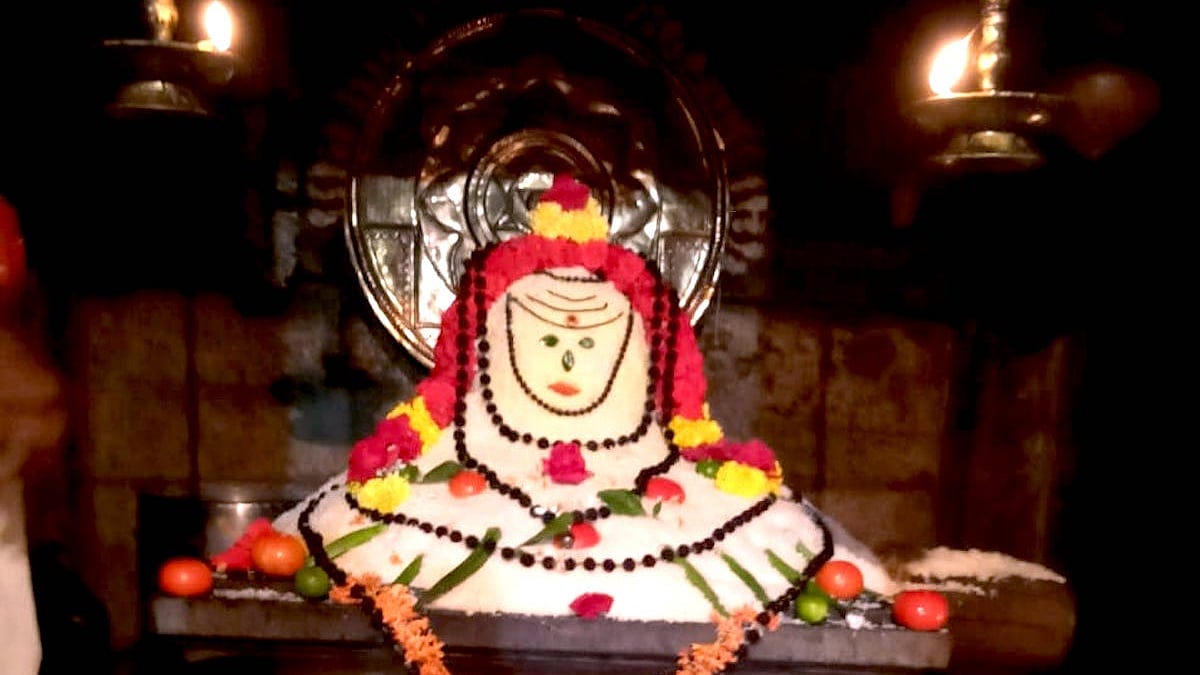
Within this landscape, the Sri Bhujangeshwara Temple at Ummatturu Village in Karnataka represents a vital yet often overlooked heritage site. Ummatturu’s significance extends beyond its association with the celebrated ruler Sri Krishnadevaraya of the Vijayanagara Empire; it also embodies centuries of rich ritual practice, social organization, and temple-based cultural traditions that continue to animate village life.
Ummatturu lies in Chamarajanagar district, approximately 28 kilometers from Chamarajanagar taluk and about 53 kilometers from Mysuru. It is situated 14 kilometers from the well-known Yelanduru town on the Nanjangudu–Kollegala road. Nearby, the Gourishwara Temple at Yelanduru is renowned for its exquisitely carved mukhamandapam, known locally as the bale-devalaya (Bale = bangle). At each of the four corners of its spacious mukhamandapa, a stone chain of interlinked rings (bale), carved from a single block, delicately sways even in a gentle breezean enduring testament to the virtuosity of Hindu stone sculpture.
Local etymology further enriches Ummatturu’s identity. One meaning of the Kannada word Umma is “gold,” and Ummatturuunderstood as Umma-hotta-uruliterally denotes “a city that carries gold.” The metaphor refers to the region’s unusually fertile soils; nearby residents describe five distinct soil varieties capable of yielding abundant crops with minimal water. For centuries, superior rock from the Kondikallu Basavana Betta hillock supported the construction of temples, homes, and roadways; villagers still note with pride how the high-quality clay base laid beneath prominent streets remains firm and largely crack-free even today.
Historically, Ummatturu also emerged as a principality (Samsthana). A local hero, Hanumappa Odeya, established the first Samsthana here, and the village’s prosperity drew the attention of the Ganga rulers and, later, the Vijayanagara emperors. As power and trade flourished, Ummatturu’s domains extended beyond Chamarajanagar district to Karmade near Coimbatore and, for a period, into Kerala. The chieftain Gangarasa eventually aspired to autonomy, even issuing his own coinage.

In response, Sri Krishnadevaraya reasserted imperial authority, and the vast regions under Ummatturu’s sway were swiftly integrated into the Vijayanagara realm. This early victoryone of the first in his reignbecame a prized achievement and set the stage for his larger ambitions. Tradition holds that he invoked the blessings of the Bhujangeshwara and Ranganatha deities here at the outset of his digvijaya-yatra, a 16-year campaign of conquest during which he is said to have won fifty-two battles before triumphantly returning to Hampi. Inscriptions at Ummatturu record generous land grants to the Bhujangeshwara and Ranganatha temples by Vijayanagara monarchs and regional chieftains, anchoring the site within South India’s political and sacred geographies.
Under the patronage of the Ganga dynasty and the Vijayanagara Empire, Ummatturu developed into a vibrant cultural hub. The village and its surroundings contain numerous temples of varying sizes, some dating at least to the tenth century CE. Many utsavas, folk arts, pottery traditions, and market practices have persisted in an unbroken fashion, often sustained by the selfless contributions of local residents. Hindu and Jaina festivals are observed with shared fervor, exemplifying the cooperative spirit that characterizes the region’s dharmic communities.
Among the most spectacular celebrations is the bandi-katto-utsava during Sankranti in January. Nine bandis (circular wooden carts), each bearing one of Ummatturu’s nine deities, sway and circle through the streets in a grand evening procession. Folk artists sing, dance, and play instruments as the Veerabhadra Swami bandi leads and the Sri Bhujangeshwara bandi completes the sequence. For hundreds of families in and around Ummatturu, these deities are revered kula-devataas, and service during the utsava is a cherished legacy. In recent years, however, social frictions and administrative challenges have interrupted the procession. Local voices, seeking unity in diversity, continue to advocate an inclusive revival aligned with the shared values of Hindu and Jaina traditions.
The Shivaratri festival at the Bhujangeshwara Temple is observed with jagarana (night-long vigil), puja of the four jamas (quarters of the night), and devotional bhajans. While resource constraints have curtailed large-scale cultural programming once associated with the occasion, the core rituals remain steady. This continuity offers an opportunity for collaborative heritage support that respects local agency while safeguarding living traditions.

Yugadi is another seminal celebration at the Ummatturu Bhujangeshwara Temple. Following special pujas throughout the day, the evening panchanga-shravana draws attentive crowds. Notably, pandits from the Jaina community are recognizedthrough a royal hakku-patrafor the hereditary right to read the Panchanga during this festival. This practice, preserved across generations, exemplifies inter-dharmic respect and the integrative ethos of the region’s sacred life.
On Modala-mangalavara (the first Tuesday of each month), devotees gather in large numbers from surrounding villages, including many visitors from Tamil Nadu. As part of the observance, they offer madilakkirice grains, jaggery, fruits, flowers, turmeric, kumkum, and dakshina bundled in a blouse piece or sareeto the graamadevataa, Urukateshwari Devi. Hundreds of families living between Ummatturu and Karmade near Coimbatore consider Goddess Urukateshwari and any one of the village’s male deities as their Jodi-kula-devataas. For most such families, Bhujangeshwara remains the kuladevataa, and the temple is especially vibrant on these monthly observances.
Halarive (offering of milk) at the Urukateshwari Temple further highlights the village’s spirit of shared seva. People across communities freely contribute services: the kumbaras (potters) prepare and carry an unbaked pot of milk and fruits with a rice-flour-lamp atop; folk artists from the uppara community sing and dance in procession; the Lingayats bring tree trunks and assemble the ratha on site; and a local community historically entrusted with ritual duties performs the ‘ere’ seva (showering the goddess with flowers and auspicious materials). Others assist with cleaning, decoration, prasada distribution, sponsorship of puja essentials, and related taskswithout charging even a paisa. This ethic of voluntary service underscores a social fabric anchored in dignity, reciprocity, and dharmic unity.
As a whole, Ummatturu reveals a rare synthesis of sacred geography, political history, inscriptional testimony, and living ritual culture. From the bale-devalaya at Yelanduru to the Bhujangeshwara sanctum and the monthly Modala-mangalavara observances, the region continues to embody the values of continuity, inclusivity, and mutual uplift across communities. For scholars, heritage travelers, and cultural practitioners, Ummatturu offers an illuminating case study in how Hindu and Jaina traditionsalongside the wider dharmic familycan nurture shared prosperity, conserve memory, and renew civic harmony through temples that remain profoundly alive.
Inspired by this post on Dharma Dispatch.










