
Colonial Virginia did not begin as a fully formed slave society; rather, it evolved into one through intertwined shifts in law, labor, demography, and elite power. The transition from a society with slaves to a slave society can be traced through emblematic lives, pivotal statutes, and a major uprising that together hardened racial hierarchy in early American history.
Established under the charter of the Virginia Company in 1606, Jamestown emerged from a precarious start marked by hunger, disease, and episodes later mythologized in popular memory. Despite early calamities, including the notorious "Starving Time," the colony survived and became the seedbed for a plantation economy whose labor demands steadily increased.
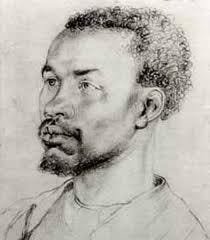
One life illustrates the relative fluidity of the colony’s earliest decades. Antonio, an Angolan captured by a rival African group and sold through regional networks to an Arab merchant, eventually reached Virginia and worked as an indentured laborer. After completing his term, he, like many indentured workers, was freed, granted land with his wife Mary, and adopted the name Anthony Johnson. By the 1640s, he owned a 250-acre farm and employed servantsan outcome possible in a period before slavery was rigidly codified.
In these formative years, the boundary between indentured servitude and slavery remained blurred. White indentured servants and Africans sometimes resisted together, fleeing or rebelling in common cause. Demographically, Africans in Virginia were more balanced by age and gender than their white counterparts, who were mostly young men. Free Black people could sue in courts, form families, and, in some cases, marry across racial lines. This was a society built with coerced labor in places, but not yet a fully racialized slave society.
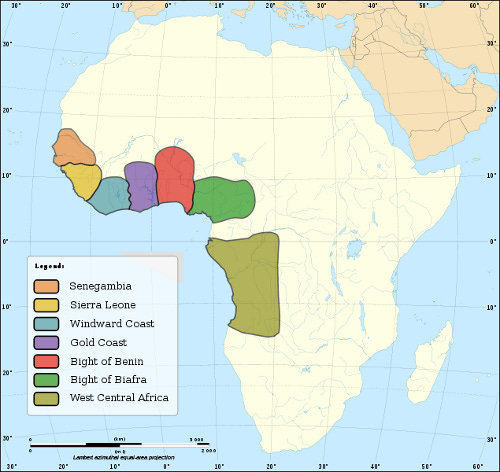
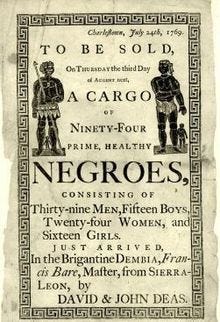
By the 1660s, demographic and economic currents began to shift decisively. Mortality rates fell, white settler populations grew, and the flow of European indentured servants declined. Planters turned increasingly to African labor supplied by the expanding transatlantic slave trade; the Slave Trade Voyages database records a marked rise in Virginia’s direct imports from Africa after mid-century. Concurrently, political power consolidated among landholders, with suffrage restricted to the propertied and even long suspensions of elections, entrenching oligarchic control.
Two turning points accelerated racialization: the 1662 statute that established hereditary slavery and the 1676 uprising known as Bacon’s Rebellion. Together, they transformed how colonial elites understood labor, status, and social order, catalyzing a legal regime aimed at preventing multiracial solidarity among the lower classes.
The 1662 law introduced partus sequitur ventrem, making a child’s legal status follow the condition of the mother. This doctrine bound the reproductive lives of enslaved African women to the expansion of slavery itself, ensuring lifetime bondage for their children regardless of the father’s identity. The statute marked a crucial shift from fluid servitude to race-based, hereditary slavery, embedding hierarchy in colonial law and family structure.
Bacon’s Rebellion revealed a different, immediate threat to the ruling order: cross-status mobilization. When Nathaniel Baconafter seeking authority to wage violent campaigns against Native Americanswas labeled a rebel, he assembled an armed force of both servants and enslaved people. The rebels seized Jamestown and burned it before the rising collapsed with Bacon’s death and the return of armed vessels. For the planter elite, the lesson was stark: servants and enslaved workers together constituted a volatile coalition capable of toppling authority.
In the rebellion’s aftermath, lawmakers hardened distinctions between “Christian” white servants and people of African descent. Free Black residents were stripped of key civil rights, including the right to marry freely; masters were granted broad latitude to “correct” enslaved people with impunity. This sharpening of racial categories drew on precedents in the English Caribbean, notably Barbados, where the binary of “Whiteness and Blackness” had already been turned into a governing principle. By the early eighteenth century, Virginia had codified a comprehensive lattice of slave codes, and the colony had definitively become a slave society.
These developments carry enduring ethical and civic implications. From a dharmic vantagedrawing upon shared values recognized across Hinduism, Buddhism, Jainism, and Sikhismthis history underscores the importance of human dignity (dharma), non-harm (ahimsa), and social arrangements grounded in compassion and justice. The legal construction of permanent hierarchy illustrates how adharma can be inscribed into institutions; remembering this process strengthens contemporary commitments to equality, pluralism, and unity across diverse communities and traditions.
This synthesis draws on the lectures of Prof. Stephanie McCurry (University of Pennsylvania) for the Coursera course History of the Slave South and integrates scholarship on colonial Virginia, Bacon’s Rebellion, the transatlantic slave trade, and early American legal history.
Inspired by this post on Varnam.










