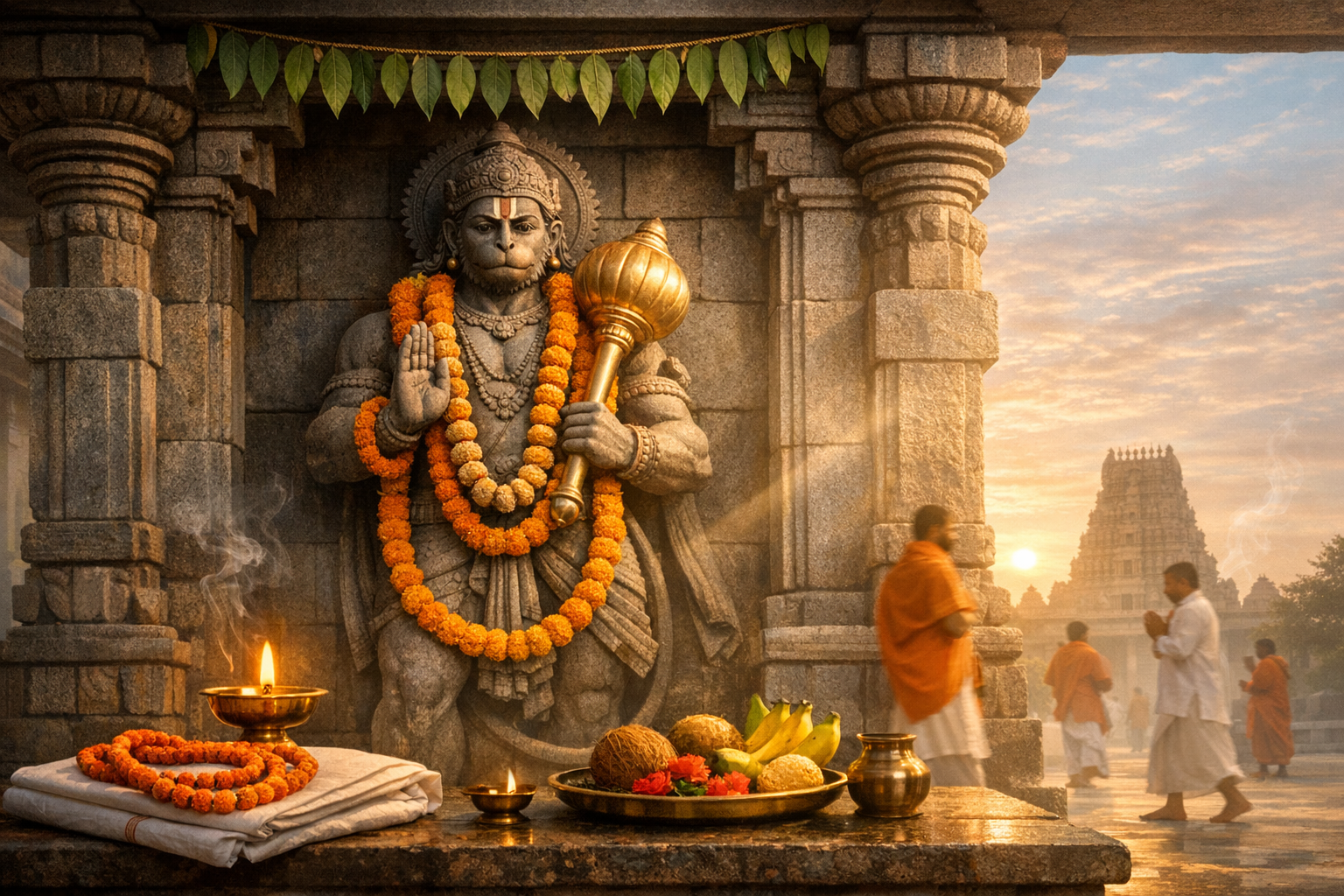
Hanuman Deeksha (Anjaneya Maala) is a revered vrata undertaken widely in Andhra Pradesh and Telangana as an intense period of discipline, devotion, and service to Sri Anjaneya Swamy. In 2026, the customary Deeksha window begins on 2 April (Chaitra Purnima as observed in regional panchangs) and culminates on 12 May. Devotees traditionally choose 11, 21, or 41 days according to capacity and guidance, integrating daily puja, parayana, and ethical observances that strengthen body, mind, and spirit.
For practical planning in 2026, Deeksha options align as follows: an 11-day Deeksha runs from 2 April to 12 April; a 21-day Deeksha completes on 22 April; and the full 41-day Deeksha concludes on 12 May. Local calendars may show slight variations in date perception; therefore, confirmation with a nearby temple or priest is advisable, especially for the sankalpa (formal vow) and viramana (conclusion) ceremonies.
Public observance is especially visible at Kondagattu Hanuman Temple and Sri Maddi Anjaneya Swamy Temple. Kondagattu (present-day Jagtial district, formerly part of Karimnagar) in Telangana hosts large congregations of Anjaneya bhaktas during this season. In Andhra Pradesh, Sri Maddi Anjaneya Swamy Temple at Guravayagudem (West Godavari district) draws equally heartfelt participation, with devotees offering vada mala, deepa, and special archana as part of the culmination.
Kondagattu’s Deeksha period is marked by early-morning darshan, group recitations, and, for some, giripradakshina in measured numbers as guided by local tradition. The temple’s association with Hanuman’s protective grace lends a distinct ethos of courage (parakram) and perseverance (sahana) to the Deeksha journey.
At Sri Maddi Anjaneya Swamy Temple, Guravayagudem, community-led seva, annadanam, and evening pujas create a contemplative rhythm throughout the Deeksha days. The temple’s lore and agricultural heartland setting underscore Hanuman’s connection with steadfast work, humility, and the protection of dharma in everyday life.
Beyond these two centers, many also observe Hanuman Deeksha with darshan at Gandi Anjaneya Swamy Temple (near Kadapa), Ponnur Sri Anjaneya Swamy Temple (Guntur), Kasapuram Nettikanti Anjaneya Swamy Temple (near Guntakal, Anantapur), and Karmanghat Hanuman Temple (Hyderabad). Each kshetra maintains its own local niyamas and customary offerings; devotees typically follow the practices of the temple where the Deeksha mala is received.
Hanuman Deeksha (Anjaneya Maala) is best understood as a vrata synthesizing bhakti, tapas, and seva. The devotee wears a consecrated mala, embraces a sattvic lifestyle, and dedicates daily time to prayer and scripture recitation. The discipline mirrors core dharmic virtuestruthfulness, non-injury, self-restraint, and generositywhile channeling Hanuman’s qualities of fearlessness, humility, devotion to Sri Rama, and unwavering service.
The mala-dharana (initiation) typically begins with a simple sankalpa at a Hanuman temple. A priest or senior devotee ties the Anjaneya Maala after brief prayers to Sri Rama, Sita, Lakshmana, and Hanuman, invoking protection and steadiness through the vow period. The mala is usually a sanctified thread or bead garland; it remains on the body for the entire Deeksha, symbolizing constancy of purpose.
Niyamas (observances) commonly include daily snana (purificatory bath), ahimsa in thought, word, and deed, satya (truthfulness), abstinence from intoxicants, and adherence to a vegetarian, sattvic diet. Many avoid tamasic foods and keep mealtime simplicity to conserve energy for japa, parayana, and seva. Restraint in speech, digital minimalism, and structured routines are encouraged to stabilize the mind.
Devotees typically wear saffron, orange, or white clothing and keep the mala visible as a reminder to remain mindful. Some observe simple footwear practices or go barefoot during temple visits according to local guidance. Personal grooming choices (such as avoiding haircuts or shaving) are left to the temple’s tradition and the devotee’s capacity.
Daily worship centers on Hanuman’s names and narratives. The Hanuman Chalisa is recited at least once daily, with many choosing multiple rounds on Tuesdays and Saturdays. Popular supplements include Sankat Mochan Hanuman Ashtak and stotras from the Ramayana tradition. The emphasis, however, remains on steady practice rather than volume alone.
Sundarakanda parayanam is a hallmark of the Deeksha period. Some households adopt the Shodasha Dina Sundarakanda Parayanam format (a structured 16-day cycle), while others read one or more sargas daily to complete the text during the chosen Deeksha length. The devotional purpose is to contemplate Hanuman’s valor, discernment, and one-pointed devotion to Sri Rama, internalizing those qualities in everyday conduct.
Fasts or partial fasts on Tuesdays and Saturdays are common, supported by light, nourishing meals after sunset or mid-day, depending on health and experience. Hydration and balanced nutrition remain essential, particularly in April–May heat across Andhra Pradesh and Telangana. Those with medical needs adapt the fast with guidance, prioritizing health and continuity of devotion.
Seva anchors the vow in living ethics. Many contribute to annadanam, offer time for temple cleanliness drives, participate in community reading circles of Sundarakanda, or distribute water to travelers. Acts of carefrom helping elders access darshan queues to providing shade and first-aidtranslate Hanuman’s spirit of service into tangible relief.
Conduct guidelines emphasize forbearance and inner steadiness. Avoiding anger and harmful speech, maintaining punctuality for puja, and honoring household duties are integral. Devotees consciously reduce distractions to preserve manasa shakti (mental strength) for japa and parayana.
Women and men observe Hanuman Deeksha in comparable ways, with practical adaptations as needed. Practices around menstrual cycles vary by household and tradition; the prevailing emphasis is on comfort, cleanliness, and sincerity rather than compulsion. Families often synchronize readings and prayers to cultivate a shared devotional atmosphere.
Health and safety considerations are important during summer. April–May temperatures necessitate shade breaks, electrolyte intake, and gentle pacing of temple rounds. Those with existing conditions are encouraged to consult physicians beforehand and to choose 11 or 21 days if new to ascetic routines. The Deeksha should support, not strain, wellbeing.
The viramana (formal conclusion) customarily occurs at the same temple where the mala was received. On the concluding day in 202612 April, 22 April, or 12 May depending on vow lengthdevotees perform abhishekam and archana to Sri Anjaneya, offer vada mala and fruits, complete pradakshina, and remove the mala with gratitude. Many also perform a simple homa, deepa-dana, or anna-dana as thanksgiving.
Travel planning to Kondagattu, Guravayagudem, or other kshetras benefits from early arrangements. Morning darshan is typically cooler and less crowded, while Tuesdays, Saturdays, and the final Deeksha days draw the largest gatherings. Lightweight cotton clothing, reusable water bottles, and minimal plastic use are recommended to align with temple guidelines and environmental care.
Culturally, Hanuman Deeksha exemplifies a living dharmic practice in which personal discipline and community welfare converge. The vrata’s ethic of patience, truthfulness, and compassionate action resonates across the broader dharmic familyHinduism, Buddhism, Jainism, and Sikhismthrough shared values like self-restraint, seva, and reverence for all life. Such shared virtues underscore unity in diversity within India’s spiritual heritage.
Devotees often describe the Deeksha’s experiential arc as a movement from restlessness to inner steadiness. Regular recitation of the Hanuman Chalisa and Sundarakanda, alongside mindful conduct, tends to cultivate clarity, courage, and a service-oriented mindsetqualities that extend well beyond the vow’s timeframe into family, work, and community life.
For those outside India, Hanuman Deeksha can be meaningfully observed through local temples, family mandirs, or virtual satsang. The essentials remain unchanged: mala-dharana with sankalpa, daily japa and parayana, dietary and behavioral niyamas, and a heartfelt viramana with offerings to Sri Anjaneya. Coordinating with a nearby temple ensures alignment with tradition and collective prayer.
In summary for 2026: Hanuman Deeksha begins on 2 April and can be undertaken for 11, 21, or 41 days, concluding respectively on 12 April, 22 April, or 12 May. Kondagattu Hanuman Temple and Sri Maddi Anjaneya Swamy Temple remain notable centers of worship, with countless other temples across Andhra Pradesh and Telangana fostering the same spirit. The vrata’s heart lies in unwavering devotion, ethical living, and servicean enduring path to inner strength and communal harmony.
Because panchang traditions and temple guidelines vary by locality, devotees are encouraged to confirm precise muhurta, sankalpa wording, and viramana procedures with their chosen temple. Within that framework, the Deeksha becomes a disciplined, joyfully sustained offering to Sri Anjaneya Swamy, illuminating everyday life with courage, compassion, and clarity.
Inspired by this post on Hindu Pad.