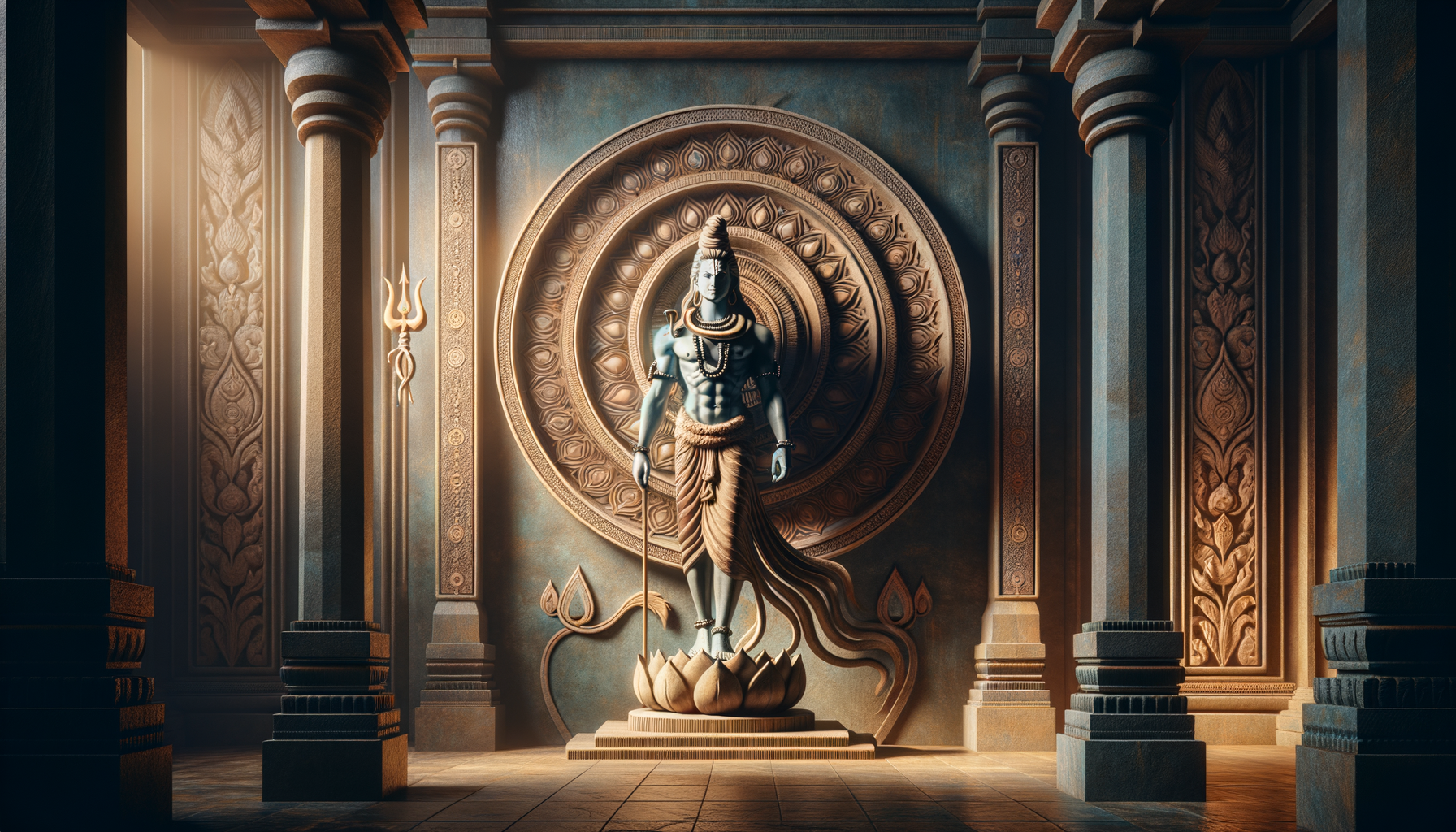
Ekapada Murthy (Ekapada Shiva) represents a distinctive and profound aspect of Lord Shiva: the one-footed bearer of cosmic balance. In this form, the deity stands upon a single leg, a visual theology that communicates Shiva’s role as the stabilizing axis of the universe. The image is concise yet encyclopedic in meaningan elegant synthesis of metaphysics and devotion that has long captivated seekers of Hindu spirituality.
Iconographically, the single supporting leg evokes the skambha, the cosmic pillar or axis mundi, signifying an unwavering center around which existence turns. This form communicates steadiness, order, and ekāgratā (one-pointed concentration), aligning Shiva’s stance with yogic ideals of inner stillness. The sculpture’s spare geometry distills complex Vedic and puranic symbolism into a singular, memorable focal point for meditation and darśan.
Historically, the murti appears in select Hindu templesespecially in Odishaand in a few ancient Shiva temples elsewhere in India. Odisha’s temple traditions are renowned for preserving rare Śaiva iconographies, and Ekapada Shiva’s presence within this heritage offers valuable insight into regional temple architecture, ritual practice, and artistic lineages of Ancient India. For students of Temple Architecture and Hindu Temples, the form serves as a gateway to understanding how theology, aesthetics, and space converge in sacred art.
Devotees and visitors frequently describe an immediate sense of grounding and clarity before Ekapada Shiva, as if the sculpture mirrors the human need for a stable center in times of movement and change. The form’s symbolic language resonates across the wider dharmic family: while each traditionHinduism, Buddhism, Jainism, and Sikhismretains distinct doctrines and practices, themes of inner steadiness, unity, and alignment with truth remain shared values. This convergence strengthens inter-tradition harmony without diluting the uniqueness of each path.
As a contemplative aid, Ekapada Murthy invites reflection on balance: how to stand firm in dharma with compassion, how to cultivate focus without rigidity, and how to uphold collective well-being while navigating personal responsibilities. Meditative engagement with this icon can deepen spiritual insight, refine devotional attention, and inspire ethical action rooted in stability and grace.
In essence, Ekapada Shiva offers a timeless lesson through a minimal, powerful form: enduring stability arises from an anchored center. Encountered in temple sanctums or studied through Hindu symbolism, this one-footed aspect of Lord Shiva continues to illuminate the path toward inner equilibrium and shared harmony within the dharmic traditions.
Inspired by this post on Hindu Pad.