

The dismissal of an attempted acquisition of Shri Ram Mandir Sansthan land in Achalpur marks an important moment in the continuing public conversation on temple protection, Hindu temple governance, and the legal safeguarding of religious endowments in Maharashtra. The matter is significant because a revenue court in Achalpur is reported to have rejected the move involving approximately 3.5 acres of land valued at nearly ₹10 crore, thereby preserving land associated with the historic Shri Ram Mandir Sansthan.
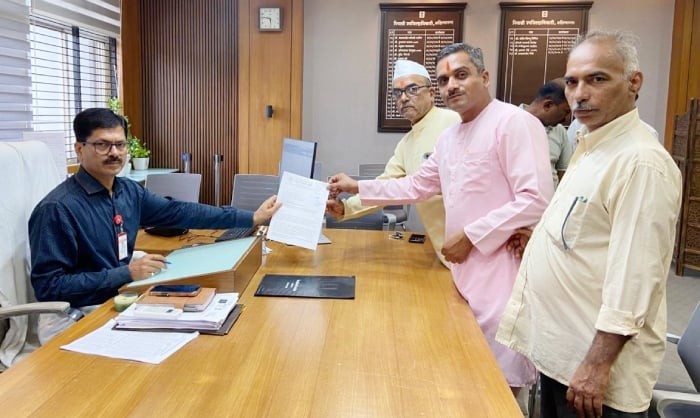
The intervention of the Maharashtra Mandir Mahasangh stands at the centre of this development. In a legal and administrative environment where temple properties can become vulnerable to disputed claims, procedural lapses, encroachments, or acquisition attempts, such an intervention demonstrates the importance of organized vigilance. The case also shows that temple land is not merely a financial asset; it is part of a religious, cultural, and community inheritance that requires careful legal stewardship.
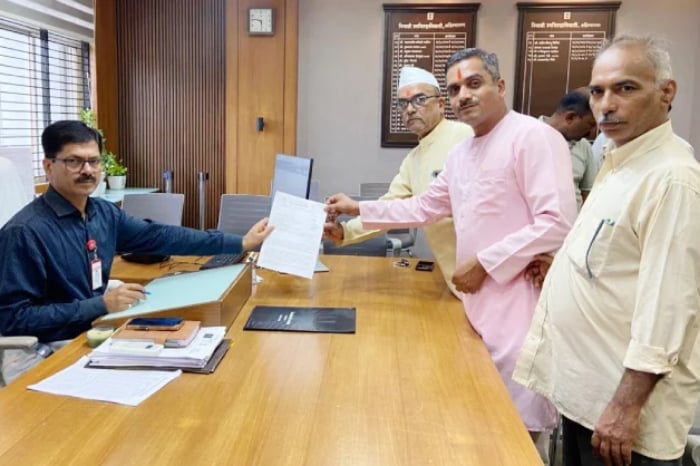
At a factual level, the case concerns 3.5 acres belonging to Shri Ram Mandir Sansthan in Achalpur. The land has been described as worth ₹10 crore, a valuation that indicates both its economic importance and the seriousness of the attempted acquisition. The revenue court’s decision to dismiss the acquisition attempt prevented the transfer or loss of this temple property and maintained the institutional control of the Sansthan over the land.

The legal significance of the ruling lies in the role of revenue courts in matters concerning land records, possession, ownership claims, and administrative disputes. In India, many temple properties are not protected only by religious sentiment; they must also be defended through documentation, revenue records, trust records, and procedural compliance. A temple institution that lacks active legal attention can face serious risk, even where the land has long been understood by the local community as belonging to a religious body.

This is why the Achalpur decision carries broader relevance beyond a single land parcel. It underlines the practical reality that heritage protection often depends on ordinary legal mechanisms. Courts, revenue officers, documentary evidence, and timely objections become the instruments through which sacred spaces and their supporting assets are preserved. The case is therefore not only about one Shri Ram Mandir property; it is also about the everyday legal architecture that sustains Hindu temples and other dharmic institutions.
Temple land has historically served multiple functions. It can support rituals, festivals, maintenance, community gatherings, educational activities, charity, and the long-term financial stability of the institution. When such land is lost, the damage is not limited to real estate value. The loss may weaken the temple’s ability to serve devotees, preserve local traditions, maintain its structures, and transmit cultural memory across generations.
For many devotees, the preservation of temple property is emotionally connected to continuity. A temple is often experienced as a place where family histories, festivals, vows, memories, and community identity converge. In that sense, the protection of Shri Ram Mandir Sansthan’s land in Achalpur can be read as a defence of both tangible and intangible heritage. The court order preserved not only acreage and valuation, but also the future possibilities attached to that land.
The Maharashtra Mandir Mahasangh’s role also highlights a larger institutional need: temple bodies require legal literacy. Devotion alone cannot protect a trust from administrative pressure or disputed proceedings. Trustees, local devotees, temple committees, and supporting organizations must understand land records, mutation entries, notices, objections, limitation periods, revenue procedures, and the importance of maintaining clear documentation.

From a governance perspective, the case offers a practical lesson. Temples and religious trusts should maintain updated property registers, certified land records, maps, title documents, court papers, and historical records wherever available. They should also periodically audit their properties, identify vulnerable parcels, and ensure that any government or private claim is answered in time. The Achalpur outcome suggests that timely intervention can make a decisive difference.

The phrase “temple protection” is sometimes treated as a purely emotional slogan, but this case shows its technical dimension. Protection requires legal strategy, procedural awareness, institutional coordination, and credible representation before the proper authority. It also requires the ability to distinguish between lawful public administration and actions that may unjustly diminish the assets of a religious institution.
The valuation of ₹10 crore further raises the stakes. High-value temple properties can attract competing interests, especially where urban expansion, commercial development, or administrative acquisition pressures exist. In such contexts, religious endowments must be handled with transparency and care. Any attempt to alter control over temple land must be examined through the lens of legality, trust obligations, public interest, and the rights of the religious institution.
Achalpur’s Shri Ram Mandir Sansthan belongs to a wider civilizational pattern in which mandirs are not isolated ritual sites but community institutions. Across Maharashtra and India, temples have historically acted as centres of worship, cultural expression, social cohesion, and local identity. Their properties are often part of a long chain of donations, endowments, and community contributions made with the intention of sustaining dharmic life.
The protection of such property should therefore be viewed in a spirit of dharmic unity. Hindu, Buddhist, Jain, and Sikh traditions have all sustained institutions that depend on collective trust, sacred memory, and disciplined stewardship. While the present case concerns a Hindu temple, the principle is broader: religious and cultural institutions require fair legal protection so that communities can preserve their traditions without fear of arbitrary loss.
The revenue court’s dismissal of the attempted acquisition also reinforces confidence in lawful remedies. Instead of allowing a dispute to escalate only through public agitation, the matter appears to have been addressed within the legal framework. That distinction is important. A strong civil society response becomes most effective when it is combined with documentary preparation, legal discipline, and respect for institutional process.
For temple administrators elsewhere, the Achalpur case should serve as a reminder to review their own vulnerabilities. Are all lands properly recorded? Are trust documents updated? Are encroachments being tracked? Are notices from revenue authorities being answered? Are local devotees aware of the legal status of temple assets? These questions are not bureaucratic distractions; they are part of responsible temple governance.
The case also has implications for public policy. Maharashtra has a rich network of temples, mathas, pilgrimage centres, and local religious institutions. A transparent framework for protecting their lands would reduce disputes and prevent avoidable litigation. Clear records, accessible grievance mechanisms, and accountability in revenue administration would benefit both religious institutions and the state.
In conclusion, the Achalpur decision represents a meaningful legal victory for the Maharashtra Mandir Mahasangh and Shri Ram Mandir Sansthan. By dismissing the attempted acquisition of 3.5 acres valued at ₹10 crore, the revenue court helped preserve a significant temple asset. More importantly, the episode demonstrates that the defence of Hindu temples and dharmic heritage requires a combination of devotion, documentation, legal awareness, and organized community responsibility.
Inspired by this post on Hindu Jagruti Samiti.









Leave a Reply
You must be logged in to post a comment.