
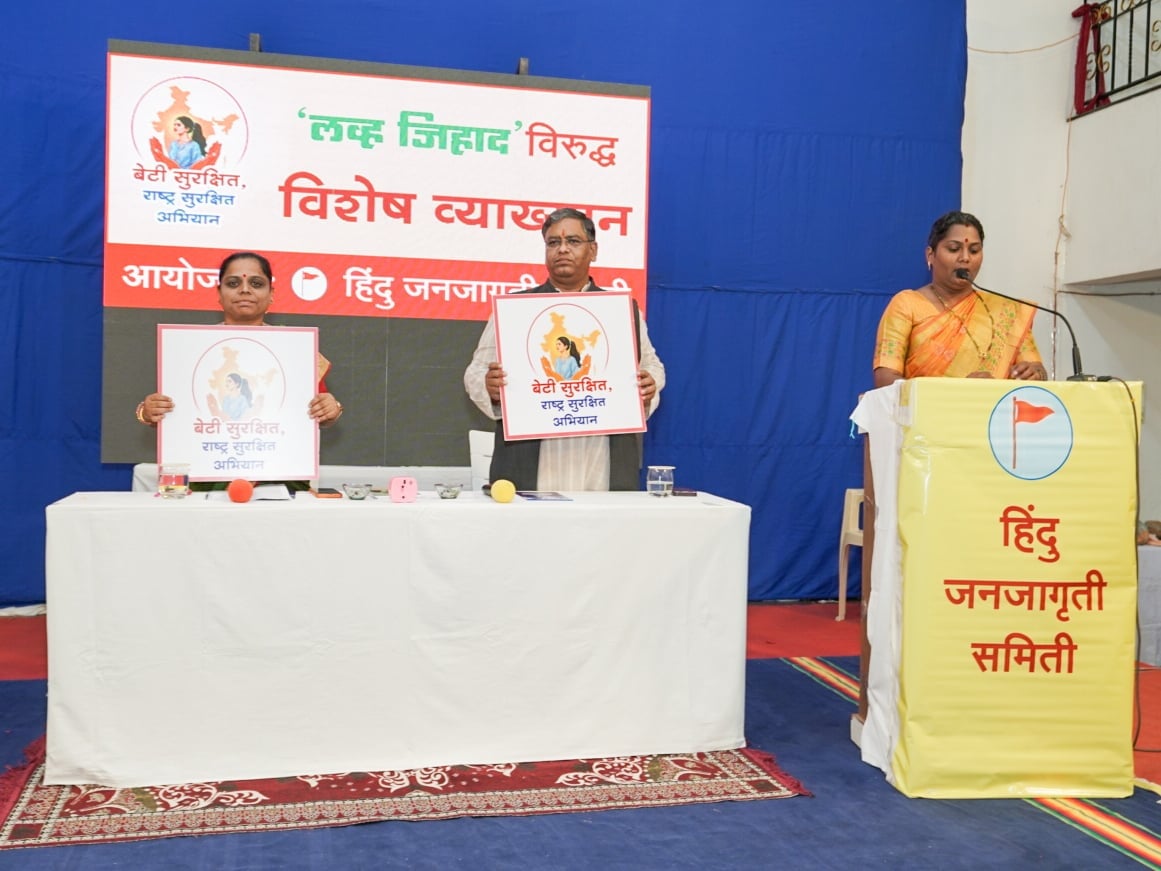
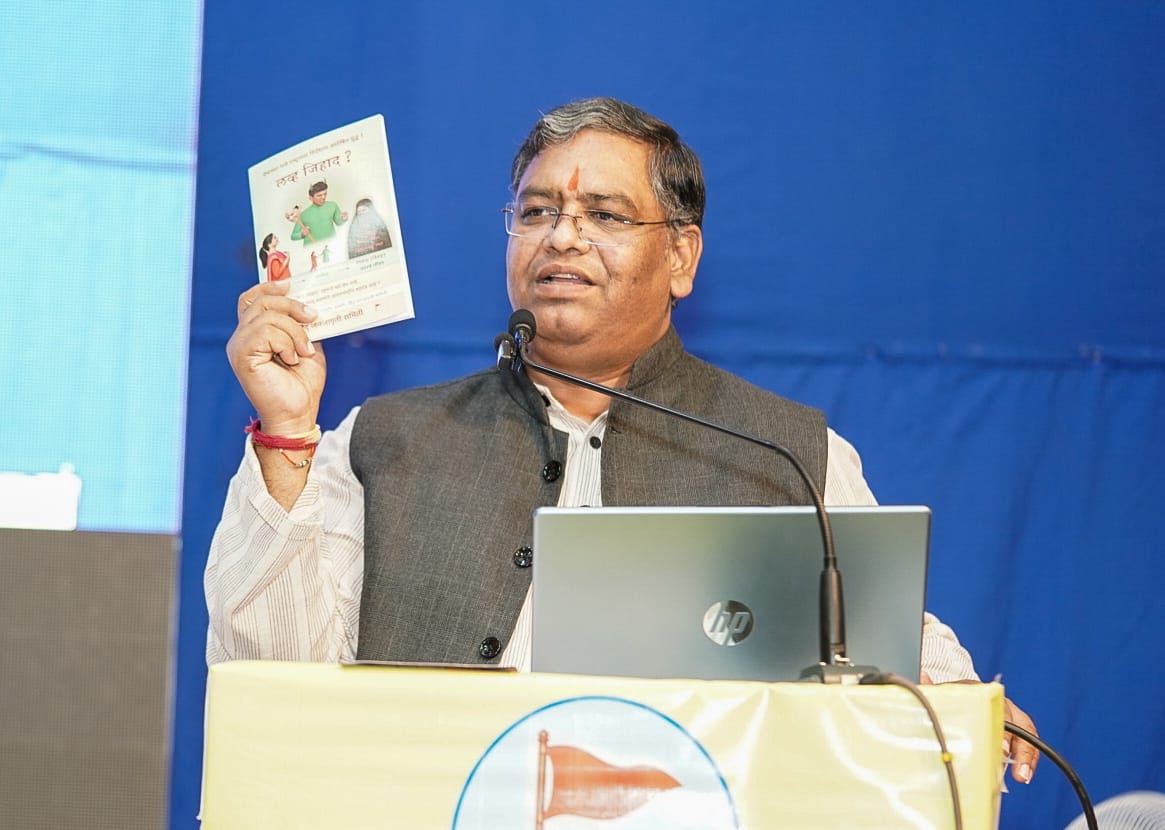
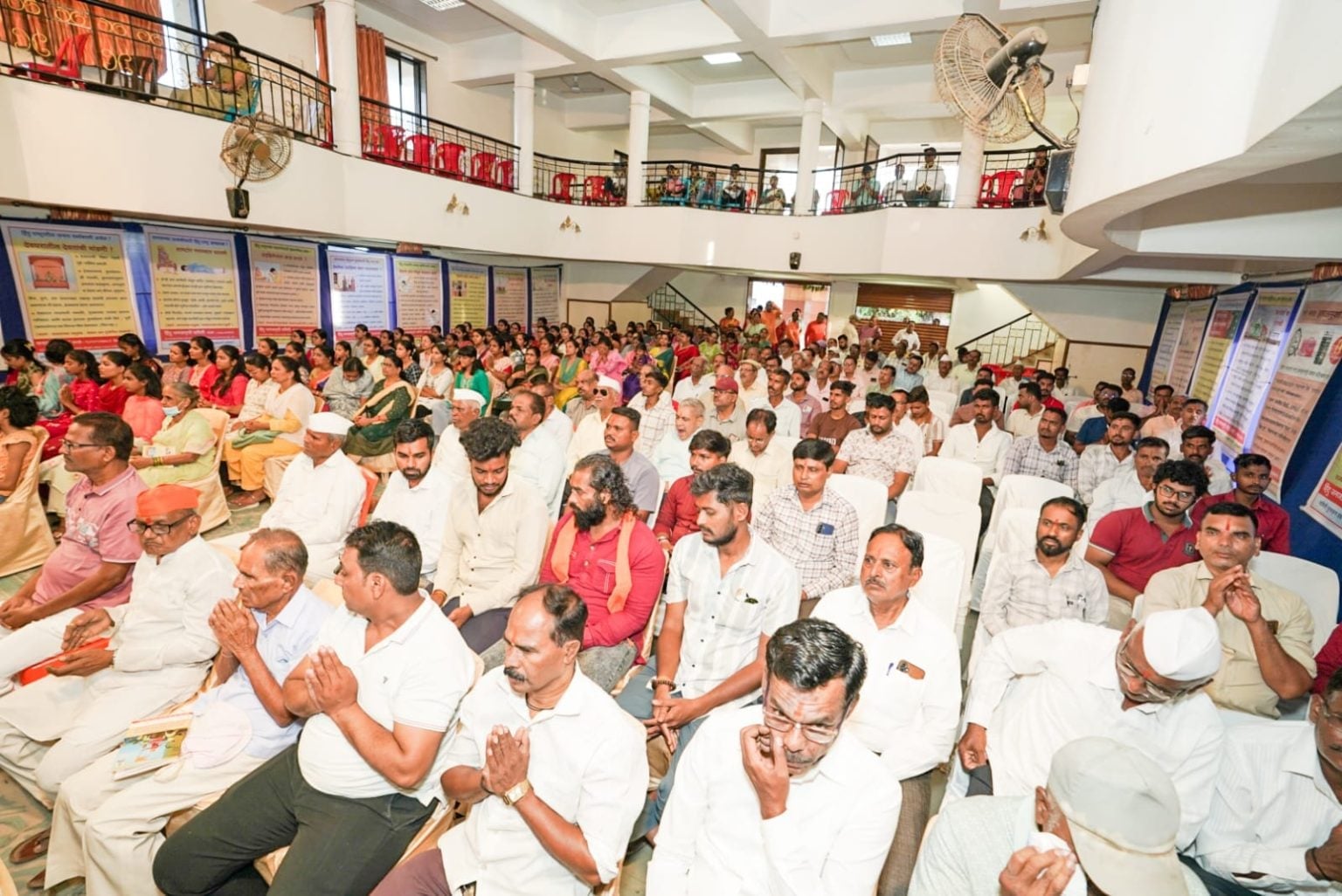
More than 700 members of the Hindu community gathered in Satara for a special symposium organized around social awareness, women’s safety, and cultural self-confidence. The event, associated with the Hindu Janajagruti Samiti (HJS), marked the launch of the campaign titled ‘Beti Surakshit, toh Rashtra Surakshit!’, a slogan that connects the safety of daughters with the moral and social security of the nation.
The symposium was also notable for its discussion of what the organizers described as “Corporate Jihad.” In public discourse, this phrase is used by some Hindu advocacy groups to refer to alleged patterns of ideological influence, manipulation, coercion, or social pressure within professional and institutional spaces. Because such claims can have serious social consequences, an academic and factual approach requires that they be examined through evidence, lawful process, institutional accountability, and case-specific inquiry rather than through broad assumptions about any religious community.

The central theme of the gathering was not merely protest, but vigilance. The launch of ‘Beti Surakshit, toh Rashtra Surakshit!’ placed women’s safety at the heart of public responsibility. In practical terms, this theme points toward legal awareness, family communication, workplace ethics, digital safety, and community support systems that help young women identify coercion, harassment, exploitation, grooming, blackmail, or intimidation before such problems escalate.
In contemporary India, concerns about women’s safety increasingly extend beyond streets, campuses, and homes into digital platforms, offices, training environments, and private-sector networks. Professional spaces can empower individuals through employment and economic independence, but they can also create vulnerabilities when power imbalances, secrecy, emotional pressure, or institutional negligence are left unchecked. A serious conversation on safety must therefore include corporate policies, grievance redressal mechanisms, POSH Act 2013 compliance, background verification practices, counseling access, and protections against retaliation.
The Satara symposium reflected a wider social anxiety about how young people navigate modern institutions while remaining rooted in family, dharma, and cultural identity. For many families, the issue is not opposition to modern education, employment, or inter-community interaction. The deeper concern is whether young women and men are being equipped with the discernment needed to distinguish friendship from manipulation, romance from coercion, and free choice from pressure shaped by deception or dependency.

From a Dharmic perspective, safety is not only a legal category; it is also a matter of dignity, self-mastery, and social responsibility. Hindu, Buddhist, Jain, and Sikh traditions differ in theology and practice, yet they share a civilizational emphasis on restraint, truthfulness, compassion, responsibility, and respect for human dignity. Any campaign framed around protection should therefore avoid hatred and collective suspicion, while still insisting that exploitation, deceit, coercion, or targeted abuse must be confronted firmly through lawful and ethical means.

The use of emotionally charged terms in public life requires careful handling. Expressions such as “Corporate Jihad” may resonate with attendees who believe they are naming a hidden social problem, but responsible discourse must separate documented incidents from generalized claims. A community that seeks justice must also preserve fairness. That means listening to victims, protecting whistleblowers, encouraging reporting, demanding institutional transparency, and refusing to turn individual misconduct into hostility toward entire populations.

The phrase ‘Beti Surakshit, toh Rashtra Surakshit!’ carries emotional force because it treats the safety of daughters as a measure of civilizational health. A society cannot claim moral strength if women feel unsafe in educational institutions, workplaces, online spaces, or social relationships. At the same time, true safety cannot be reduced to fear. It must include confidence, education, legal literacy, financial independence, emotional resilience, and a social environment where women can speak without shame or isolation.

One of the most important dimensions of such awareness campaigns is prevention. Families and community organizations often respond only after a crisis has already occurred. A more effective model begins earlier: teaching young people how coercive relationships develop, how digital blackmail works, how workplace harassment is reported, how to document evidence, how to approach police or legal aid, and how to seek help without being blamed. This preventive approach is more constructive than panic-driven reaction.
Corporate institutions also have a role in this conversation. If the concern is about misconduct within workplaces, then the solution cannot remain only at the level of community meetings. Employers must maintain transparent codes of conduct, enforce anti-harassment policies, ensure Internal Committees function properly under the POSH Act 2013, protect employees who report abuse, and create channels where complaints are assessed impartially. A workplace that ignores coercion, harassment, stalking, or intimidation fails both law and ethics.

The Satara gathering also points to the importance of cultural confidence. When communities feel that their children are disconnected from dharma, family bonds, and civilizational memory, fear can take root quickly. The healthier response is not isolation, but education. Young people who understand Hindu values, Dharmic pluralism, the dignity of women, and the principle of self-respect are better prepared to engage the wider world without insecurity. Cultural literacy can become a form of inner strength rather than a wall of suspicion.
For Dharmic unity, the language of protection must be matched by the ethics of harmony. Hindu society has long included multiple sampradayas, philosophical schools, sects, linguistic communities, and regional traditions. Sikh, Jain, and Buddhist communities share overlapping civilizational histories with Hindu society while maintaining their own distinct identities. A responsible public movement should strengthen these bonds, protect vulnerable individuals, and resist any tendency to convert social vigilance into sectarian hostility.

The symposium’s large attendance suggests that the subject has touched a real nerve in Satara and beyond. When more than 700 people come together for a discussion on safety and awareness, it indicates that the community sees the matter as urgent. However, urgency should not weaken standards of evidence. Allegations must be handled through lawful mechanisms, victims must receive support, and public narratives must remain disciplined enough to avoid rumor, exaggeration, or social polarization.
A balanced response to the concerns raised at the event would include legal education workshops, counseling networks, women’s helplines, workplace rights training, digital safety sessions, parental guidance programs, and collaborations with credible civil-society groups. Such measures convert anxiety into capacity. They also help ensure that the campaign remains focused on protection, dignity, and justice rather than becoming dependent on slogans alone.
The broader lesson from the Satara symposium is that community awareness must mature into community competence. Protecting daughters is not accomplished only by warning them of danger; it is accomplished by giving them knowledge, confidence, support, and access to institutions that work. Protecting society is not accomplished by suspicion alone; it is accomplished by strengthening families, reforming workplaces, respecting due process, and upholding dharma through disciplined action.
Viewed in this way, the event can be understood as part of a larger debate about Hindu advocacy, women’s safety, corporate accountability, and cultural continuity in modern India. Its most constructive potential lies in channeling concern into lawful awareness, ethical public conduct, and Dharmic unity. When vigilance is joined with fairness, and cultural confidence is joined with compassion, social protection becomes more than a reaction; it becomes a principled form of collective responsibility.
Inspired by this post on Hindu Jagruti Samiti.











Leave a Reply
You must be logged in to post a comment.