Hare Krishna Hare Krishna Krishna Krishna Hare Hare Hare Rama Hare Rama Rama Rama Hare Hare.
Sri Radha Kund, often described as “liquid love,” is revered within Hindu spirituality as one of the most sanctified waters associated with Sri Krishna and Srimati Radha in the Bhakti Tradition. Situated in the sacred landscape of Vrindavan, this tirtha symbolizes premadivine loveembodied in water, reflecting the Hindu way of life where devotion, ethics, and community converge.
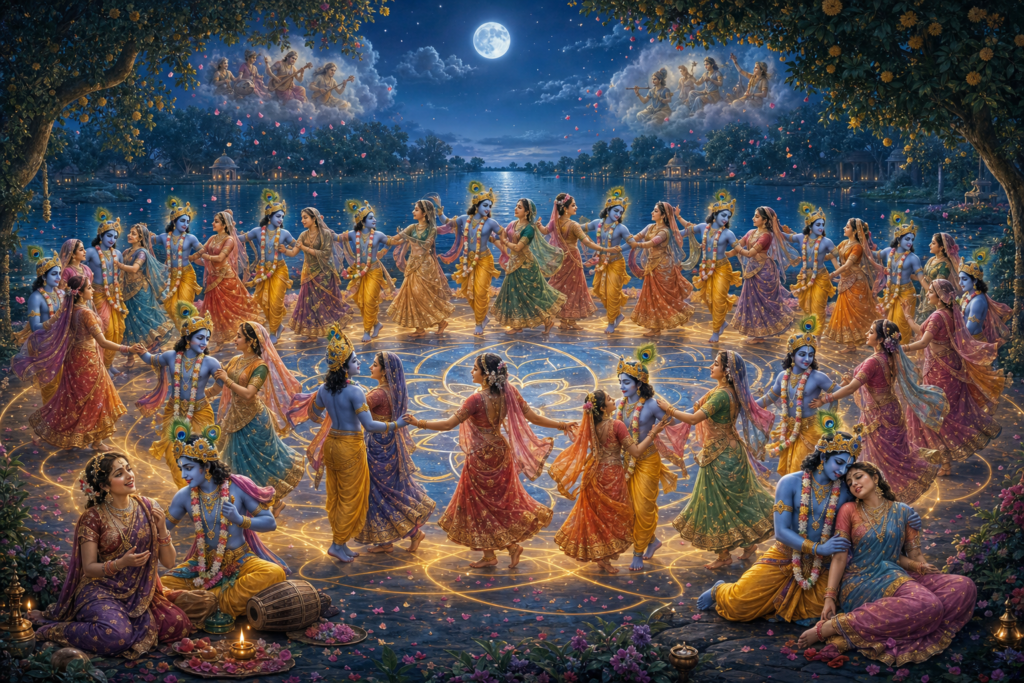
Tradition records that Sri Chaitanya Mahaprabhu identified Radha Kund as the holiest of holy places for cultivating prema-bhakti, affirming its centrality in Gaudiya Vaishnavism. Puranic and Vaishnava narratives explain its origin through the lila in which Radha and her companions manifest Radha Kund after Krishna subdues Aristasura, while Krishna manifests Syama Kundtogether forming a sacred geography that encodes timeless theological insights on purity, humility, and love.
Hindu pilgrimage practices at Sri Radha Kund include parikrama (circumambulation), quiet japa, and respectful darshan at sunrise and sunset. On Bahulastami, many undertake ritual bathing (snana), seeking spiritual renewal aligned with the principles of ahimsa, seva, and inner purification. The maha-mantraHare Krishna Hare Krishna Krishna Krishna Hare Hare Hare Rama Hare Rama Rama Rama Hare Hareis often softly recited, cultivating one-pointed devotion and mindful presence.
Pilgrims frequently describe a distinctive stillness around the kunds: the lucid water, gentle temple bells, and subdued kirtan together foster a contemplative atmosphere conducive to dhyana. This environment supports reflective practice that balances emotion and insight, a hallmark of mature bhakti where heartfelt devotion is grounded in disciplined sadhana.
The values expressed at Sri Radha Kund resonate across the wider dharmic family. Principles such as karuna (compassion), ahimsa (non-violence), and seva (selfless service) align naturally with Buddhist compassion practices, Jain vows of non-harm, and Sikh seva. Such convergence affirms a shared civilizational ethosunity in spiritual diversitywhere distinct paths reinforce common ethical commitments.
Water’s sanctity is a unifying motif in Dharmic Traditions: as a tirtha, Radha Kund functions as a symbolic “crossing place” from the mundane to the sacred. Comparable reverence for sacred waters and purification rites can be observed in Buddhist offerings, Jain practices of pavitrata, and Sikh sarovars such as the Amrit Sarovareach articulating purification, remembrance, and renewal.
Visitor etiquette reflects the site’s spiritual gravity. Modest attire, soft speech, and mindful movement support a serene atmosphere for residents and pilgrims alike. Ritual purity of the kunds is safeguarded by avoiding soaps, detergents, and food offerings directly into the water. Photography is undertaken with discretion, and circumambulation is performed respectfully, typically clockwise, honoring local tradition.
Heritage stewardship is integral to devotion. Preserving the kunds demands environmental responsibilityrefusing single-use plastics, participating in community cleanliness seva, and supporting conservation efforts. Such actions translate spiritual insight into tangible care for sacred spaces, ensuring that future generations can receive the same contemplative benefits.
Sri Radha Kund stands as a living confluence of devotion, ethics, and heritagean enduring testament to the transformative power of prema in the Hindu way of life. By honoring shared dharmic values and practicing mindful pilgrimage, visitors deepen their relationship with Sri Krishna while contributing to interfaith harmony within the broader Dharmic Traditions.
Inspired by this post on Dandavats.