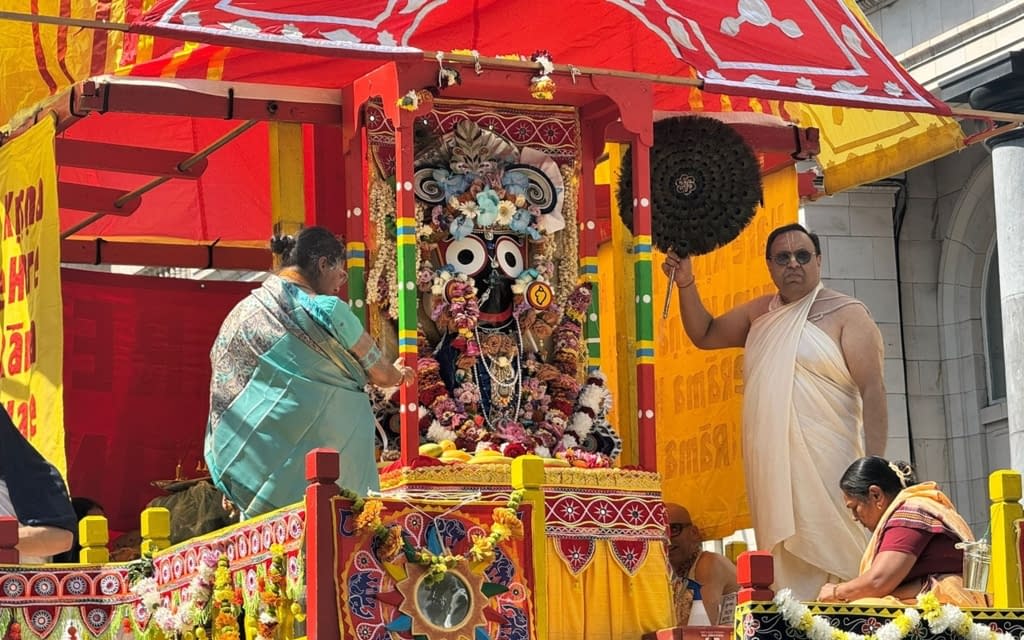
Bury Place stands at the heart of a living chapter in London’s spiritual history. Near Soho Street, ISKCON London approaches a meaningful milestone that resonates with the city’s diverse communities and its evolving cultural heritage. The site’s story affirms how sacred spaces can nurture unity, resilience, and shared values across generations.
Dayal Mora das, Temple President of ISKCON London, underscores that the community’s journey reflects an unfolding legacy rather than a single moment. The emphasis remains on responsible stewardship of heritage and the cultivation of inclusive participation, guided by the enduring spirit of seva and the collective purpose of a yajna that is both spiritual and civic in character.
In 1969, Srila Prabhupada established ISKCON London and installed Sri Sri Radha-Londonisvara at 7 Bury Place, initiating a vibrant era of Gaudiya Vaishnava bhakti in the city. From the outset, the temple functioned as a welcoming Hindu temple in London—an open door for seekers, residents, and visitors drawn to kirtan, study, and community life rooted in timeless dharmic values.
While firmly grounded in the bhakti tradition, the Bury Place legacy also highlights a broad dharmic kinship. The ethos of the space encourages unity in spiritual diversity and interfaith harmony among Hindu, Buddhist, Jain, and Sikh communities, affirming shared principles such as compassion, self-discipline, and respect for multiple paths to truth. This inclusive orientation reflects London’s multicultural fabric and the interconnectedness of South Asian spiritual traditions.
Seva continues to animate the community’s daily rhythm—through sacred music and study, prasadam distribution, cultural heritage education, and reflective dialogue. Understood as selfless service, seva enriches the collective yajna by strengthening social bonds, supporting well-being, and preserving historical memory. These practices help sustain a trusted London landmark of spiritual hospitality and cultural preservation.
Visitors frequently describe a palpable sense of continuity when stepping from the bustle of Soho Street into the serenity associated with Sri Sri Radha-Londonisvara. Elders in the diaspora recall the formative years with gratitude, while younger generations experience the space as a bridge linking identity, belonging, and purpose. Such lived experiences offer a nuanced perspective: heritage thrives when communities participate with care, humility, and openness.
Looking ahead, the Bury Place narrative emphasizes careful heritage stewardship, inclusive community engagement, and a renewed commitment to dharmic unity. By aligning cultural preservation with compassionate outreach, the journey honors Srila Prabhupada’s vision and serves London’s wider public. In doing so, the story of Bury Place remains a testament to how sacred history can inspire pluralism, learning, and fellowship across the dharmic family.
Inspired by this post on Dandavats.