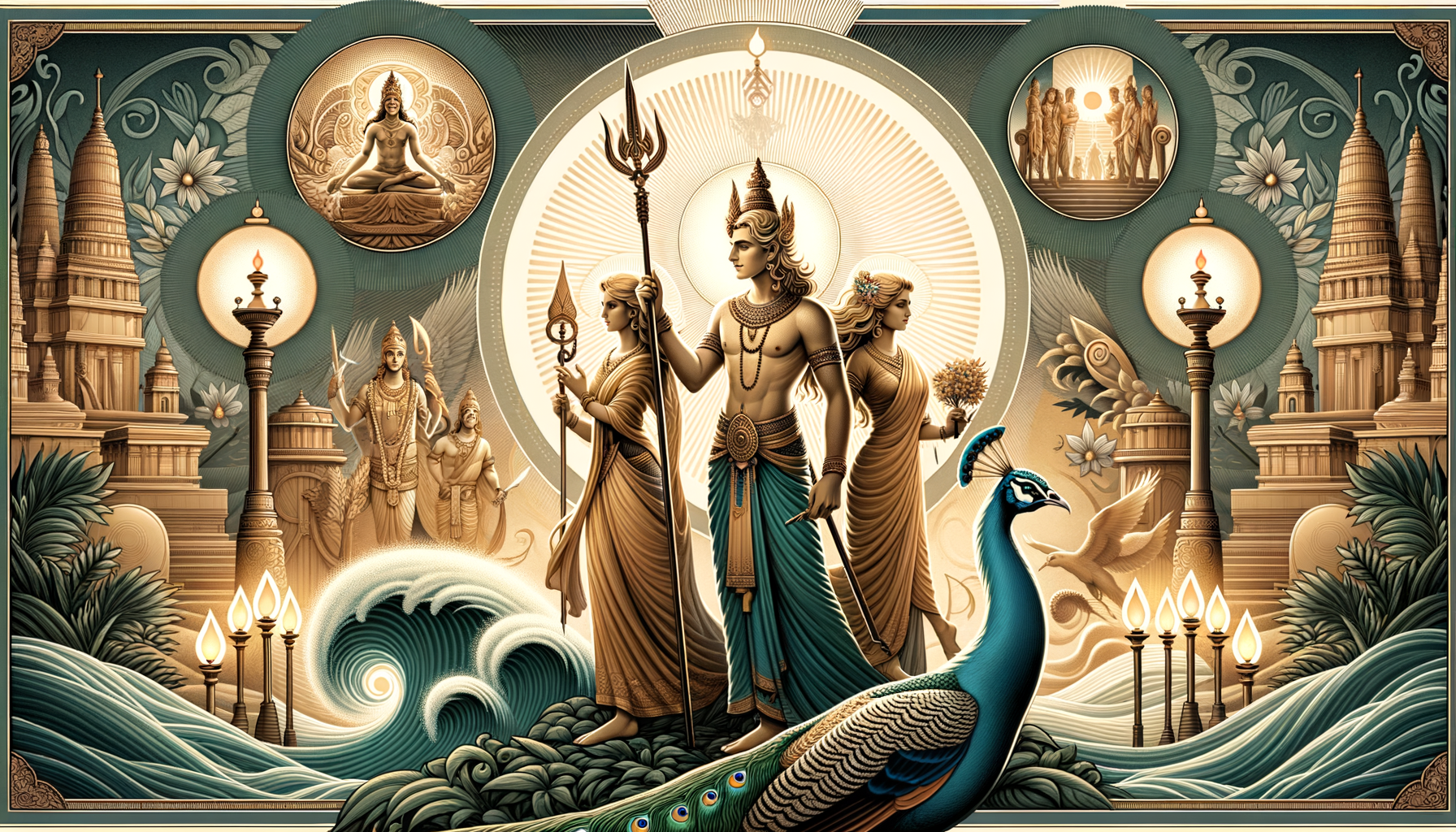
Public memory often ends Lord Muruga’s narrative at the dramatic defeat of the asura Surapadman, with only a passing recollection of the sacred marriages to Ma Valli and Ma Devasena. Yet, the tradition preserves a far richer account of what follows: a sustained vision of compassion, instruction, pilgrimage, and inclusive devotion that continues to shape spiritual practice across South India and the broader dharmic world.
In the immediate aftermath of the war, the legend emphasizes transformation rather than annihilation. Surapadman, subdued by the vel, is transfigured: one form becomes the peacock, Lord Muruga’s vahana, and the other the rooster, a victorious emblem. This symbolism—victory tempered by grace—signals a theology in which dharma is restored not simply through force, but through the conversion of hostility into service. The peacock’s vigilant stance and the rooster’s clarion call remain enduring reminders of awakened courage and ethical clarity.
The twin marriages to Ma Devasena and Ma Valli articulate a unifying spiritual message. The celestial union with Ma Devasena at Thirupparankundram marks Muruga’s integration with cosmic order and the devas. The folkloric union with Ma Valli at Tiruttani honors earth-rooted devotion and community intimacy. Together, these consorts signify harmony between refined ritual and heartfelt bhakti, between formal lineage and lived experience—an inclusivity that resonates with the shared dharmic values of courage, wisdom, and compassion recognized across Hinduism, Buddhism, Jainism, and Sikhism.
This post-victory legacy is embedded in the Arupadai Veedu (six sacred abodes), a canonical pilgrimage that distills Muruga’s manifold roles: Thiruchendur (the shore-temple of victory over Surapadman), Thirupparankundram (wedding to Ma Devasena), Swamimalai (instruction in the pranava, where Skanda becomes the teacher), Palani (Dandayudhapani, the renunciate sage), Tiruttani (wedding to Ma Valli), and Pazhamudircholai (the forest shrine of fulfilled grace). Each site deepens the legend, inviting seekers to contemplate valor, knowledge, restraint, joy, and compassion as an integrated path.
Beyond martial triumph, Lord Muruga emerges as Deva-Senapati who restores social and cosmic balance. Narratives describe the granting of refuge to the repentant, the calming of celestial turmoil, and the guiding of devotees through the vel’s luminous discernment. At Swamimalai, the transmission of primal knowledge underscores Skanda’s stature not only as guardian but as guru—an archetype of enlightened leadership that stewards power through wisdom.
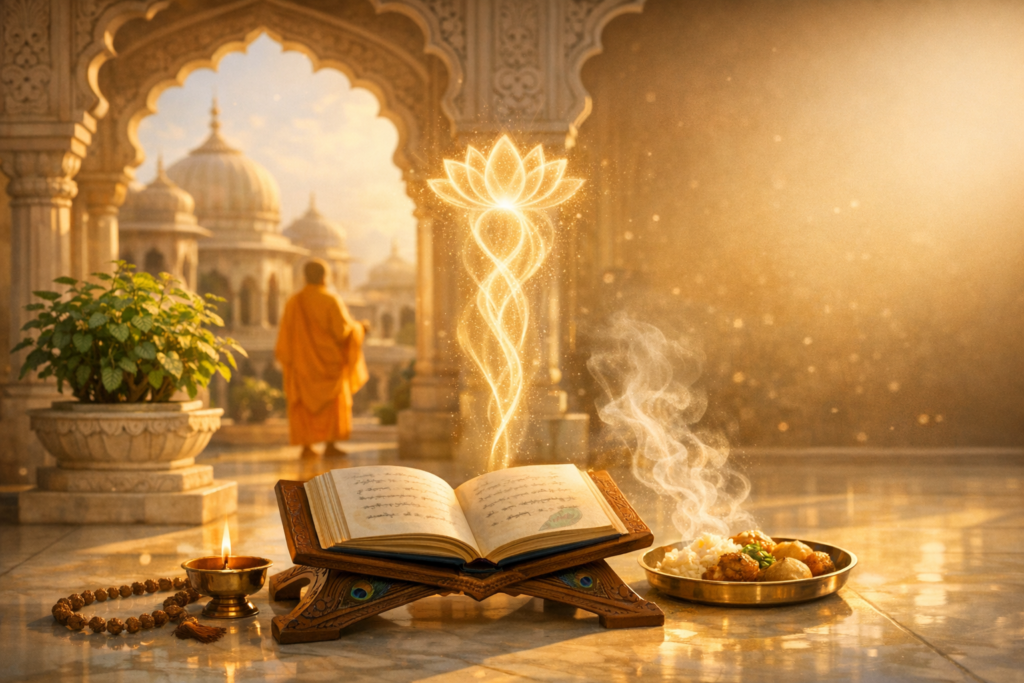
Ritual life carries this legacy forward in festival and practice. Skanda Sashti at Thiruchendur re-enacts the asura-samhara with solemn vows and communal prayer. Karthigai Deepam floods the Tamil landscape with flame, commemorating divine light and the peacock vahana’s vigilant grace. Thaipusam inspires kavadi vows and processions, while dances like Mayil Attam honor the peacock’s sanctity. The vel, peacock feather, and rooster motif appear in homes, flags, and temples as living symbols of protection, discernment, and renewal.
Devotees often recount vivid, shared experiences that make the legend immediate: the ocean breeze and drumbeats at Thiruchendur at dawn; the steep, humbling steps of Palani undertaken in silence; the glow of lamps during Karthigai Deepam; and the collective strength felt as kavadi bearers move in rhythmic resolve. These moments create a felt sense of belonging—across languages, castes, and regions—binding families and communities through remembrance and vow.
Read in an ecumenical light, Muruga’s post-war story exemplifies values cherished across dharmic traditions: non-cruelty in victory, steadfast service, disciplined knowledge, and compassionate governance. Such virtues cultivate unity-in-diversity, encouraging mutual respect among varied paths of practice while celebrating the freedom of each seeker’s chosen way.
Thus, what follows Surapadman’s defeat is not an epilogue, but a program for ethical and spiritual life. Lord Muruga’s compassion, the harmonizing presence of Ma Valli and Ma Devasena, the Arupadai Veedu, and the cycle of festivals together invite devotees and learners to transform conflict into clarity, power into protection, and personal devotion into communal harmony.
Inspired by this post on Hindu Pad.