Adhi Maha Sastha stands as a distinctive manifestation of Dharma Sastha in South Indian temple worship, revered for harmonizing benevolent governance with compassionate guidance. The etymology itself conveys his theological stature: “Adhi” signifies primordial or supreme, “Maha” denotes greatness, and “Sastha” conveys ruler or teacher. In temples across Kerala and Tamil Nadu, this form is honored as a guardian of dharma whose presence unites strength, wisdom, and care within the lived fabric of Sanatana Dharma.
Within the Ayyappa tradition, Adhi Maha Sastha is recognized as a supreme guardian who protects devotees and instructs through example. Temple narratives and Puranic recollections describe this role as a synthesis of protection (kshetra-pala) and instruction (acharya), revealing a deity who embodies justice (nyaya), compassion (karuna), and disciplined power (shakti). The result is a model of righteous leadership deeply aligned with Hindu temples’ emphasis on order, welfare, and spiritual insight.
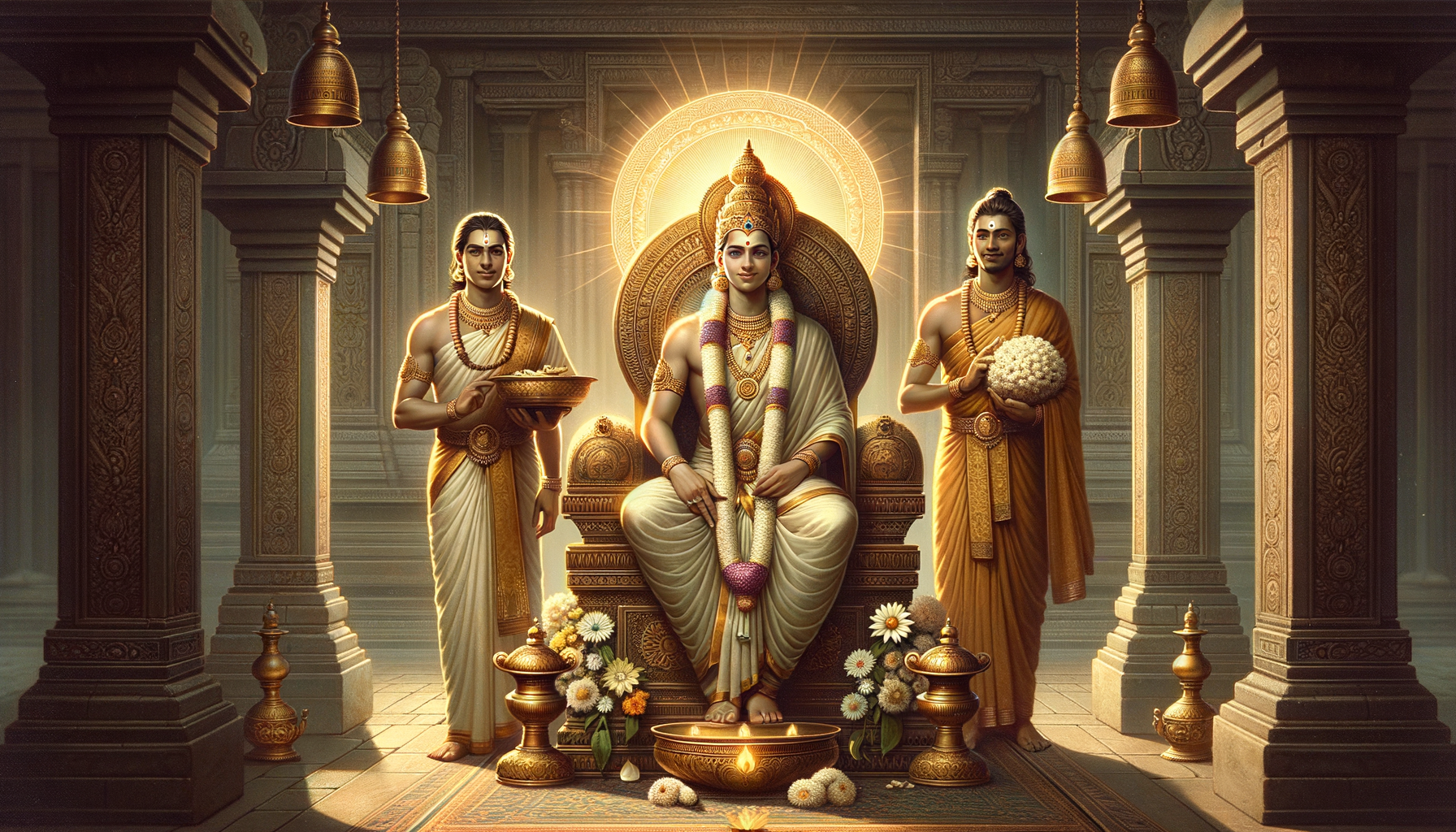
The consorts Purna and Pushkala frame the icon’s meaning and devotional appeal. Purna evokes fullness, completeness, and spiritual wholeness; Pushkala signifies abundance, auspicious expansion, and well-being. Together they symbolize harmony in the grihastha (householder) ideal, reminding devotees that spiritual realization flourishes alongside familial responsibility, community cohesion, and ethical prosperity.
In iconography, Adhi Maha Sastha is typically depicted seated or standing on a sacred peetha, the hands expressing blessing and protection through varada and abhaya. Purna and Pushkala appear to the left and right, reinforcing a balanced field of grace, courage, and auspiciousness. Worship practices emphasize deepa-aradhana, mantra-japa, and archana, with devotees seeking moral clarity, protection, and the steadying fullness that the consorts personify.
Scriptural and cultural memory enrich this form. References in the Puranas, including the Skanda Purana, and temple sthala-purana traditions present Sastha as a vigilant guardian of settlements, thresholds, and routesan ideal intimately connected to the rhythms of community life. Such portrayals, while regionally nuanced, consistently affirm a deity whose guardianship is inseparable from ethical teaching.
The relationship to Ayyappa worship is especially notable. Sabarimala foregrounds the celibate yogi aspect of Dharma Sastha, emphasizing tapas, restraint, and inner discipline. In contrast, many Kerala and Tamil Nadu shrines venerate the family form with Purna and Pushkala, celebrating household harmony and benevolent protection. Together these expressions reveal a continuum: dharma as both inward discipline and outward guardianship, each sustaining the other.
This vision resonates across Dharmic traditions. Values embodied by Adhi Maha Sasthacompassionate strength, ethical conduct, and servicealign with the Buddhist emphasis on wisdom and compassion, the Jain ideal of disciplined non-violence (ahiṃsa), and the Sikh commitment to seva and righteous protection. The form therefore serves as a unifying reminder that plural paths within India’s spiritual heritage converge on shared principles of human flourishing.
Devotees often describe the darshan of Adhi Maha Sastha with Purna and Pushkala as an encounter with calm authority and serene completeness. The triadic presence reassures in moments of uncertainty, inviting courage without harshness and abundance without excess. In the daily round of temple lifeprocessions, festivals, and quiet offeringsthis icon nurtures a culture of responsibility, mutual care, and reverence for truth.
For contemporary society, the image offers a practical ethic: leadership in family, community, and institutions must unite firmness with empathy, clarity with kindness. Adhi Maha Sastha with Purna and Pushkala thus remains a timeless guide for those seeking to uphold dharma in the midst of change, affirming the inclusive, many-sided wisdom of Sanatana Dharma and the sacred plurality of Hindu temples.
Inspired by this post on Hindu Blog.