In many Bengali households, Thursday is observed as Lakshmi Bar, a day dedicated to Goddess Lakshmi, the embodiment of wealth, purity, and auspiciousness. The observance is marked by simplicity, devotion, and a calm, household-centered ritual ethic that aligns prosperity with dharma. As a weekly vrata, it sustains a gentle rhythm of gratitude and care within the home while preserving a living strand of Bengali traditions.
Within this cultural context, Thursday’s Lakshmi Puja functions as a devotional practice that interweaves domestic order, ethical wealth, and communal wellbeing. The focus is less on grandeur and more on a thoughtful, repeatable rite that strengthens family bonds, nurtures inner contentment, and welcomes prosperity understood as both material sufficiency and spiritual harmony.
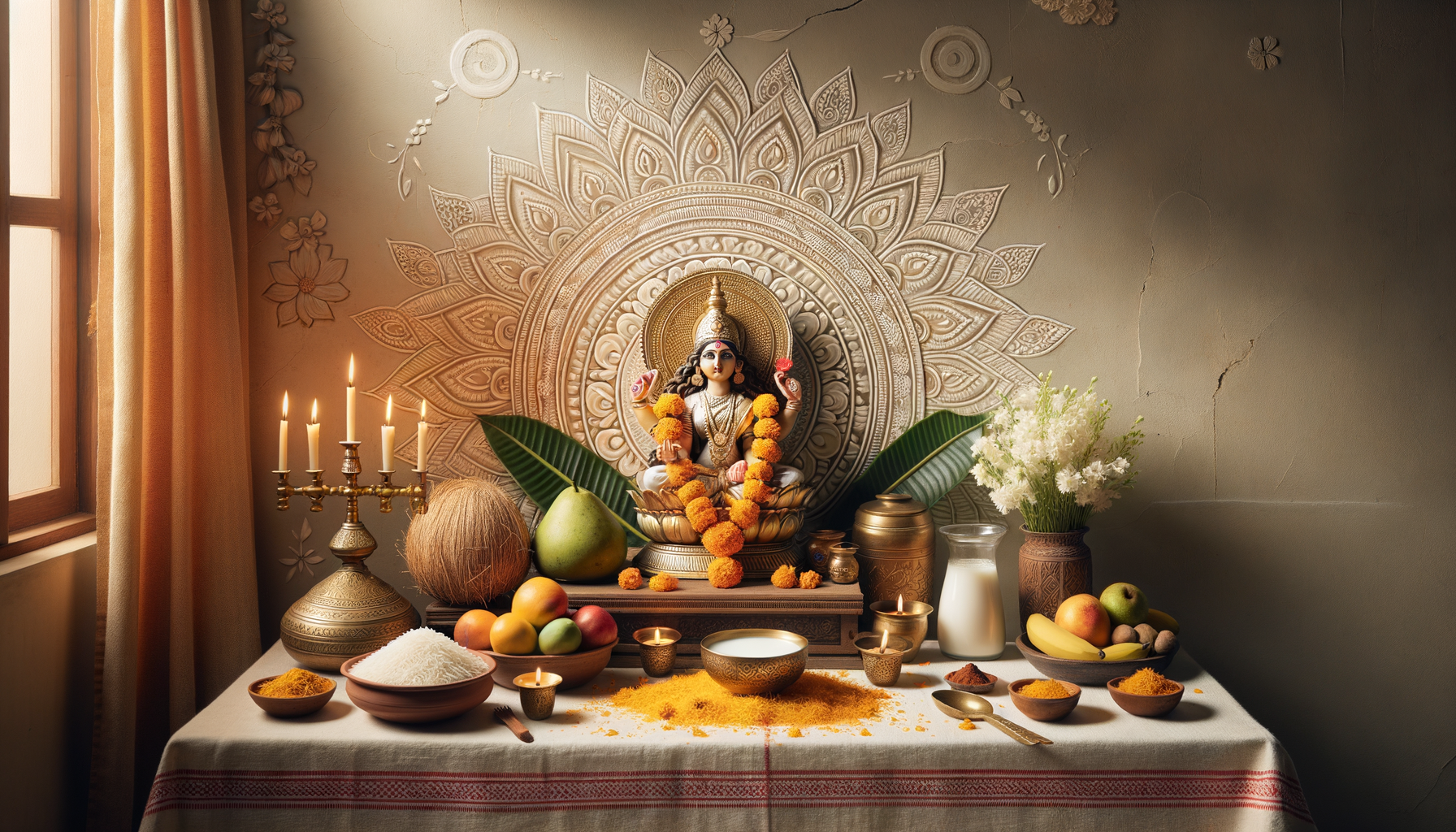
Preparation begins with cleanliness. Floors are swept and wiped, the altar area is arranged, and the kitchen is kept sattvic. Many families create a simple alpana with rice paste, and paint small footprints leading from the entrance to the shrinean artful gesture symbolizing Lakshmi’s arrival. The atmosphere is intentionally serene, allowing the mind to settle before worship.
The altar typically features an image or murti of Goddess Lakshmi, a lamp, incense, and a kalash with water topped by mango leaves and a coconut. A clean cloth is spread, grains of rice or paddy (dhan) are placed to invoke abundance, and if available, a lotus symbolizes purity. Reusable diyas, locally sourced flowers, and plastic-free offerings reflect a mindful, sustainable approach consistent with traditional values.
Offerings remain modest and heartfelt: fruits, milk-based sweets, puffed rice (muri), roasted paddy (khoi), and batasha are common, while homemade narkel naru or a simple payesh may be prepared when time permits. Turmeric, kumkum, and akshata (unbroken rice) are placed with care, affirming a sense of order and auspicious intention.
Invocation centers on clarity and sincerity. Many households recite the Lakshmi Ashtottara Sata Namavali and, where familiar, passages of the Sri Sukta. A brief period of silence follows the mantras, allowing reflective awareness of gratitude, ethical livelihood, and responsibility toward family and society. The aarti is performed with steady attention and a calm breath.
Some observe a simple Thursday vrata by adopting a sattvic menu and refraining from onion and garlic; others keep a partial fast until the puja is complete. Acts of charitysharing prasad, offering food, or extending small kindnessesare considered integral, aligning artha with dharma and translating devotion into tangible social care.
Participation across generations gives the puja its enduring warmth. Elders guide procedures; children place flowers or light the lamp under supervision; and families often recount how a grandmother’s gentle instructions, the fragrance of incense, or the hush of a quiet evening made Thursday feel distinctly auspicious. Such shared experiences embed practice within memory, strengthening cultural continuity.
The spirit of Lakshmi Bar resonates with values cherished across dharmic traditions. Hinduism’s emphasis on dharma-guided prosperity, Buddhism’s cultivation of mindfulness and compassion, Jainism’s aparigraha (non-possessiveness), and Sikhism’s seva (selfless service) all affirm ethical wealth, generosity, and community wellbeing. Observed in this inclusive light, Thursday Lakshmi Puja becomes a weekly reminder of shared principles that unify the broader dharmic family.
Concluding the worship, devotees perform aarti, offer pranam, and distribute prasad. The home is left tranquil, the lamp’s glow symbolizing inner clarity. As a recurrent practice, Lakshmi Bar nurtures devotion without excess, clarifies intention around wealth and responsibility, and guides households toward purity, prosperity, and peace.
While core elements are widely recognized, customs vary by family and locality. Households respectfully follow ancestral practice while adapting thoughtfully to contemporary constraints. Consulting elders sustains authenticity; approaching the puja with sincerity ensures that the essencereverence, simplicity, and ethical abundanceremains intact.
Inspired by this post on Hindu Blog.