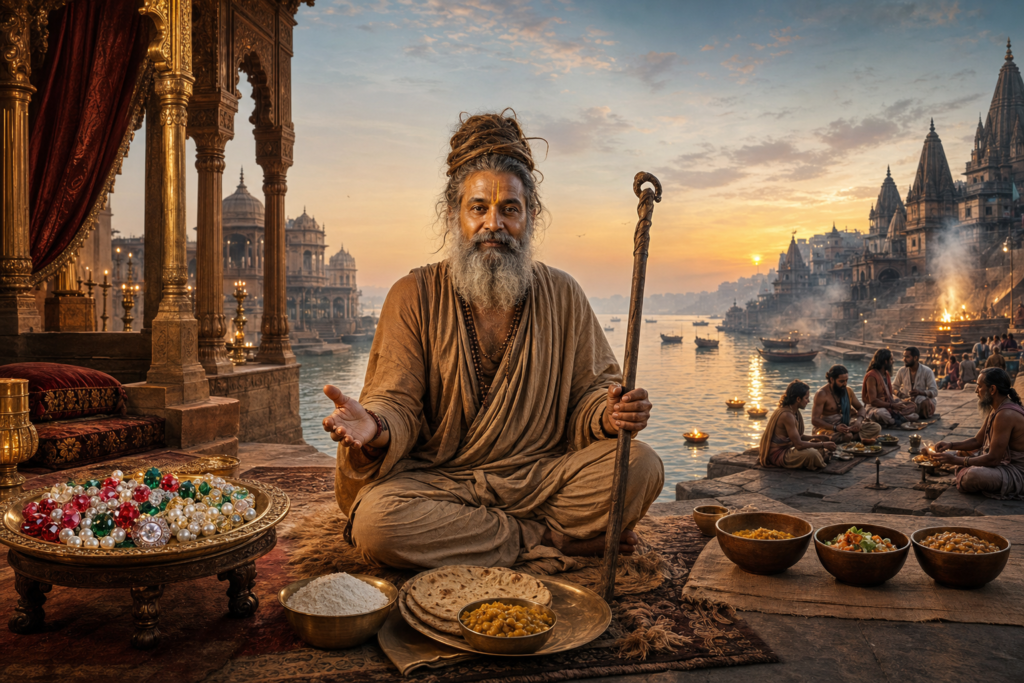
In the quiet of the evening darshan, Jananivas Prabhu would bring frankincense into Srila Prabhupada’s room, allowing the fragrance to saturate the air. The customary practice with frankincense is to open doors and windows afterward so that the smoke ushers mosquitos outside. On these occasions, however, Srila Prabhupada preferred to keep the room closed, asking that the smoke remain within the sacred space.
This choice produced a tangible effect. During darshan there were often many Western devotees present, and some would cough as their eyes watered, unaccustomed to the density of incense smoke. The scene revealed a real-time encounter between devotional practice and the body’s instinctive responses, between the aspiration for stillness and the challenge of sensory intensity.
Viewed through the lens of bhakti and the guru–shishya tradition, the decision to retain the frankincense smoke reads as a subtle instruction in presence and austerity. Incense has long served in Hindu spirituality as a purifier of atmosphere and intention, creating a boundary between the mundane and the sacred. The same symbolism resonates across dharmic traditionsHinduism, Buddhism, Jainism, and Sikhismwhere fragrance, dhupa, and sacred smoke orient attention inward, soften distractions, and signal reverence.
Many who have sat in incense-filled rooms can recognize the familiar negotiation between bodily comfort and devotional focus. The lungs tighten, the eyes sting, and yet a slow, mindful breath steadies the mind. In that moment, the disciple’s learning is not merely verbal; it is embodied. The room becomes a living commentary on discipline, humility, and shared spiritual spacequalities essential for unity across diverse practices within the broader dharmic family.
As a vignette in ISKCON’s living history, this episode underscores how Srila Prabhupada often taught through environment as much as through words. Keeping the smoke inside transformed the room into an intentional zone of contemplation, where discomfort did not eclipse devotion but refined it. The lesson is universal: sacred spaces sometimes prioritize inner purification over ease, training attention, patience, and compassion for fellow seekers.
In this way, a simple evening of frankincense becomes a quiet pedagogy in devotional presenceone that honors tradition, deepens personal practice, and affirms the shared spiritual grammar that unites Hinduism, Buddhism, Jainism, and Sikhism in their aspiration for stillness, clarity, and loving service.
Inspired by this post on Dandavats.