Srila Prabhupada’s guidance on Rādhā-kuṇḍa offers a precise and elevating standard within Hindu spirituality and the Bhakti Tradition. Framing Rādhā-kuṇḍa as nondifferent from Rādhārāṇī grounds pilgrimage behavior in humility, devotion, and sacred restraint. This orientation aligns with Sanatan Dharma and the shared ethos of dharmic traditions, where sacred geography invites reverence rather than recreation.
“There is no difference between Rādhā-kuṇḍa and Rādhārāṇī. So how you can jump over Rādhārāṇī? Rādhā-kuṇḍa and Rādhārāṇī nondifferent. How you can enjoy Rādhā-kuṇḍa by swimming? You cannot touch with your feet even Rādhā-kuṇḍa. You can take little water and keep it on the head. That is respectful to Rādhā-kuṇḍa. Of course, things are going on like that, but strictly speaking, Rādhā-kuṇḍa should be respected as Rādhārāṇī herself. That is Rādhā-kuṇḍa consciousness. Highest Rādhā-kuṇḍa consciousness.”
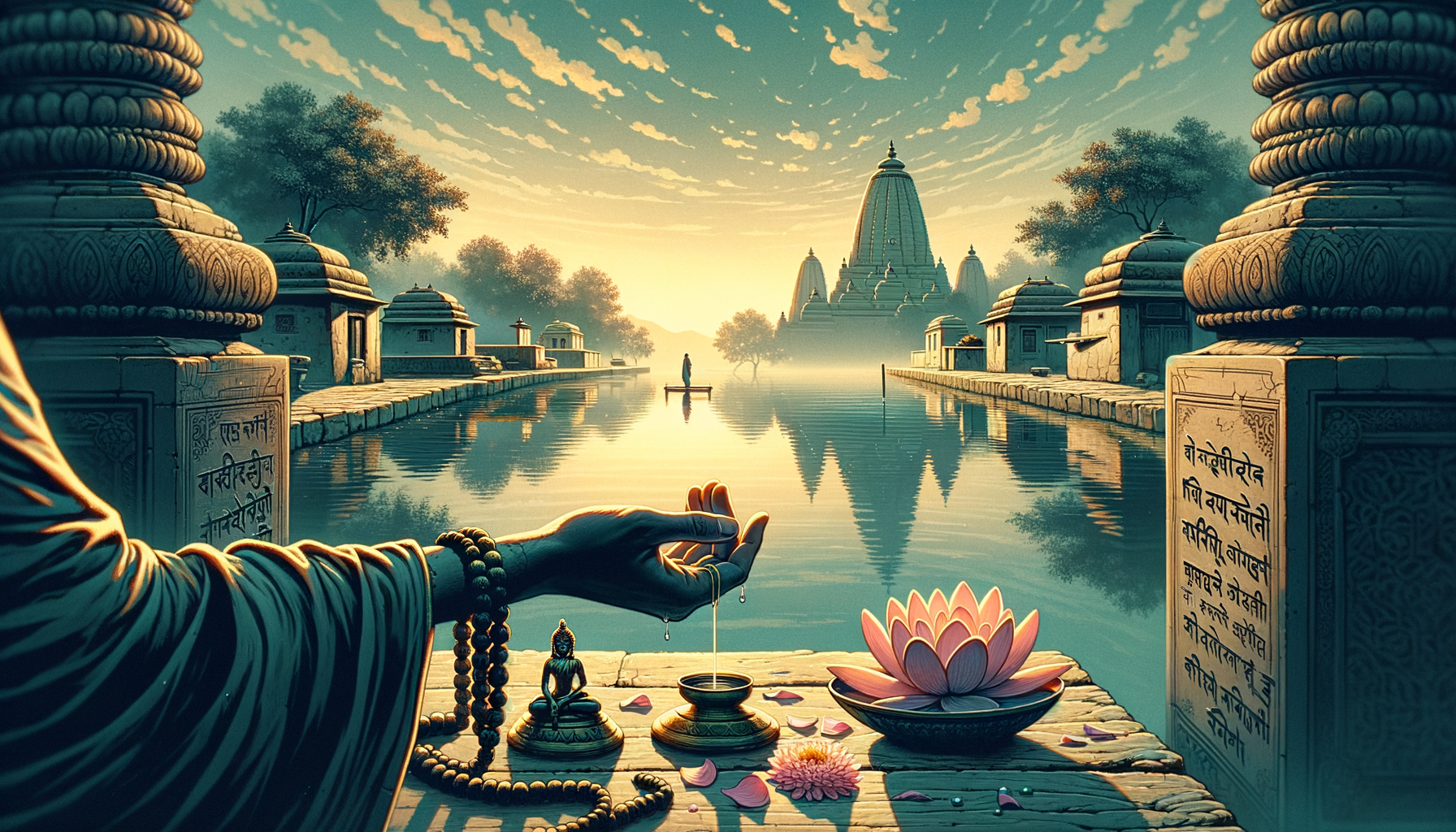
This teaching clarifies that the highest Rādhā-kuṇḍa consciousness is expressed through refined conduct: no swimming, no casual touching with the feet, and the simple, dignified act of placing a few drops of its water upon the head. Such gestures transform a visit from sightseeing into a living practice of devotion, encouraging an inner posture of gratitude and restraint that strengthens spiritual focus.
Comparable standards of reverence appear across dharmic traditions. In Buddhist contexts, stūpas and monastic sites are approached with quiet decorum; in Jain practice, tīrthas are honored with purity and discipline; in Sikh tradition, gurdwara sarovars are treated with dignity and respect. This shared culture of sacred respect underscores unity in diversity: each tradition affirms that holy places are not for entertainment but for elevating consciousness and nurturing compassion.
For those undertaking Hindu pilgrimage, practical applications are straightforward. Approach Rādhā-kuṇḍa as one would approach a revered personmindfully and with restraint. Favor silent japa over casual conversation; offer flowers or prayers rather than seeking recreational use; and, where appropriate, lightly touch water to the head as a respectful acknowledgment. Observing local customsespecially those preserved in the Gaudiya traditiondeepens connection while safeguarding the sanctity of the kuṇḍa.
Emotionally, this standard of reverence invites an introspective shift from self-centered enjoyment to relationship-centered devotion. It encourages pilgrims to consider how every gesturespeech, step, and gazecan reflect love for Rādhārāṇī. This mindful discipline fosters inner calm, strengthens devotional intent, and creates a shared atmosphere of respect that welcomes all seekers.
Ultimately, highest Rādhā-kuṇḍa consciousness is a proven pathway to cultivate humility, compassion, and unity. By honoring Rādhā-kuṇḍa as Rādhārāṇī herself, practitioners align with the timeless insight of Sanatan Dharma and affirm a broader commitment to preserving sacred geography for the benefit of all dharmic communitiestoday and for future generations.
Inspired by this post on Dandavats.