
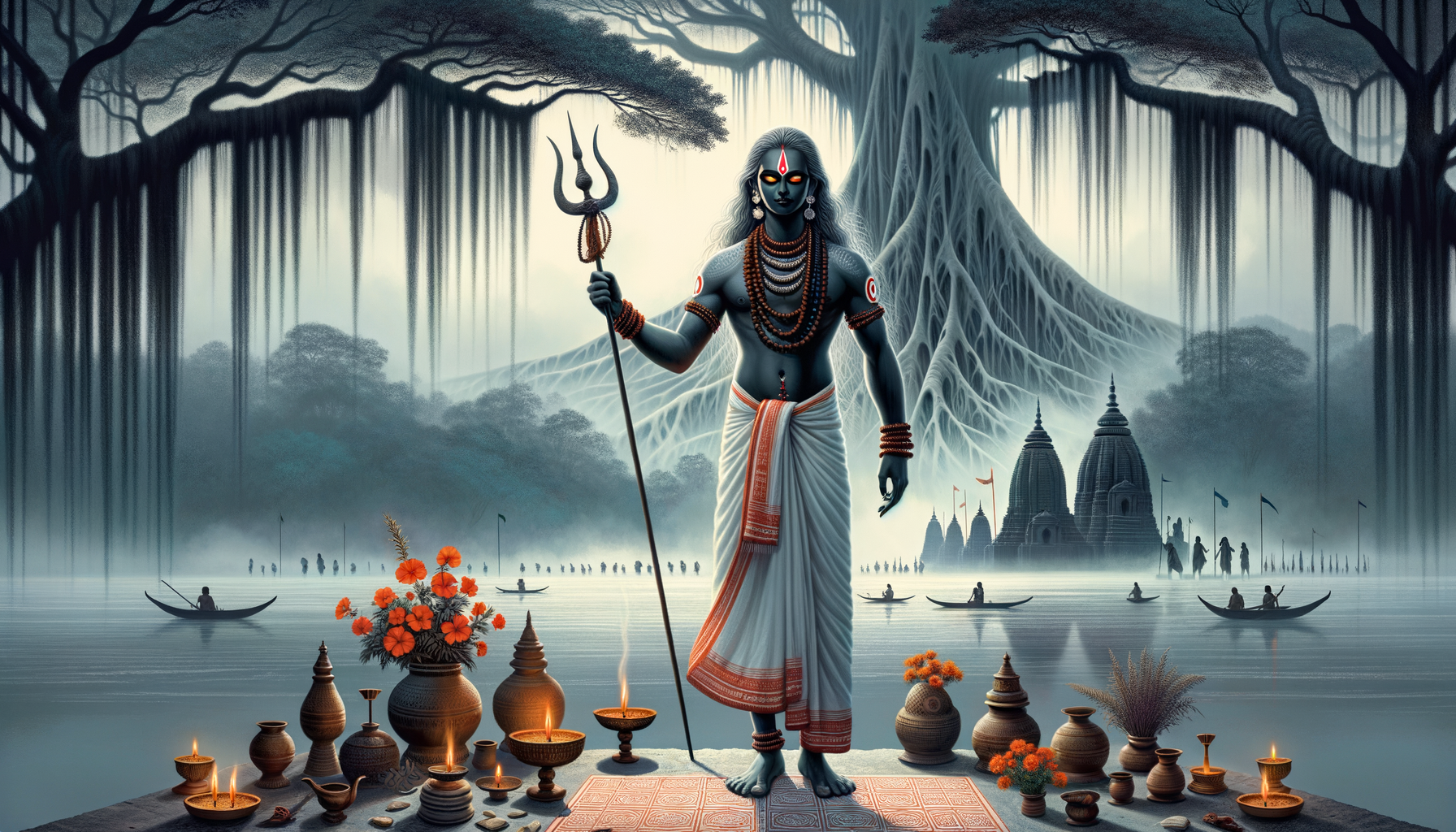
Masan Thakur emerges in North Bengal folk tradition as a fearsome yet protective offspring of Goddess Kali, a spirit-deity associated with the liminal world of the dead. Within this regional matrix of Hindu folklore, reverence for Masan Thakur acknowledges both the awe that surrounds death and the need for compassionate guardianship over its thresholds.
The very term “masan” evokes cremation grounds in eastern Indic usage, situating Masan Thakur at the boundary between the seen and the unseen. As a spirit-deity or demigod of the dead, he is honored as a mediator who upholds order where life and death intersect. In narratives preserved through oral history, his protective presence is sought to avert disorder and misfortune, reflecting a community ethic that balances reverence with responsibility.
Ritual observances for Masan Thakur align with calendrical moments traditionally linked to fierce and protective deities. In many parts of North Bengal, worship takes place on Tuesdays, Saturdays, and especially on the new moon (Amavasya), when rites for ancestors and guardians are considered particularly potent. Such timings harmonize his veneration with the broader devotional rhythm surrounding Goddess Kali.
Offerings to Masan Thakur tend to be simple and locally groundedoil lamps, incense, and modest prasadunderscoring the folk character of his cult while maintaining the gravity appropriate to a guardian of the cremation ground. Within this framework, the deity is understood to respond to sincerity and ethical conduct; neglect is believed to court misfortune, while mindful appeasement restores balance. The emphasis on restraint, humility, and remembrance channels fear into moral vigilance.
Community memory in North Bengal often frames Masan Thakur not as an agent of terror but as a vigilant protector whose awe-inspiring nature safeguards communal spaces and ancestral bonds. Elders describe practices that encourage collective responsibilitymaintaining shrines, observing auspicious days, and recounting stories that transmit values of courage and compassion. In this way, the deity’s fearsome aspect serves a social purpose: strengthening resolve, discouraging transgression, and protecting the vulnerable.
Seen through the lens of the wider dharmic familyHinduism, Buddhism, Jainism, and Sikhismsuch observances align with a shared civilizational respect for ethical living, remembrance of the departed, and service to community. While ritual forms vary, the underlying ethos resonates across traditions: fostering compassion, honoring duty, and acknowledging the sacredness of life’s transitions. This plural and inclusive spirit is central to the cultural unity of the subcontinent.
From an academic perspective, Masan Thakur exemplifies how local deities articulate profound theological themes in accessible, folk idioms. He embodies the fierce mercy of Shakti in regional practice, integrates ancestral remembrance with ritual calendrics, and preserves intangible heritage that binds people to place and to one another. As such, Masan Thakur stands not merely as a “terrifying” figure, but as an enduring guardian whose reverence deepens cultural continuity and spiritual insight.
Inspired by this post on Hindu Blog.










