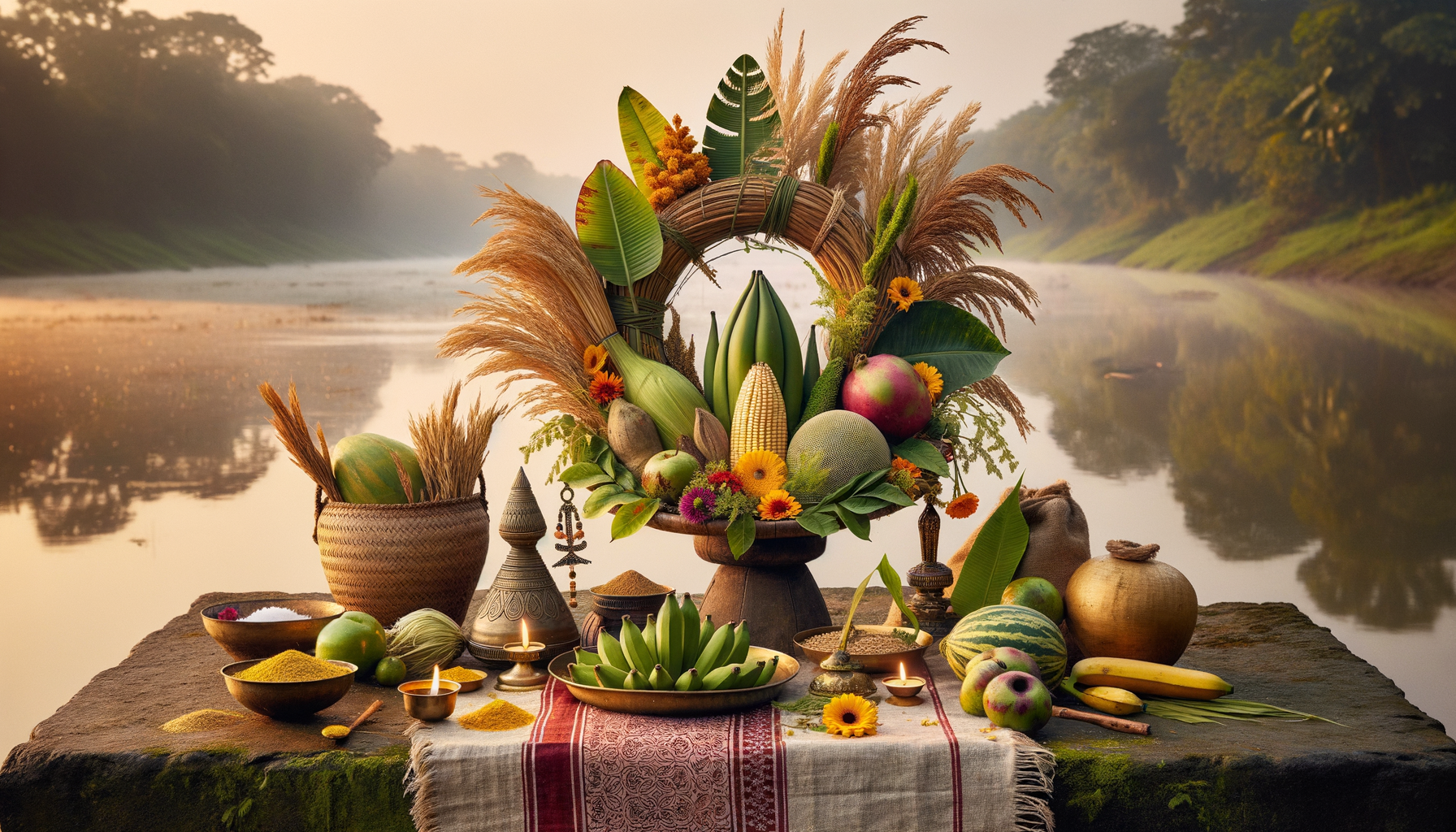
Nabapatrika and Shakambhari together illuminate a profound current within Durga Puja: the inseparable bond between devotion, agriculture, and ecological balance. Beyond the celebrated narrative of Mahishasura Mardini, the autumnal Navaratri foregrounds a sacred dialogue between nature and nurture, where Goddess Durga is venerated not only as a vanquisher of adharma but also as the lifegiving matrix of crops, rivers, and seasonal abundance.
At the heart of Durga Puja in Bengal stands the Nabapatrika rite—often affectionately recognized in living tradition as Kola Bou—a consecrated bundle of nine plants bound to a banana stem, bathed at dawn on Saptami and enthroned as a living embodiment of Durga’s nourishing presence. While lists of constituent leaves vary by region and lineage, the assembly typically includes staples such as banana, turmeric, paddy (dhan), bilva, pomegranate, ashoka, and colocasia—each signaling vital relationships among soil, seed, water, and household sustenance.
This ritual choreography—river-bath, fragrant anointing, and respectful installation—unfolds like an agrarian liturgy. In the Ganga-Brahmaputra delta, where silted floodplains and monsoon rhythms shape livelihoods, Nabapatrika functions as a thanksgiving for harvests and a plea for resilience. The nine greens map the subtle grammar of agricultural abundance: fertility of earth, purity of water, potency of herbs and grains, and the shared labor that transforms fields into food security.
Shakambhari, an auspicious form of the Divine Mother, extends this agrarian theology into a universal ethic of nourishment. Etymologically invoking śāka (greens, vegetables) and the protective bearer of sustenance, Shakambhari Devi is revered as the one who restores vitality through vegetation, fruits, and herbs when lands grow barren. Her worship—remembered in observances such as Shakambari Jayanti—celebrates the sanctity of edible biodiversity and the rituals of care that sustain communities across seasons.
Together, Nabapatrika and Shakambhari articulate a single sacred proposition: that reverence for the Sacred Feminine is inseparable from reverence for food, water, and ecological balance. Within the seasonal arc of Navaratri, these rituals converge as a dharmic pedagogy, guiding households to honor cyclical time, to cherish agro-biodiversity, and to align worship with conscious stewardship of the living earth.
For many families, the dawn procession to the river, the rustle of leaves bound to the banana stem, and the glow of incense become intergenerational memory-work—linking grandparents’ harvest stories to children’s first lessons in gratitude. Devotees often describe how the scent of turmeric and the sheen of damp paddy awaken an embodied awareness: devotion is not abstract; it is cooked, shared, and eaten together.
This ethos resonates across the broader dharmic tapestry. In Jain and Buddhist practices, an ethic of ahimsa and mindful consumption honors all living beings and the interdependence of life. Sikh langar, prepared from seasonal grains and vegetables, reinforces the dignity of shared nourishment and equality. Read together, these traditions amplify a unifying insight: spiritual life matures when gratitude for food, care for soil and water, and compassion for all beings converge.
Contemporary relevance is tangible. Eco-conscious Durga Puja practices—biodegradable offerings, plastic-free decorations, safe immersion protocols, and support for local farmers—translate the symbolism of Nabapatrika and Shakambhari into actionable sustainability. As climate variability challenges monsoon rhythms and crop yields, these rituals reaffirm a community ethic of stewardship and invite collaboration around sustainable agriculture and water conservation.
Philosophically, the rites center Prakriti and Shakti as living principles. Nabapatrika enshrines the household bond with the field, seed, and kitchen fire; Shakambhari elevates the healing intelligence of plants and the responsibility to cultivate them wisely. In this integrated vision, the altar and the acreage are not separate spheres but two faces of a singular sacred reality.
By gathering nine leaves into one sacred form and by invoking Shakambhari’s plenitude, Durga Puja weaves devotion into everyday ecology. The result is a practical spirituality—rooted in unity across dharmic traditions—that nourishes bodies, steadies communities, and keeps faith with the earth that sustains all.
Inspired by this post on Hindu Blog.