In the Jagadhatri Puja of Bengal, the murti of Goddess Jagadhatri is often depicted with an elephant head beneath her feet. This striking iconographic feature raises an essential question: why an elephant head? The answer lies in a careful reading of Sri Sri Chandi (Devi Mahatmya) and in the layered symbolism nurtured by Bengal’s Shakta traditions.
According to the Devi Mahatmya, during the decisive battle with Mahishasura, the asura repeatedly assumed different forms through maya (illusion), including that of an elephant. Durga subdued each transformation with unwavering clarity and strengthsevering the elephant form’s trunk and ultimately overcoming the asura’s shifting guises. The elephant head placed beneath Jagadhatri’s feet recalls this scriptural moment: the Goddess stands serene above illusion, anchoring order over chaos.
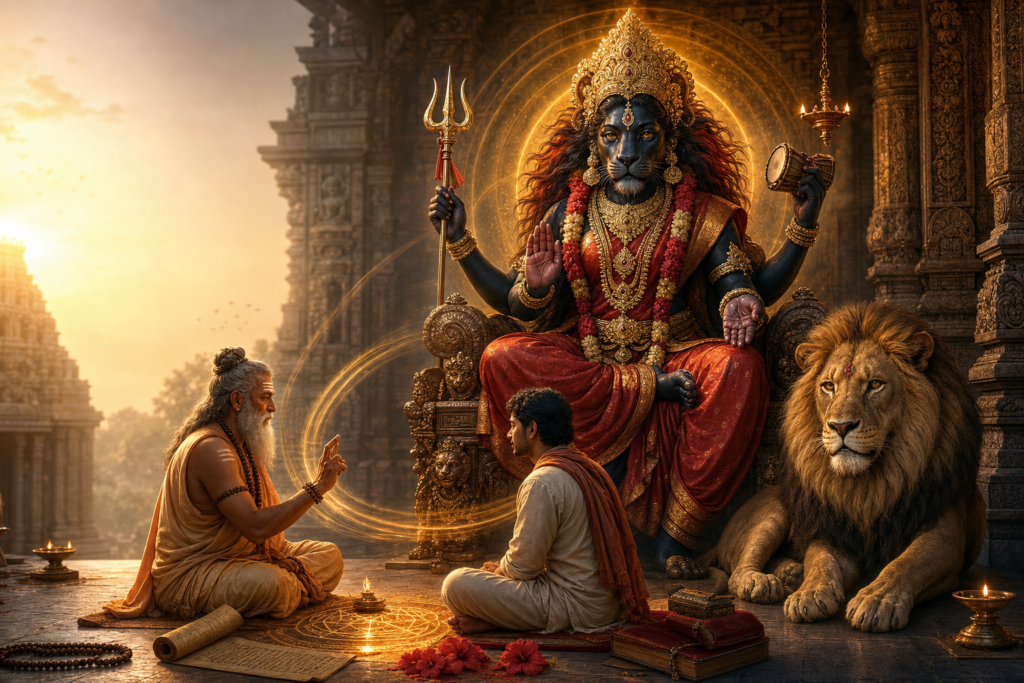
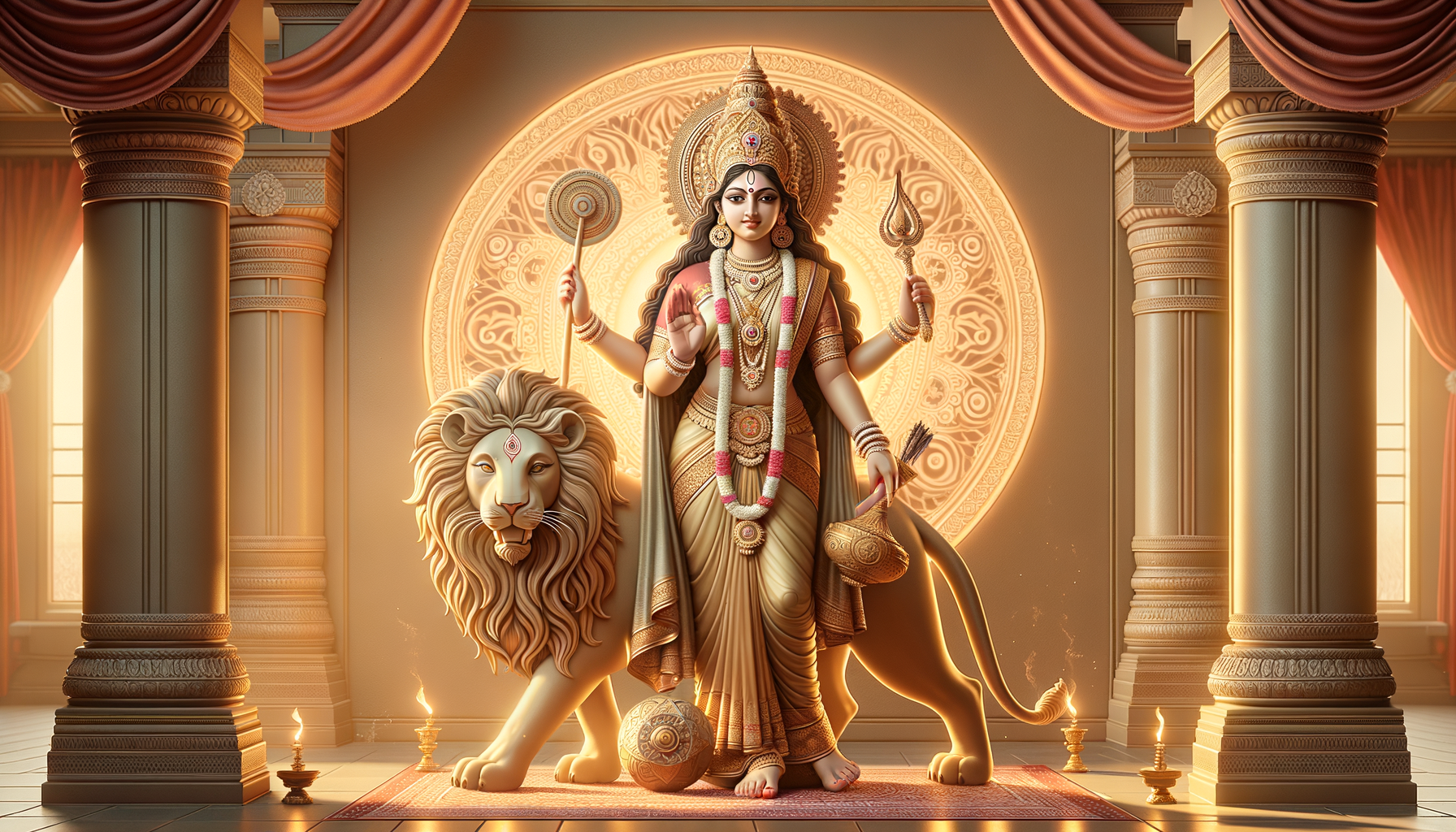
Jagadhatri, literally the Sustainer of the World (Jagat-dhatri), is understood as a compassionate yet firm aspect of Durga. In Bengal’s artistic and ritual vocabulary, she is often shown poised above the subdued elephant head while accompanied by a lion. The compositioncalm visage above, restrained force belowcommunicates a philosophical message central to Shakta thought: spiritual sovereignty requires mastery over ahaṅkāra (ego) and moha (delusion), not their destruction alone but their ethical subordination to dharma.
Regional narratives deepen this meaning. In several Bengal traditions, the elephant underfoot is remembered as Karindrasura (“lord of elephants”), a figure that embodies the heavy, stubborn weight of unexamined pride. Artisans in places such as Chandannagar and Krishnanagar render the head with meticulous detail, inviting devotees to contemplate how outward grandeur must ultimately bow to inner discipline and wisdom. In this way, the iconography functions as visual theologyconcise, memorable, and pedagogical.
This symbolism resonates across the dharmic family of traditions. In Buddhist imagery, taming the wild elephant frequently represents training the mind; in Jain thought, self-mastery and the conquest of passions are foundational; in Sikh teachings, haumai (ego) is to be recognized and transcended through remembrance and righteous action. Jagadhatri’s foot upon the elephant powerfully aligns with this shared ethic of self-governance and inner clarity, offering a unifying bridge across Hinduism, Buddhism, Jainism, and Sikhism.
Devotees often describe a distinctive emotional register when viewing a Jagadhatri murti: the Goddess appears infinitely compassionate yet immovably resolute. That juxtapositiongentle gaze above, vanquished illusion belowencourages introspection during puja: to recognize inner distortions, to refine conduct, and to cultivate courage anchored in wisdom. As an emblem, the elephant head becomes more than a mythic reference; it serves as a practical reminder that clarity of mind and steadiness of purpose are the true vehicles of victory.
Ultimately, the elephant head beneath Goddess Jagadhatri’s feet synthesizes scripture, philosophy, and regional art. Rooted in the Devi Mahatmya’s account of Mahishasura’s illusory forms and refined through Bengal’s devotional aesthetics, it communicates an enduring lesson: the path to sustaining the world begins with the humble, disciplined mastery of the self. For those observing Jagadhatri Puja, understanding this iconography deepens both cultural appreciation and spiritual insight.
Inspired by this post on Hindu Blog.