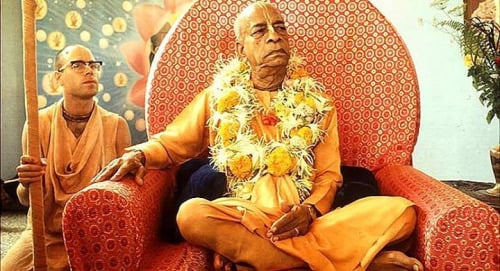
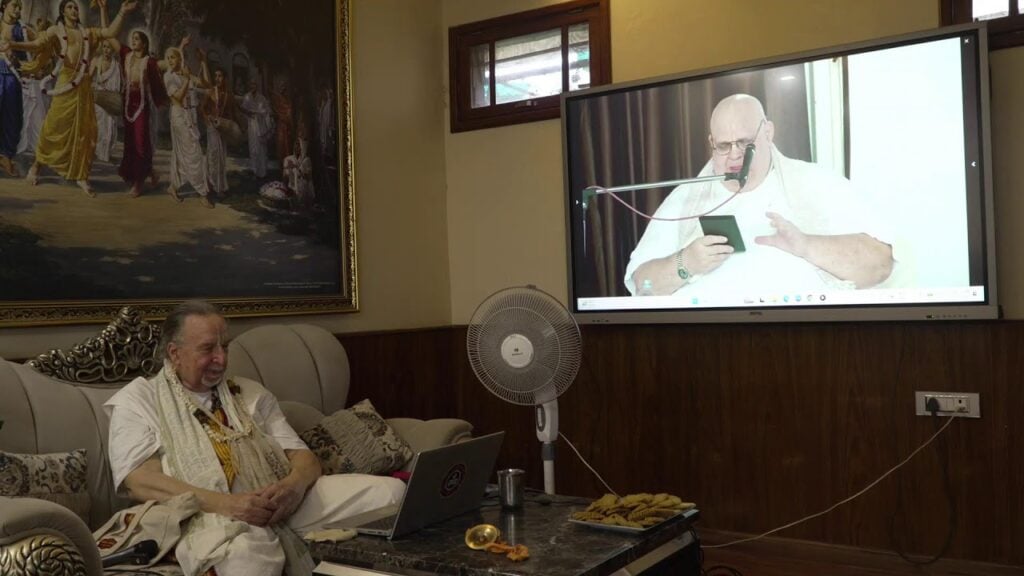
In the late 1970s, a brief exchange from Tehran distilled a universal principle: the holy names of the Divine transcend boundaries. When Atreya Rsi reported that local Muslims had chanted the Hare Krishna mantra, Srila Prabhupada’s encouraging replyrecalled in community correspondence and memoirsaffirmed that sincere glorification of God’s names is inherently purifying and non-sectarian. This insight, resonant with the dharmic ethos of Vasudhaiva Kutumbakam, frames a constructive path for interfaith understanding rooted in the shared contemplative heritage of Hinduism, Buddhism, Jainism, and Sikhism.
The thesis advanced here is simple and testable: collective chanting (kirtan) and personal repetition (japa or simran) of the holy namesunderstood across dharmic traditions as sacred sound (śabda) suffused with meaningnurture psychological well-being, civic trust, and durable pluralism. In sociological terms, chanting is a low-cost, high-impact practice that builds social capital by synchronizing breath, attention, and affect. In philosophical terms, it operationalizes unity in spiritual diversity by honoring distinct lineages while converging on a common method: focused remembrance of the Divine through name.
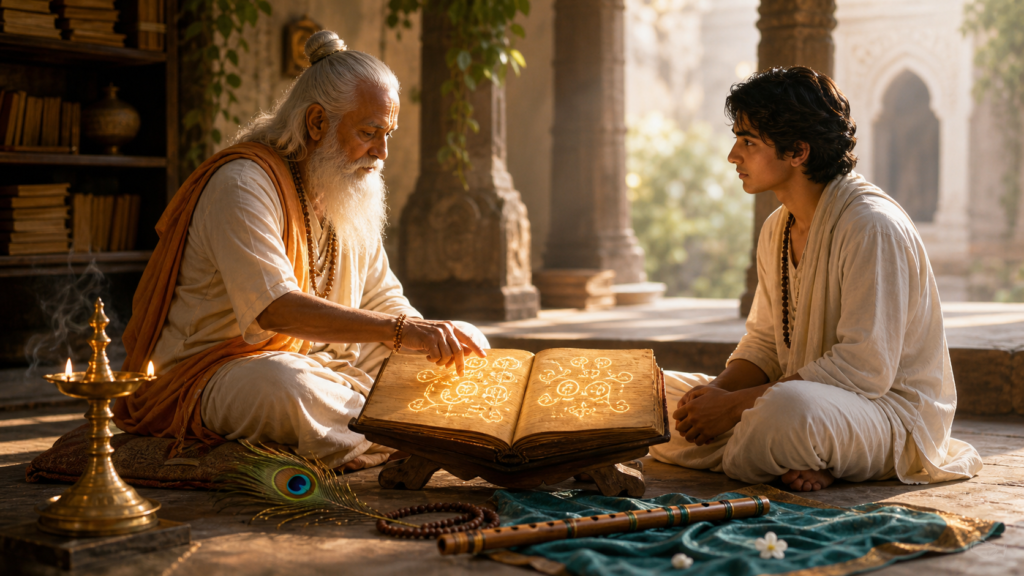
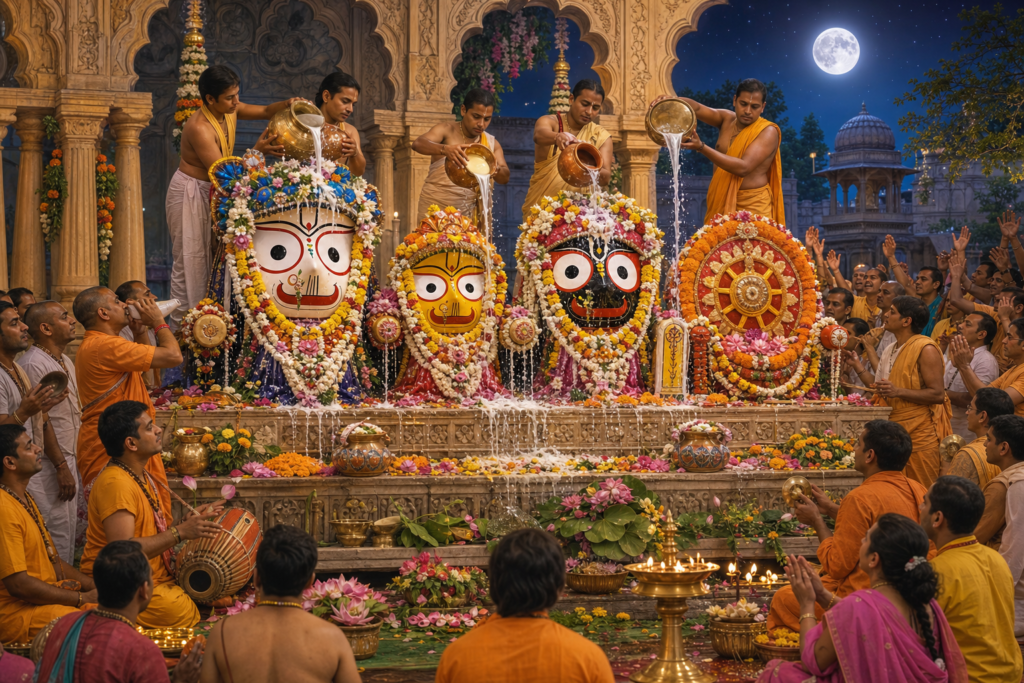
Within the Hindu bhakti tradition, nāma-saṅkīrtana is celebrated as a direct means to awaken devotion. Texts and teachings emphasize that the holy name is not a mere label but a presenceshabda-brahmanwhere sound and sacred referent are intimately connected. In practice, this appears as congregational chanting and personal repetition of mantras such as “Hare Krishna Hare Krishna, Krishna Krishna Hare Hare / Hare Rama Hare Rama, Rama Rama Hare Hare,” which countless practitioners regard as transformative for attention, emotion, and conduct.
Sikh spiritual discipline centers on Naam Japna and kirtan as living remembrance of Ik Onkar. The repeated invocation of “Waheguru” and sung recitation of Gurbani establish a contemplative rhythm that is at once personal and communal, uniting sangat (congregation) in shared purpose. This emphasis on the Name as the vehicle of grace and ethical renewal closely parallels Hindu bhakti’s valuation of nāma while preserving Sikhism’s distinctive theology and praxis.
Buddhist traditions employ mantra recitation as an aid to mindfulness, compassion, and insight. Across Mahayana and Vajrayana, formulae such as “Om Mani Padme Hum” are cultivated to refine attention and embody the enlightened qualities to which the words point. Even in Theravāda, simple recollection practicesincluding repetition of “Buddho”help stabilize awareness and soften reactivity. Though doctrinal commitments differ across schools, the disciplined use of sacred syllables as a contemplative method is shared.
Jain spiritual life likewise elevates the Name through the Namokar Mantra (Namaskar or Navkar Mantra), a salutary invocation that pays homage to Arihants, Siddhas, Acharyas, Upadhyayas, and all Sādhus. Its universal phrasing avoids sectarian reference to a single historical person while honoring perfected qualities, aligning explicitly with Jain commitments to ahiṁsā, aparigraha, and inner purification. As in Hinduism, Sikhism, and Buddhism, the mantra functions both as devotion and as method.
The Tehran episode is therefore not an anomaly but a case study in a broader principle: communities unfamiliar with one another can find common ground in reverence for the Divine through sacred names. Srila Prabhupada’s response (often spelled “Srila Prabhupad” in some accounts) consistently emphasized that chanting is a universal spiritual technology, accessible to all who sincerely approach it. That universality is not predicated on diluting distinctive lineages; rather, it stems from honoring the Name as a bridge, not a boundary.
Interfaith parallels make this even clearer. Islamic dhikr, for example, centers on repetitive remembranceAllāh, Al-Ḥaqq, Al-Raḥmānoften in breath-aligned cadence. While the theological frames differ from dharmic traditions, the contemplative architecture is strikingly similar: breath regulation, rhythmic repetition, and a shared affective field. The Tehran experienceMuslims chanting the Hare Krishna mantra in a spirit of goodwillillustrates how shared contemplative forms, approached respectfully, can soften social boundaries and invite friendship.
The philosophical rationale for unity through the holy names draws on several strands. First, the concept of shabda (authoritative sound) and nāda (primordial sound) permeates dharmic metaphysics; the Name is not simply representation but participation in the sacred. Second, remembrance (smaraṇa, simran) is a convergent virtue across lineages, linking attention, memory, and aspiration. Third, ethics are not incidental: chanting in bhakti, simran in Sikhism, mantra in Buddhism, and the Namokar in Jainism are embedded in vows that orient practitioners toward humility, non-violence, service, and truthfulness.
There is also a growing scientific literature elucidating mechanisms by which chanting catalyzes cohesion and well-being. Group singing and rhythmic recitation can synchronize respiration around 0.1 Hz (approximately six breaths per minute), enhancing vagal tone and heart-rate variabilitybiomarkers associated with stress resilience and social engagement. Neuroimaging studies of sacred syllable recitation report downregulation of limbic reactivity alongside activation patterns consistent with focused attention and positive affect. Pilot trials of mantra-based meditations (including kirtan kriya) show improvements in perceived stress, mood, and, in small studies, markers related to cognitive agingresults that warrant further, rigorous investigation.
From a sociological vantage, collective chanting fosters what Durkheim called “collective effervescence,” a shared elevation that strengthens prosocial norms. The mechanics are intuitive: synchronized breath and voice reduce interpersonal threat perception, entrain attention to a common object (the Name), and produce a felt sense of unity. When such experiences are framed within an ethic of mutual respect and non-proselytization, they can translate into lasting trust across communities.
Historically, public kirtan has served as a bridge between cultures as well as between sects. Srila Prabhupada’s kirtans with diverse audiencesincluding widely noted programs with Allen Ginsberg in American universitiesdemonstrate how sacred music can cross linguistic, cultural, and generational lines without sacrificing doctrinal integrity. Comparable examples abound in Sikh gurdwaras where kirtan is offered freely to all, in Buddhist temples where mantra recitation is open to visitors, and in Jain gatherings where the Namokar Mantra is intoned irrespective of caste or community.
A practical blueprint for dharmic unity through the holy names is straightforward. A “sarva-dharma nāma-saṅkīrtana” assembly can be structured around four pillars: hospitality, integrity, inclusivity, and continuity. Hospitality ensures that all participantsHindu, Buddhist, Jain, Sikh, and interested neighborsare warmly received. Integrity safeguards each lineage’s mantra practice in its authentic cadence and intention. Inclusivity invites sequential offerings (japa or kirtan) from each tradition, with explicit consent and invitations to listen respectfully or participate. Continuity commits the group to regular gatherings, so trust and shared understanding grow over time.
An inclusive format might proceed as follows. Begin with a brief invocation of shared intentionpeace, compassion, and friendshipfollowed by a short period of silence. Invite a Hindu bhakti kirtan of the hare krishna mahā-mantra; follow with Sikh simran on “Waheguru” and a shabad kirtan selection; continue with a Buddhist mantra recitation such as “Om Mani Padme Hum” led by that community; include the Jain Namokar Mantra as a universal salutation to perfected beings. Close with a second silence and an opportunity for participants to share reflections on how the practice influenced their state of mind and feeling toward others.
Ethical guardrails are essential. Participation should always be invitational, never compulsory; abstention must be respected without commentary. Language should honor each tradition’s grammar and meaning; transliterations can be provided for accessibility without altering cadence. Roles and musical leadership should rotate equitably. No community’s sacred words should be instrumentalized as mere “cultural performance”; the sanctity of the Name remains primary.
To assess impact, organizers can employ light-touch measures aligned with academic best practices. Pre- and post-gathering reflections can capture changes in perceived stress, warmth toward other communities, and willingness to collaborate on service projects. Simple tools like the Inclusion of Community in Self (ICS) scale, short mood inventories, and open-ended prompts provide both quantitative and qualitative insights while respecting privacy. Over multiple gatherings, these data can demonstrate whether chanting circles are strengthening social cohesion.
Civic applications are promising. Schools can host dharmic name-chanting showcasesframed as cultural-literary programs with optional participationalongside workshops on breath and voice. Universities and community centers can convene “Unity in spiritual diversity” evenings, pairing chanting with dialogue on ethics, ecology, and service. Municipal arts councils can support sacred music festivals that highlight dharmic traditions’ sonic heritage while upholding guidelines on respect and consent.
One frequent concern is the risk of syncretism or dilution. The solution is not to avoid collaboration but to design it carefully. Each tradition leads its own segment, in its own style, with its own theological framing, while the assembly honors a shared civic aspiration: friendship across difference. The analogy is not fusion cuisine but a thalidistinct flavors served side by side, nourishing a single table. Unity is expressed not by collapsing identities but by harmonizing intentions.
Another concern involves cultural appropriation. Clear attribution, leadership by lineage bearers, and education about the origins and meanings of each mantra address this directly. When communities speak for themselves and are listened to with care, the sacred name remains in rightful custodianship even as it is generously shared with neighbors.
The dharmic concept of Ishtaone’s chosen form or name of the Divinefurther clarifies how plurality and unity coexist. Individuals can cherish their Ishta while appreciating that others relate to the Divine through different names and forms. The Name becomes a meeting place: diverse paths converge in the reverent act of remembrance. This is unity in spiritual diversity in practice, not merely in slogan.
The Tehran recollection thus serves as a constructive template. When sincerity is present and respect is explicit, hearts open. The experience of chantingeven oncecan reframe perceptions of “the other” from category to companion. In the language of public policy, that is a small intervention with disproportionate social return.
The same logic scales inside dharmic families themselves. Hindu sampradāyas, Buddhist schools, Jain gacchas, and Sikh jathas can collaborate in festivals of sacred sound, celebrating shared commitments to compassion, self-restraint, and truth. The outcome is not an erasure of difference but a luminous network of sanghas linked by music, memory, and mutual care.
In summary, the holy names are more than devotional poetry; they are a living method for personal transformation and social healing. Philosophically, they enact shabda’s bridge between sound and sacred; practically, they entrain breath and attention; civically, they convert strangers into neighbors. The evidencehistorical, experiential, and emerging from sciencesupports what the Tehran moment made vivid: glorification of the holy names can unite a divided world without flattening its beautiful diversity.
Anchored in the dharmic wisdom of bhakti, simran, mantra, and the Namokar, and guided by the ethic of Vasudhaiva Kutumbakam, communities have a clear, humane, and scalable path forward. With humility, clarity, and care, chanting can become a public grammar of peacesacred sound as civic practice, sacred remembrance as social glue, and sacred names as shared inheritance.
Inspired by this post on Dandavats.