Prahasta emerges in the Ramayana and Ramcharitmanas as Lanka’s formidable commander-in-chiefan architect of strategy, discipline, and logisticswhose life frames a deeper inquiry into Dharma-Yuddha (righteous war). While popular attention gravitates toward more celebrated figures, Prahasta’s role illuminates the inner workings of Ravana’s military state and raises perennial questions about loyalty, statecraft, and the ethics of warfare within the broader dharmic tradition.
Across the textual tradition, Prahasta’s presence is clearest in the Valmiki Ramayana, where he directs Lanka’s martial response to the Vanara coalition. Tulsidas’s Ramcharitmanas, with its devotional emphasis, compresses battlefield detail but retains Prahasta’s stature as a principal rakshasa (rākṣasa) warrior. Read together, these sources portray a statesman-soldier whose choices echo through the narrative arc from counsel to combat, and finally to his fall on the battlefield.
The name Prahastacommonly interpreted as “one with extended hands”signals reach, dexterity, and command. Genealogically, he is situated within the rakshasa aristocracy as the son of Sumali and Ketumati, and thus maternal uncle to Ravana. This lineage anchored him within Lanka’s highest strategic councils, linking kinship, sovereignty, and military duty at a time when Lanka’s power confronted the moral and political crisis precipitated by Sita’s abduction.
As commander-in-chief (senapati), Prahasta embodies the junction of rājadharma (duties of rule) and kshatra-dharma (warrior code). He is repeatedly shown organizing the defense of Lanka, managing musters and deployments, and coordinating elite formations. His portfolio appears to extend beyond conventional command to include intelligence coordination and counsel, positioning him as Ravana’s indispensable executor of policy once diplomacy faltered.
The intelligence dimension is especially telling. Lanka relies on seasoned operatives such as Shuka and Sarana to reconnoiter the Vanara host and probe its leadershipan apparatus often associated in the narrative milieu with Prahasta’s strategic ecosystem. In Sundara Kanda, the fierce warrior Jambumali, identified in several traditions as Prahasta’s son, confronts Hanuman; the encounter’s outcome foreshadows both the prowess of Rama’s allies and the costs that Lanka’s general staff will incur.
Hanuman’s audacious foray into Lanka catalyzes Prahasta’s war footing. The destruction of key outposts and the slaying of elite fighters by Hanuman signal to Lanka’s command that the challenge is no mere incursion but an organized, dharma-anchored expedition. The reaction of Lanka’s high councilranging from Malyavan’s peace counsel to Prahasta’s hard-power calculusframes the coming campaign not merely as a clash of arms but as a contest of moral visions.
Within that council, Vibhishana’s call to restore Sita and avert adharma stands in stark contrast to martial counsels inclined toward war. Prahasta, true to his office, does not waver from the imperatives of state defense and sovereign command, even when those commands originate in an unjust cause. The juxtaposition of these positions is central to the Ramayana’s treatment of duty: does allegiance to throne and kin override allegiance to dharma? The text invites a sober examination rather than a simplistic verdict.
As the Yuddha Kanda unfolds, Prahasta shapes Lanka’s order of battle. Elite rakshasa divisions sally forth under named generals, with Prahasta’s corps prominent among them. Observers in the text note battle arrays, chariot-led spearheads, and combined-arms tacticsarrows and javelins massed against the Vanaras’ shock tactics of stones, trees, and mountain-crestsevoking a sophisticated strategic mind countered by unconventional, high-morale forces aligned with a just cause.
Prahasta’s death becomes a narrative hinge. In the Valmiki Ramayana, Nilathe Vanara commander renowned for incendiary prowessengages Prahasta in a brutal confrontation, culminating in Prahasta’s fall under a massive missile (often described as a hurled boulder) after fierce exchanges of archery and hand-to-hand combat. The rout of his division shatters a vital pillar of Lanka’s command structure, signaling an irreversible shift in campaign momentum.
While Valmiki’s recension highlights the duel with Nila, regional Ramayana traditions occasionally record subtle variations in sequencing or emphasis. What remains consistent across tellings is Prahasta’s rank, martial capability, and decisive fall, which collectively mark a strategic inflection in Rama’s favor. Such convergencedespite differing poetic aimsunderscores the centrality of Prahasta’s role to the war’s inner logic.
Ramcharitmanas, with its bhakti-infused lens, lists Prahasta among Lanka’s titans who succumb to Rama’s righteous campaign, subsuming tactical detail under the epic’s larger theological and ethical horizon. Here, the stress lies less on the mechanics of battle and more on the moral causality: unrighteous rule precipitates downfall; righteous purposeanchored in compassion, restraint, and truthprevails, often with minimal narrative elaboration on individual duels.
Prahasta’s story threads directly into the ethics of Dharma-Yuddha. The Ramayana repeatedly affirms norms recognizable as just-war criteria: just cause (restoration of Sita and cosmic order), right intention (not conquest for its own sake), last resort (diplomatic overtures precede arms), proportionality (restraint toward noncombatants and envoys), and legitimate authority (Rama as rightful sovereign-in-exile). For instance, Shuka and SaranaRavana’s operatives apprehended in Rama’s campare released unhurt, highlighting the prohibition on harming messengers, a cornerstone of ancient kshatra-dharma.
From this vantage, Prahasta embodies a profound tension: impeccable execution of his sworn duty in service of an adharma-laden command. The Ramayana refrains from caricature; instead, it shows a consummate professional whose loyalty, while admirable in form, cannot redeem the injustice of the cause it serves. The narrative thereby distinguishes between personal valor and ethical legitimacya distinction of enduring relevance to soldiers, civil servants, and strategists alike.
A wider dharmic lens deepens this reading and reinforces inter-traditional unity. Hindu sources articulate Dharma-Yuddha and kshatra-dharma as ethically bounded force; Buddhist thought stresses compassion and the karmic gravity of violence, pressing toward restraint and transformation; Jain philosophy anchors itself in ahiṃsā (non-violence), allowing at most the most constrained worldly accommodations; Sikh tradition speaks of dharam yudh as the defense of justice and the oppressed when all peaceful means fail. Together, these perspectives converge on minimizing harm, prioritizing truth, and placing moral order above expediencyprinciples that illuminate Prahasta’s predicament and Rama’s code simultaneously.
Symbolically, the epithet “one with extended hands” suggests reach and efficacyqualities that, when yoked to unrighteous ends, magnify harm rather than good. The Ramayana’s didactic arc thus preserves space to respect Prahasta’s capacities while soberly assessing the ethical misalignment that ultimately limits and redirects them. This balanced portrayal discourages simplistic vilification and instead cultivates moral discernment.
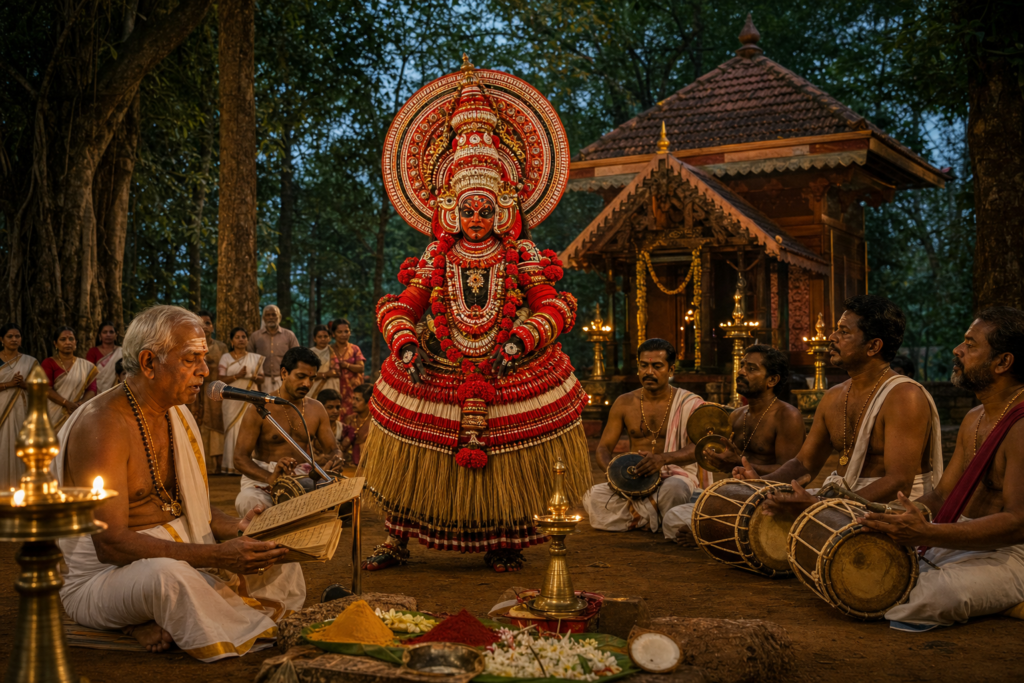
In cultural memorykathas, regional Ramayanas, dance-drama traditions like Yakshagana and KathakaliPrahasta often appears as the stalwart bulwark of Lanka’s army, a figure whose fall signals that technical mastery cannot outlast ethical failure. The unity of dharmic traditions underscores the same lesson in different idioms: power without dharma decays; courage aligned with dharma endures.
Seen through contemporary eyes, Prahasta becomes a case study in leadership ethics. Organizational loyalty, operational brilliance, and mission focusadmirable in themselvesmust be held accountable to a higher compass. The Ramayana and Ramcharitmanas invite reflection on how to harmonize professional excellence with moral responsibility, a message that resonates across Hindu, Buddhist, Jain, and Sikh frameworks committed to truth, restraint, and the welfare of all beings.
Prahasta’s legacy is therefore double-edged: a testament to disciplined statecraft and a caution about severing skill from dharma. His rise and fall serve the epics’ central conviction that Dharma-Yuddha is not simply about victory but about how victory is sought and secured. In charting Prahasta’s arc, the texts offer a nuanced, unifying ethic for readers and leaders navigating duty, loyalty, and justice in their own time.
Inspired by this post on Hindu Blog.