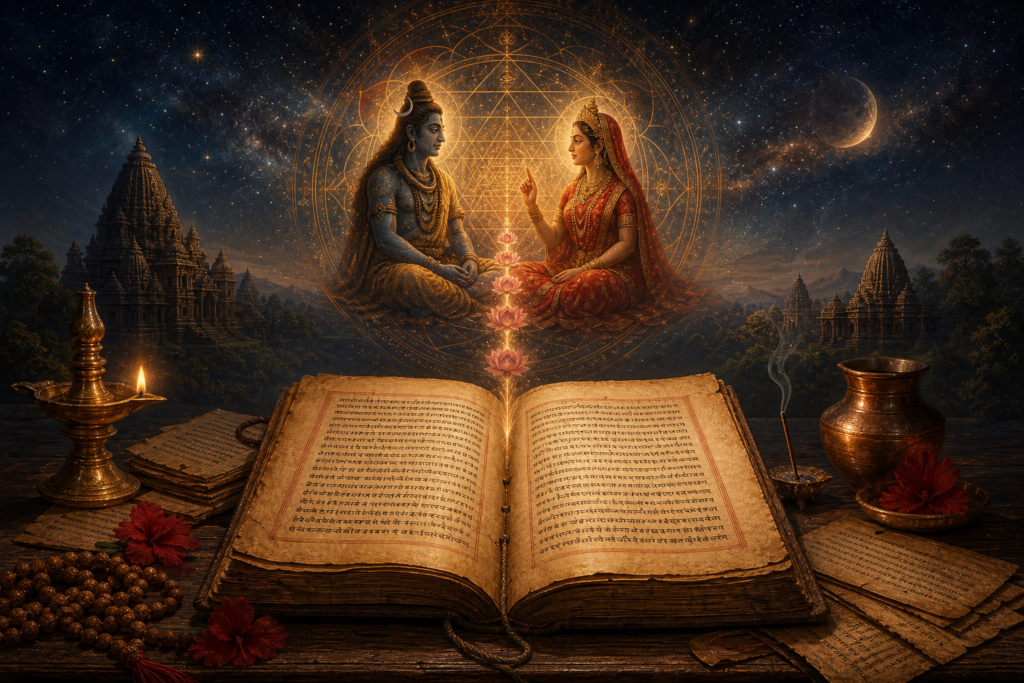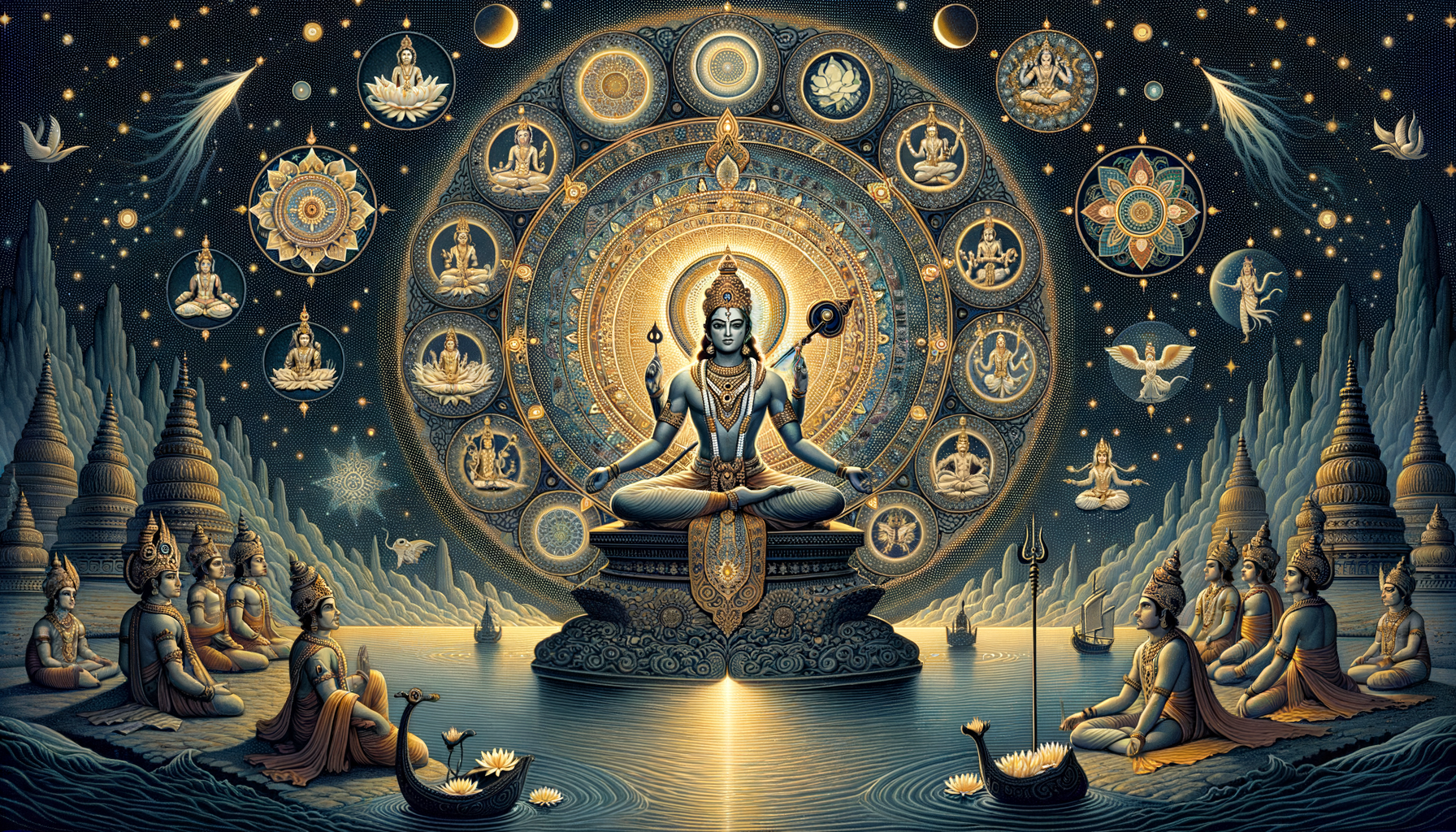
The Vishnu Purana, one of the Eighteen Mahapuranas, stands as a foundational Hindu scripture that weaves theology, cosmology, and ethics into a cohesive vision of Sanatana Dharma. Within the expansive corpus of Puranic literature, it occupies a central place by presenting Lord Vishnu as the sustaining principle of the cosmos and by framing devotion (bhakti) as a transformative path.
Beyond its theological emphasis, the text offers structured insights into dharma, the rhythms of time (yugas), and the genealogies of ancient lineages, while also engaging readers with narratives that illuminate virtue, resilience, and spiritual discernment. Traditionally associated with Vyasa and narrated by the sage Parashara to Maitreya, the Vishnu Purana is organized into six sections (aṁśas), reflecting a deliberate design to guide spiritual understanding step by step.
Prominent within its pages are accounts of Vishnu’s avatars and revered devotees who model steadfast faith. Narada appears as the compassionate itinerant sage whose counsel harmonizes wisdom with compassion. Prahalada exemplifies unwavering devotion under oppression, demonstrating how inner conviction can transcend fear. Dhruva’s focused penance culminates in cosmic prominence, symbolizing how disciplined intention aligns human effort with divine grace. Thumburu, celebrated for sacred music, shows how the arts themselves can become a vehicle of worship and refinement.
These stories are not merely mythic; they are mirrors for contemporary life. Prahalada’s courage speaks to anyone navigating adversity with clarity and compassion. Dhruva’s single-minded practice models mindful goal-setting rooted in ethics rather than ego. Narada’s measured speech and gentle guidance underscore the responsibility that comes with knowledge and influence. Thumburu’s devotion through music highlights that creativity, when oriented toward the good, becomes a form of sadhana.
Read through an inclusive dharmic lens, the Vishnu Purana’s values resonate across Hinduism, Buddhism, Jainism, and Sikhism: non-violence (ahimsa), truthfulness (satya), self-discipline, service (seva), and contemplative practice (dhyana). While centering Vishnu within its own theological framework, the text’s ethical teachings align with a broader commitment to harmony among diverse spiritual paths and practices. This spirit of unity in diversity strengthens an integrated understanding of Indic wisdom traditions.
As a guide for modern seekers, the Vishnu Purana frames bhakti not as passive sentiment but as informed devotionanchored in dharma, refined by knowledge (jnana), and animated by selfless action (karma). Its narratives invite reflective living: to cultivate inner steadiness amid change, to elevate speech and conduct, and to recognize the sacred in everyday responsibilities.
Engaging the Vishnu Purana with care reveals more than ancient tales; it offers an ethical compass and contemplative depth for contemporary challenges. By situating personal growth within a larger moral and cosmic order, it invites readers to participate in a shared civilizational heritage where wisdom is lived, compassion is practiced, and unity across dharmic traditions is both affirmed and celebrated.
Inspired by this post on Hindu Pad.