Dhata, celebrated in ancient Hindu texts as one of the Adityas, is traditionally invoked as a stabilizing force who sustains cosmic order (rta) and nurtures health, prosperity, and mental tranquility. Born of Aditi and Kashyapa, Dhata occupies a revered place in the lineage of solar deities whose radiance symbolizes the ethical and spiritual light that guides human life.
The very name Dhata derives from the Sanskrit verbal root dha, meaning to place, to uphold, or to establish. In scriptural usage, dhata conveys the sense of an establisher or supporter of the world, aligning the deity with themes of creation, continuity, and benevolent protection. This semantic field explains why Dhata is honored as a giver of peacefulness and measured abundance.
Within the Vedic and post-Vedic imagination, the Adityas are guardians of rta, the universal norm that regulates nature and society. While the Rigveda often extols the collective virtues of the Adityas, Puranic literature formalizes a list of twelve Adityas in which Dhata is consistently included. These twelve are associated with the cyclical order of time, the movement of the sun, and the ethical scaffolding of life.
Puranic enumerations vary modestly across texts, yet Dhata’s place is remarkably stable. Some passages align Dhata with a creative aspect conceptually close to Brahma, whereas others present him as a distinct solar principle whose task is to sustain well-being and social balance. Both strands converge on the idea that Dhata represents establishment, coherence, and life-affirming order.
In lived practice, devotees venerate Dhata for three interrelated aims: health (physical vitality and resilience), wealth (ethical prosperity secured within dharma), and peace (inner serenity and social harmony). These aspirations reflect the classical Indian view that artha and kama flourish only when anchored in dharma, and that lasting well-being is fundamentally holistic, joining body, mind, community, and cosmos.
Mantra recitation is a central mode of worship. The devotional formula OM SRI DHATA DEVAYA NAMAHA is widely used to invoke the deity’s presence and grace. Its sonority encourages steady breathing and attention, which in turn cultivates calmness, clarity, and a constructive mental orientation toward healing and abundance.
Dhata is also invoked alongside Mata Lakshmi Devi to harmonize the axes of sustenance (Dhata) and auspicious prosperity (Lakshmi). This pairing expresses a refined theological insight: prosperity is most stable when it rests on order, virtue, and service. In practice, households often perform simple Lakshmi puja in the evening and Dhata-focused solar worship at dawn to span the daily rhythm with blessing and balance.
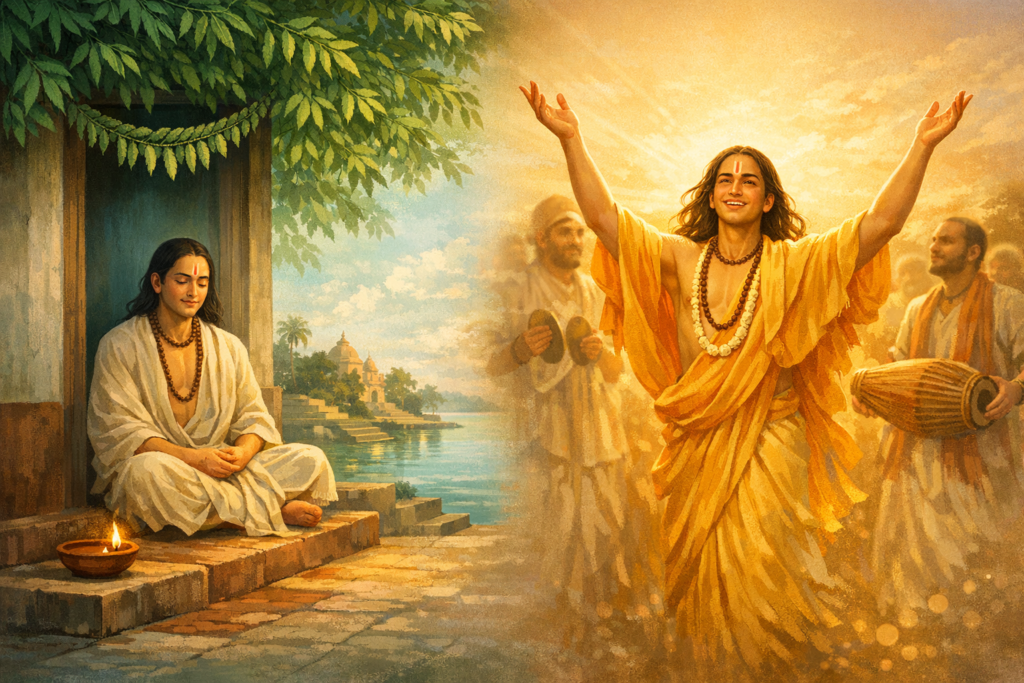
A practical home observance centers on sunrise. Many practitioners offer water (arghya) to the rising sun while facing east, light a clean ghee lamp, and recite OM SRI DHATA DEVAYA NAMAHA for one or more rounds of 108 beads. A short, sincere sankalpa (statement of intent) framed around health, peacefulness, and ethical prosperity aligns personal aims with dharmic principles.
Supportive disciplines amplify the effect. Surya Namaskar integrates breath, posture, and solar awareness; basic pranayama steadies attention and circulates prana; and a sattvic daily routine in tune with daylight honors the Ayurvedic insight that circadian alignment fosters ojas (vital essence) and resilience. In this way, devotion to an Aditya is complemented by practical habits that build well-being.
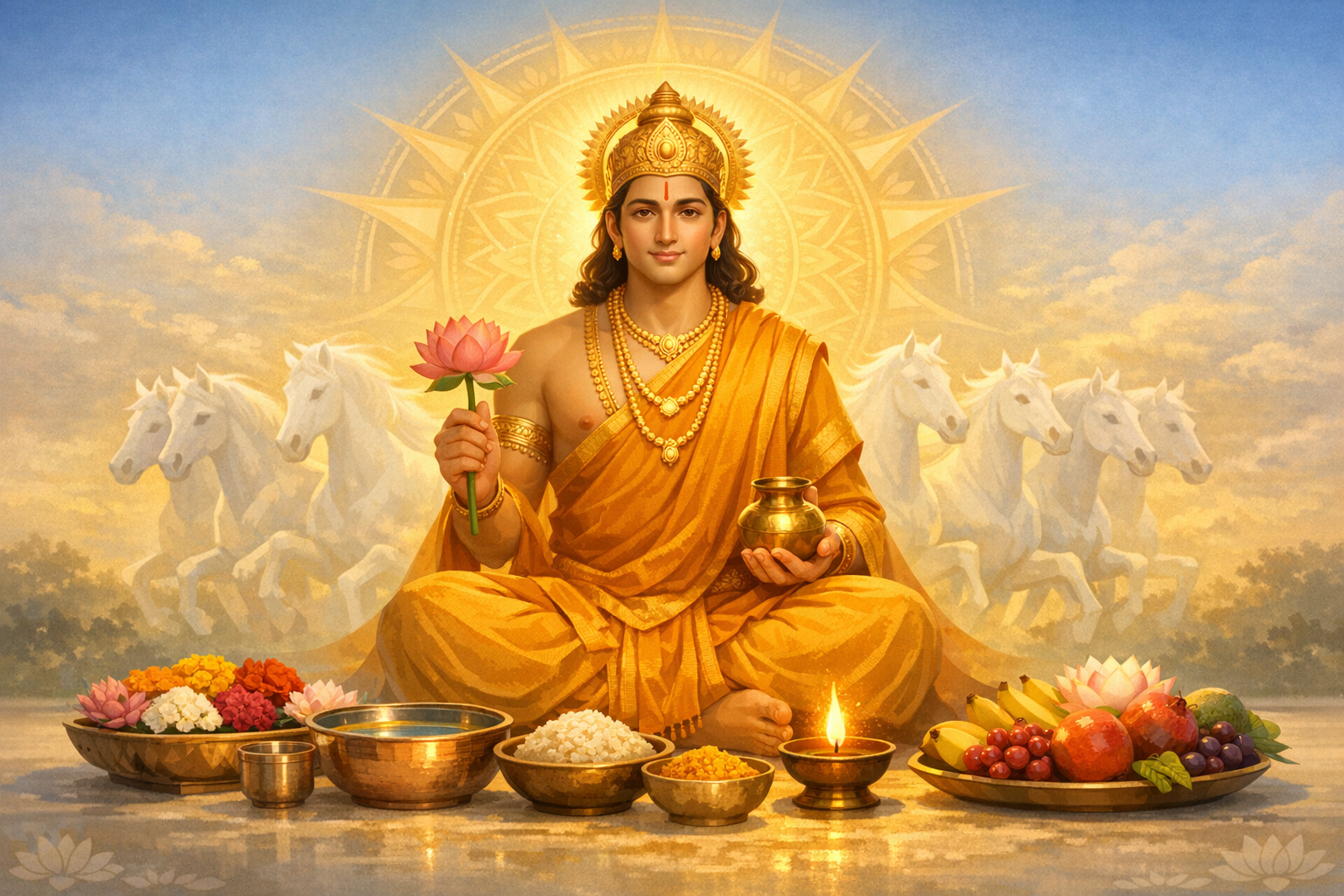
Offerings are simple and symbolic. Clean water, fresh flowers in warm hues, cooked grains, and seasonal fruits represent clarity, life, nourishment, and gratitude. The spirit of offering matters more than elaboration, and the emphasis remains on humility, ethical intention, and continuity of practice.
From the perspective of Jyotisha (Vedic astrology), the Adityas correspond to solar intelligences that structure time and vitality. Without making deterministic claims, many practitioners approach Dhata’s worship as a way to cultivate steadiness where the solar principle (surya tattva) is central: clarity of purpose, disciplined energy, and a compassionate, service-oriented orientation to prosperity. Spiritual discipline should be seen as complementary to, not a replacement for, appropriate medical care and responsible planning.
Accounts from households and temple communities frequently describe a two-fold impact of steady practice: first, a noticeable quieting of worry and reactivity, and second, a more consistent, dharma-aligned momentum in health routines, professional endeavors, and family relationships. These experiences align with the scriptural premise that order, rightly invoked, radiates outward from inner clarity to tangible outcomes.
Iconographically, Adityas share solar attributes: luminous complexion, lotuses or water vessels signifying purity and sustenance, and associations with the sun’s chariot and its seven horses (symbolizing the spectrum of light and the rhythm of the week). Though specific images of Dhata may vary regionally, the semiotics remain consistent: light, life, and lawful harmony.
Scriptural resonances are wide. The Vedas and early texts praise the Adityas as guardians of moral law; the Puranas develop their individual names and functions; and epic passages such as the Aditya Hridayam in the Ramayana honor the sun’s animating role for courage and clear vision. Within that arc, Dhata stands out as the establisher whose grace turns diligence into durable well-being.
Observances often intensify on Sundays and on solar festivals such as Ratha Saptami, when communities recall the sun’s generative power and renew vows of right conduct. At the personal level, many integrate brief japa at dawn, ethical mindfulness during work, and gratitude in the evening to maintain an unbroken current of practice.
Dhata’s worship resonates deeply with the shared ethos of the broader dharmic family. Hindu, Buddhist, Jain, and Sikh traditions each valorize disciplined practice, compassion, self-restraint, service, and inner clarity. Whether through japa, metta-bhavana, samayika, or naam simran, the common trajectory is to kindle inner light and translate it into care for others. Honoring Dhata as an archetype of sustaining order can thus serve as a unifying symbol for interdependent flourishing across dharmic paths.
Ethical alignment is integral. Practitioners are encouraged to anchor worship in truthfulness, non-harming, generosity, and responsibility. In classical Indian thought, these virtues are not ancillary but constitutive; they ensure that sought-after health, wealth, and peace arise as byproducts of right relationship with self, society, and nature.
Text-critical reflection underscores Dhata’s stature. While lists of the twelve Adityas can differ across the Puranas, Dhata’s inclusion is a near-constant, and the semantic-mythic linkage to establishment and support is unambiguous. The diagnostic clarity of this role has made Dhata an enduring focus for seekers who pursue structured, ethically grounded prosperity.
For those beginning, a simple daily rhythm is effective: greet dawn with gratitude and quiet breathwork; offer arghya while invoking OM SRI DHATA DEVAYA NAMAHA; reflect on one concrete act of service to perform that day; and close the evening with a brief remembrance of Lakshmi to suffuse effort with auspiciousness. Over time, this sequence matures into a resilient way of life.
Ultimately, Dhata’s worship frames prosperity as relational rather than merely accumulative. Health is the harmony of body, mind, and conduct; wealth is resourcefulness deployed in service; peace is the tranquility that arises when actions, values, and rhythms align. In honoring Dhata, practitioners affirm that order, compassion, and disciplined joy are the true foundations of enduring well-being.
Inspired by this post on Hindu Pad.