Why is the Earth called Prithvi? Puranic narratives attribute this sacred name to Prithu Chakravarthi, a paradigmatic dharma-raja celebrated for restoring harmony between society and nature. In one account, Bhishma enquired of Sage Pulastya about the mighty Raja Prithu, upon whom, tradition affirms, the Earth was named as Prithvi. This inquiry opens a window onto a foundational episode in ancient India’s scriptural memory, preserved across the Puranas and echoed in the epic imagination.
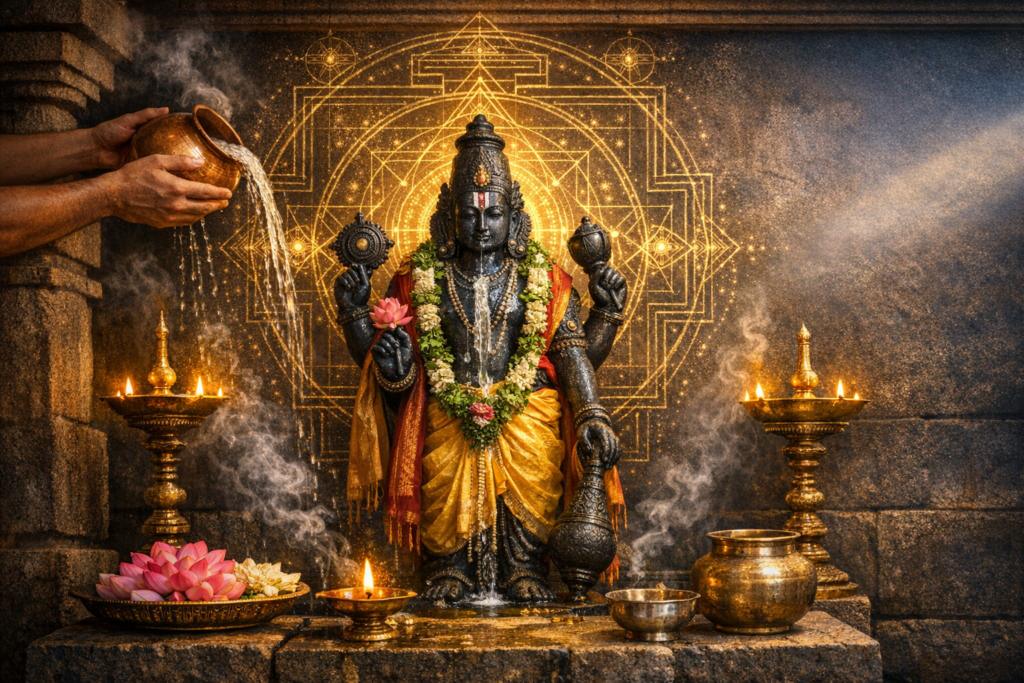
Sage Pulastya relates that Anga—styled Anga-Prajapati and a descendant of Swayambhuva Manu—married Sunitha. In due course, Sunitha gave birth to Vena, whose adharma fractured the balance of the realm. The sages, seeking to safeguard society, intervened and, following Vena’s demise, symbolically churned his body. From the left thigh emerged the Nishada peoples; from the right arm arose Prithu, a divinely empowered ruler (often regarded as a śaktyāveśa manifestation of Vishnu) destined to re-establish dharma.
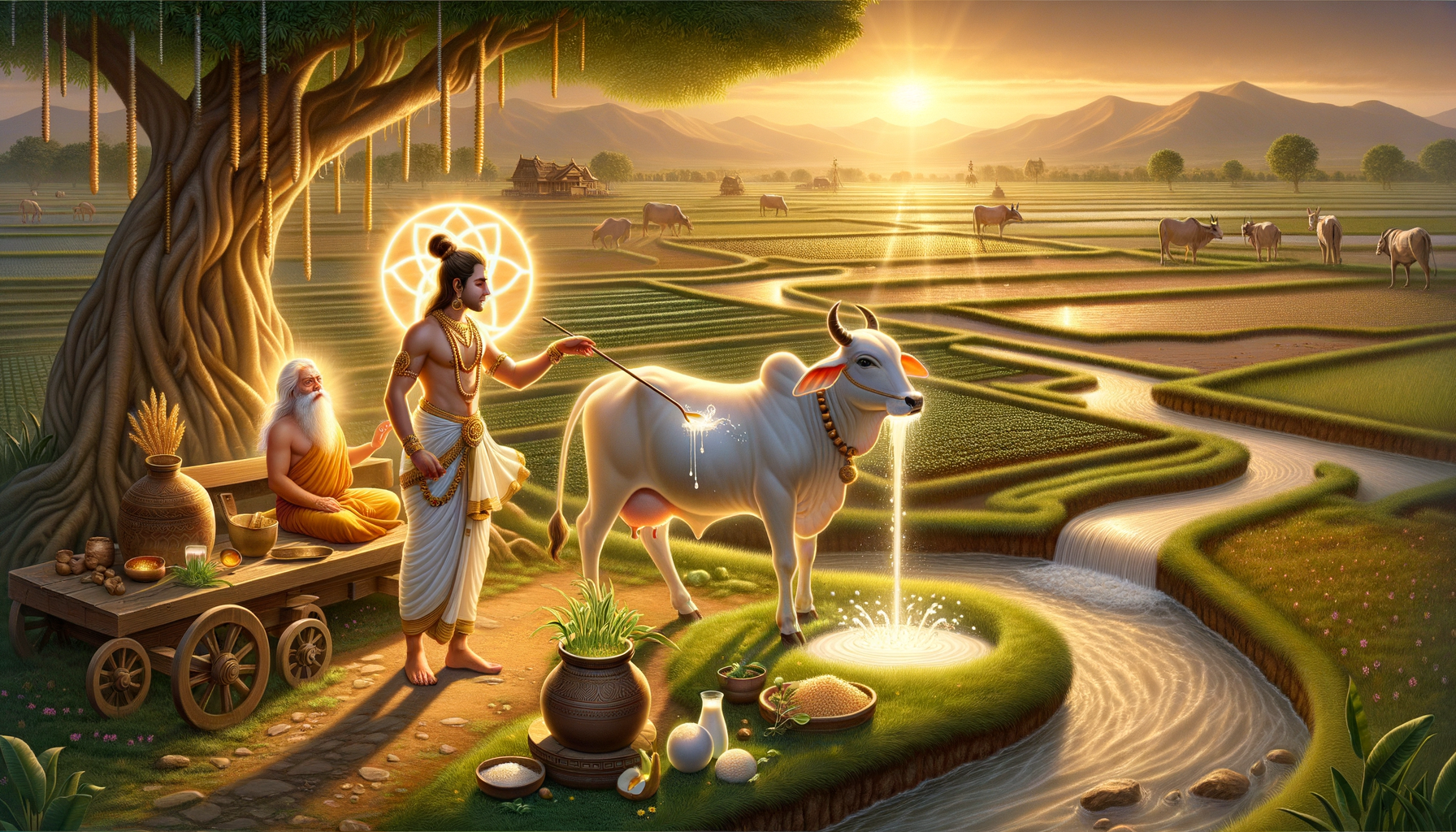
Coronated as a Chakravartin, Raja Prithu confronted a world in famine and fear. The Earth, aggrieved by prior misrule, withheld her bounty and assumed the form of a cow to elude exploitation. Prithu pursued her—not to harm, but to secure a moral covenant. When he stayed his hand at her plea, the Earth agreed to yield nourishment once righteous order was restored. With Swayambhuva Manu invoked as the symbolic calf, Prithu “milked” the Earth, initiating agriculture, reviving herbs, and renewing prosperity. From this epochal reconciliation, the Earth is celebrated as Prithvi, bearing his name in gratitude and remembrance.
Under Prithu’s governance, the land was leveled for cultivation, norms of just taxation and fair exchange were set, roads and irrigation were organized, and protection for householders, ascetics, and traders alike was instituted. These measures exemplify rajadharma in action: leadership as stewardship, authority restrained by ethics, and prosperity anchored in social responsibility. In this light, Prithu’s reign is less a tale of conquest and more a model of service-centered statecraft.
The narrative also expresses the civilizational intimacy between humanity and Bhumi Devi (Mother Earth). Its ethical core—reciprocity, restraint, and reverence—resonates across dharmic traditions. Hinduism’s Puranas preserve the detailed account; Jainism’s emphasis on ahimsa, Buddhism’s compassion for all beings, and Sikhism’s spirit of seva and honest livelihood all converge with the story’s call for ecological responsibility and moral leadership. As such, Prithu’s legacy speaks to a shared dharmic vision of living in harmony with the natural world.
For readers seeking scriptural grounding, the story appears prominently in the Bhagavata Purana (notably in Skandha 4) and in the Vishnu Purana, with thematic resonances in the Mahabharata’s reflections on rajadharma. Variations exist across texts, yet the central arc remains consistent: a righteous king re-establishes dharma, renews the Earth’s abundance, and lends his name—Prithvi—to the very ground that sustains life. The episode endures as a timeless guide to ethical governance and ecological humility.
Inspired by this post on Hindu Pad.