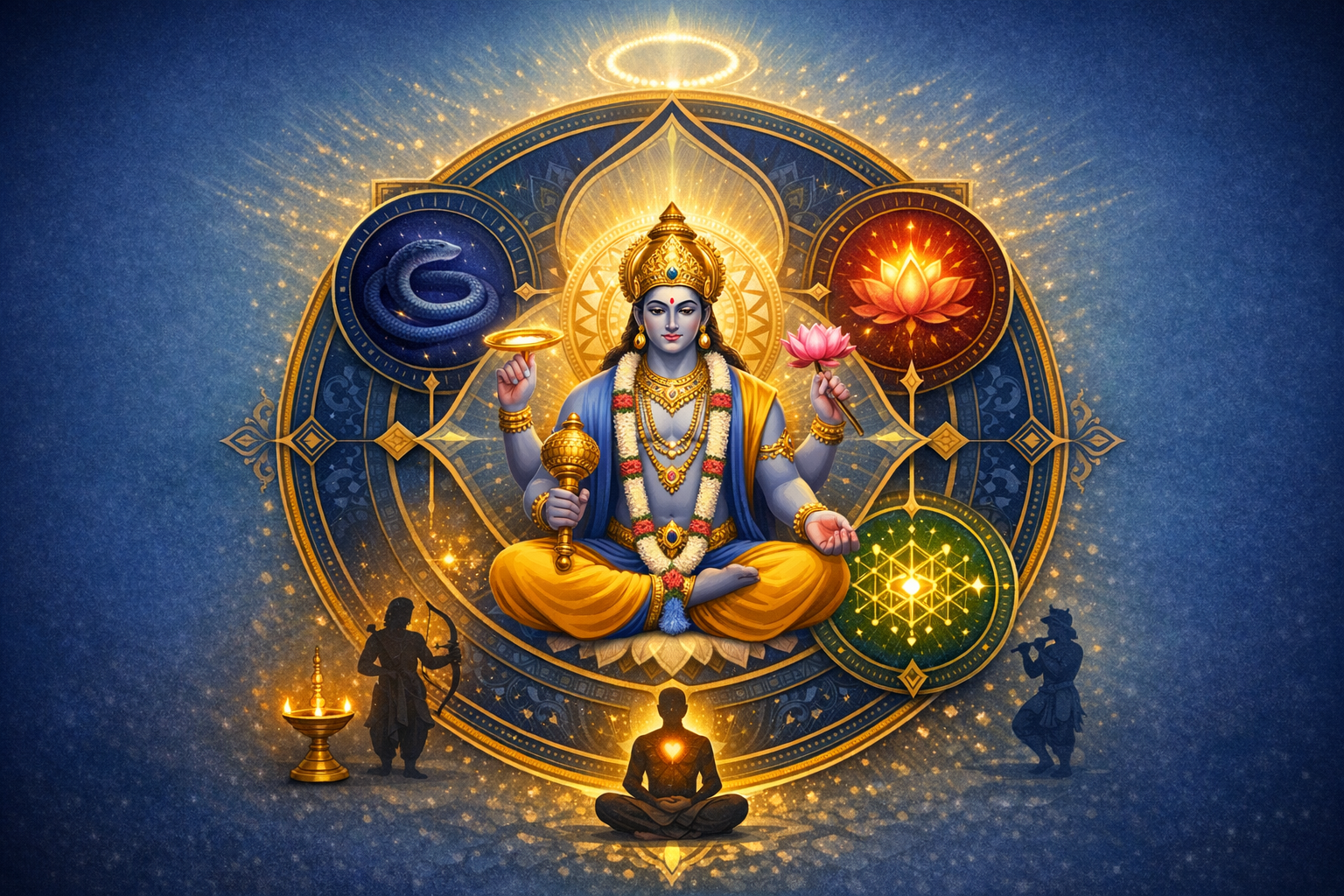
Within the Pancharatra and Bhagavata traditions of Vaishnavism, Vishnu–Narayana is understood to manifest in a disciplined theological architecture that safeguards both transcendence and immanence. A core teaching proposes four primary modes of manifestation: Para (the transcendent Supreme), Vyuha (emanational expansions), Vibhava (incarnations or avatāras), and Antaryāmin (the indwelling controller). Several lineages also add Arcā (iconic presence in consecrated images), yielding a fivefold scheme; yet the fourfold presentation remains a widely attested and pedagogically useful frame in the Pancharatra corpus and Bhagavata-inspired exegesis.
The phrase ‘Chaturvyuhas’ refers specifically to the four emanational forms within the Vyuha categoryVāsudeva, Saṅkarṣaṇa, Pradyumna, and Aniruddhathrough which the Supreme orders creation, cognition, and devotional accessibility. Distinguishing the two uses of “four” is crucial: the “four aspects of manifestation” (Para, Vyuha, Vibhava, Antaryāmin) describe modalities of divine presence, whereas the “four vyuhas” are the named emanations that structure cosmology and worship within the Vyuha modality itself.
Para designates the absolute, transcendent Vishnu beyond all limitationpure being-awareness-bliss, the ground of the sixfold perfections (bhaga) that define the very term “Bhagavān”: jñāna (omniscience), aiśvarya (lordship), śakti (power), bala (strength), vīrya (valor), and tejas (splendor). This mode anchors metaphysics, guaranteeing that all subsequent manifestations neither diminish nor divide the Supreme.
Vyuha describes systematic emanations by which the Supreme becomes the cosmic order without ceasing to be transcendent. The four vyuhasVāsudeva, Saṅkarṣaṇa, Pradyumna, and Aniruddhadistribute divine functions and qualities in a way that aligns theology, cosmology, and soteriology. In Pancharatra treatises (e.g., Sātvatasaṁhitā, Ahirbudhnya Saṁhitā, Jayākhya Saṁhitā), this structure is presented as a precise, reproducible grammar of the divine presence.
Vāsudeva, the foremost vyuha, is the proximate Lord encountered by devotees as supreme consciousness made lovingly accessible. Saṅkarṣaṇa is associated with jīva-tattva and the ground of withdrawal (saṁhāra), often linked to the guna of tamas in its cosmic function; Pradyumna aligns with creative intention and manas (mind), resonating with rajas; Aniruddha, the regulator of the manifest order and presiding over ahaṅkāra and the senses, bears affinities with sattva. This threefold mapping to guṇas (tamas–rajas–sattva) does not reduce the vyuhas to material qualities; rather, it clarifies their roles in sustaining cyclical creation, maintenance, and dissolution.
Pancharatra also maps the six divine attributes (ṣaḍguṇa) across the vyuhas in a pedagogically elegant distribution: Saṅkarṣaṇa embodies jñāna and bala, Pradyumna embodies aiśvarya and vīrya, and Aniruddha embodies śakti and tejas, while Vāsudeva is understood as the plenary reservoir of all six. The result is a coherent architecture in which metaphysical absoluteness (Para) flowers into functional plurality (Vyuha) without ontological fragmentation.
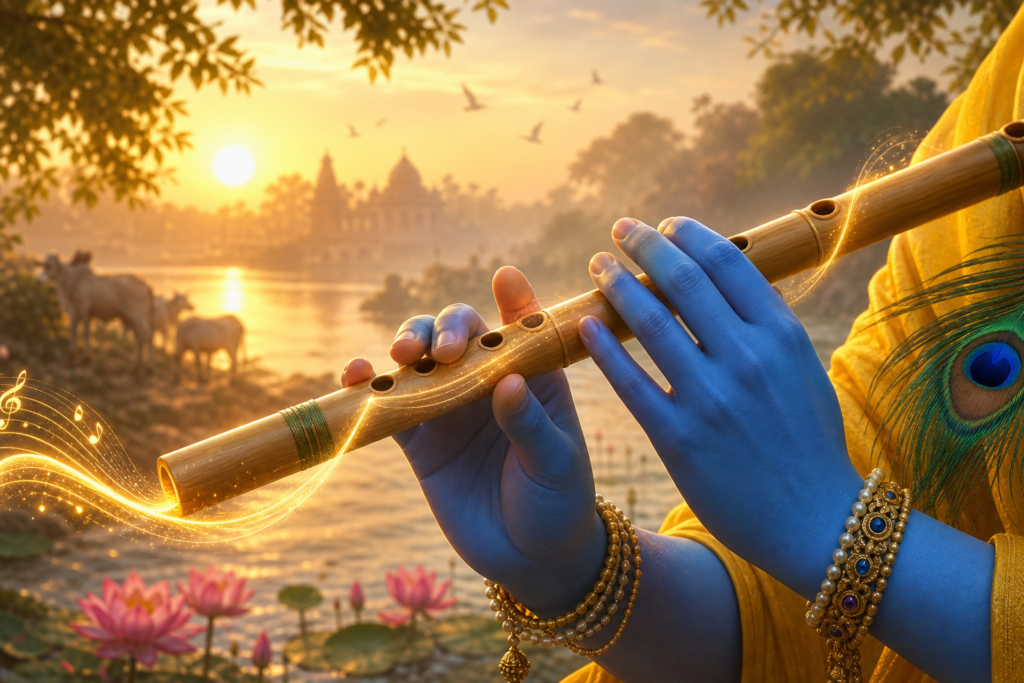
Vibhava denotes avatārasnarrative and historical descents such as Rāma, Kṛṣṇa, Varāha, and Narasiṁhathrough which the Supreme intervenes in space and time. From a Pancharatra lens, vibhava-avatāras may be read as context-specific embodiments grounded in the underlying vyuha grammar. Thus, devotion to Rāma or Kṛṣṇa is devotion to the same Lord who, through Vāsudeva and the other vyuhas, sustains cosmic order and makes spiritual realization relationally possible.
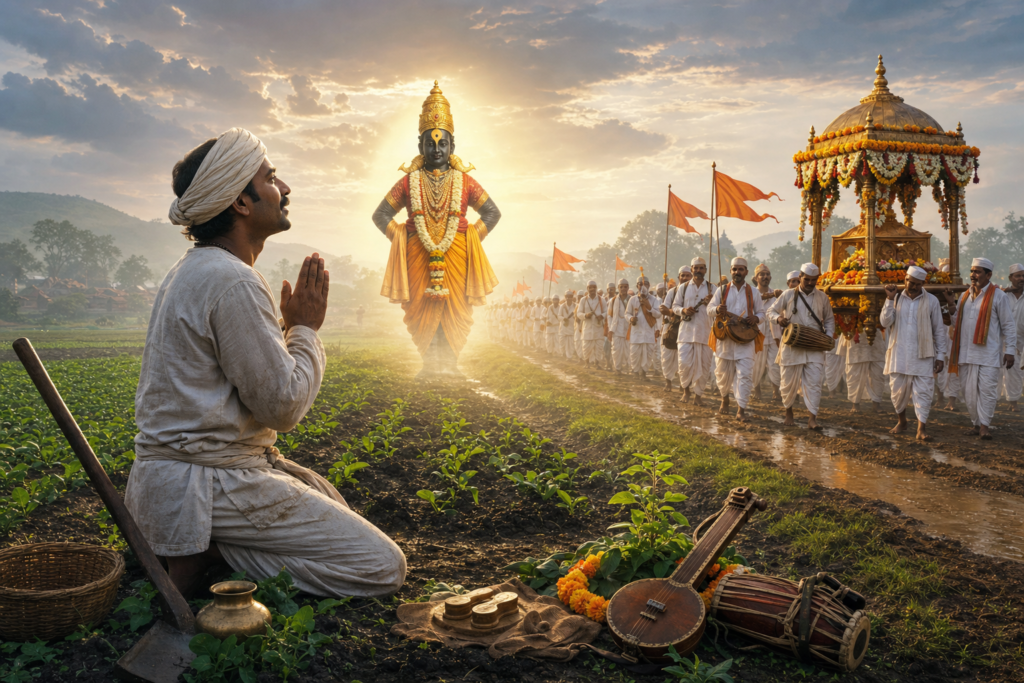
Antaryāmin, the indwelling presence, points to the intimate experience of the Lord as the inner controller (antar-hṛdaya-stha), guiding conscience, stabilizing attention in meditation, and nurturing ethical discernment. In practice, many devotees describe moments in which unbidden clarity arises during japa or contemplationan experience frequently interpreted through the Antaryāmin lens: the Lord quietly “leads from within.”
In numerous temples and āgamic lineages, Arcā is taught as a distinct, fifth mode: the consecrated image through which the invisible becomes touchable. Even when not formally listed as a separate category, Arcā is functionally ubiquitous and unites metaphysics with embodied devotion. A pilgrim standing before an archa-mūrti often reports the stilling of mental noise and a felt sense of companionshipa reproducible, community-tested epiphany that Pancharatra theology recognizes as a legitimate, even indispensable, pathway to realization.
Historically and textually, scholars place the maturation of Pancharatra thought between the early centuries BCE and the early first millennium CE, with the Sātvatasaṁhitā, Ahirbudhnya Saṁhitā, Jayākhya Saṁhitā, and Pauṣkara Saṁhitā among key sources. The Heliodorus Pillar (second century BCE) dedicated to Vāsudeva signals an early public presence of Bhagavata–Vāsudeva devotion; later inscriptions and temple manuals corroborate the consolidation of vyuha theology in living practice.
Within Sri Vaishnava scholarship, Pancharatra received a robust philosophical defense. Ramanuja’s engagement, for example, affirmed the scriptural status of the Pancharatra Saṁhitās and integrated their ritual-metaphysical vision with Viśiṣṭādvaita Vedānta. In Gaudiya Vaishnavism, elaborations connect vyuhas with successive expansions of Viṣṇu in creation (Kāraṇodakaśāyī, Garbhodakaśāyī, Kṣīrodakaśāyī), illustrating how the same grammar flexibly supports richly plural theological ecosystems.
Iconography occasionally reflects the theology in complex ways. Vaikuṇṭha Caturmūrti imagerywhere Vishnu may appear with multiple faces evocative of lion and boar aspectscelebrates integral lordship and should not be conflated with the Chaturvyuha doctrine. The former is primarily an iconographic synthesis of supremacy; the latter is a precise emanational schema used to explicate cosmology, devotion, and soteriology.
In lived devotion, mantras encode the vyuha logic for daily practice. The eight-syllabled Aṣṭākṣara, “Om Namo Nārāyaṇāya,” and the twelve-syllabled “Om Namo Bhagavate Vāsudevāya” are especially prominent. Devotees often report that regular recitation clarifies thought (Pradyumna’s domain), steadies identity and resolve (Aniruddha’s guidance), and eases the burden of self-inquiry (Saṅkarṣaṇa’s knowledge and strength), while reorienting the whole inner life toward the luminous center (Vāsudeva).
This fourfold framework also harmonizes naturally with broader dharmic insights without erasing genuine differences. In Buddhism, for example, the Trikāya doctrine (dharmakāya, sambhogakāya, nirmāṇakāya) explores the relation of transcendence, enjoyment, and manifestation; in Sikh thought, the distinction between nirguṇ and sarguṇ points to the formless and the manifest presence of Ik Onkār; Jain traditions venerate Tīrthaṅkaras as perfected beings whose presence, images, and teachings act as salvific bridges. While the categories are not identical, these families of ideas resonate in affirming that ultimate reality can be simultaneously beyond form and compassionately present.
For seekers and students, a practical way to internalize the teaching is to “walk” the four manifestations in contemplation. One may begin with Para by resting the mind in a sense of vast, luminous presence; shift to Vyuha by reflecting on the universe as intentional order; move to Vibhava by contemplating a chosen avatāra (Rāma, Kṛṣṇa) and its moral-spiritual lessons; and conclude with Antaryāmin by listening inwardly for quiet guidance. Practiced consistently, this cycle tends to integrate metaphysics with ethics and devotion, making scriptural ideas vivid in daily conduct.
Pancharatra’s precision helps address perennial questions: How can the Absolute be both beyond all and near to all? How can the same Lord sustain galaxies and soothe a single heart in prayer? The fourfold manifestation provides a logically consistent and experientially anchored answertranscendence (Para) never abandons compassion; compassion structures the cosmos (Vyuha); compassion steps into history (Vibhava); and compassion whispers within (Antaryāmin). Where Arcā is emphasized, that same compassion welcomes touch, sight, and sound, sanctifying the senses rather than dismissing them.
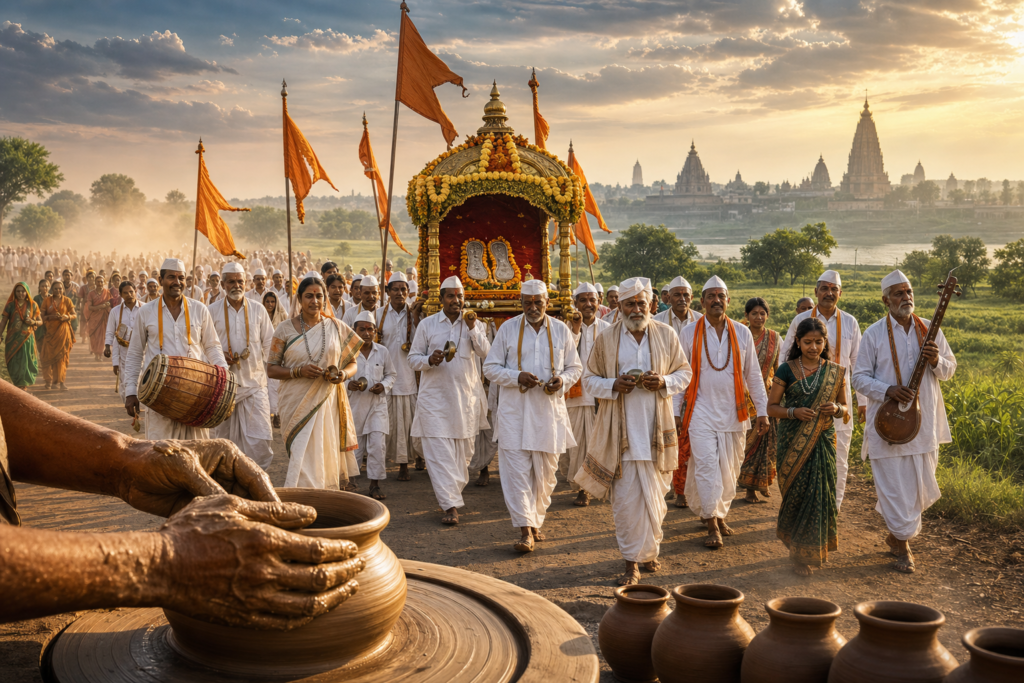
The Chaturvyuha, far from an abstract theory, calibrates community life. Ritual cycles, temple architecture governed by Pancharatra āgamas, and shared liturgy cultivate an atmosphere in which knowledge (jñāna) and strength (bala) stabilize resolve, lordship (aiśvarya) and valor (vīrya) foster responsibility, and power (śakti) with splendor (tejas) ennoble service. In this way, philosophy becomes culture, and culture becomes a school of character.
Read with care, the Pancharatra–Bhagavata synthesis encourages unity across dharmic traditions. Its core intuitionthat the ultimate can be both ineffable and intimately availablesupports respectful pluralism and shared ethical commitments. Rather than imposing a single path, it honors diverse temperaments and practices that converge in compassion, self-mastery, and the pursuit of liberation.
In sum, the “four aspects of manifestation” clarify how Vishnu–Narayana is encountered as the Supreme (Para), as ordered emanation (Vyuha), as gracious descent (Vibhava), and as inner guide (Antaryāmin). The “Chaturvyuhas” detail the internal logic of Vyuha through Vāsudeva, Saṅkarṣaṇa, Pradyumna, and Aniruddha, distributing divine perfections for cosmology and devotion. Together they form a rigorous, time-tested map that is intellectually satisfying, spiritually nourishing, and profoundly unifying within the dharmic family.
Inspired by this post on Hindu Pad.