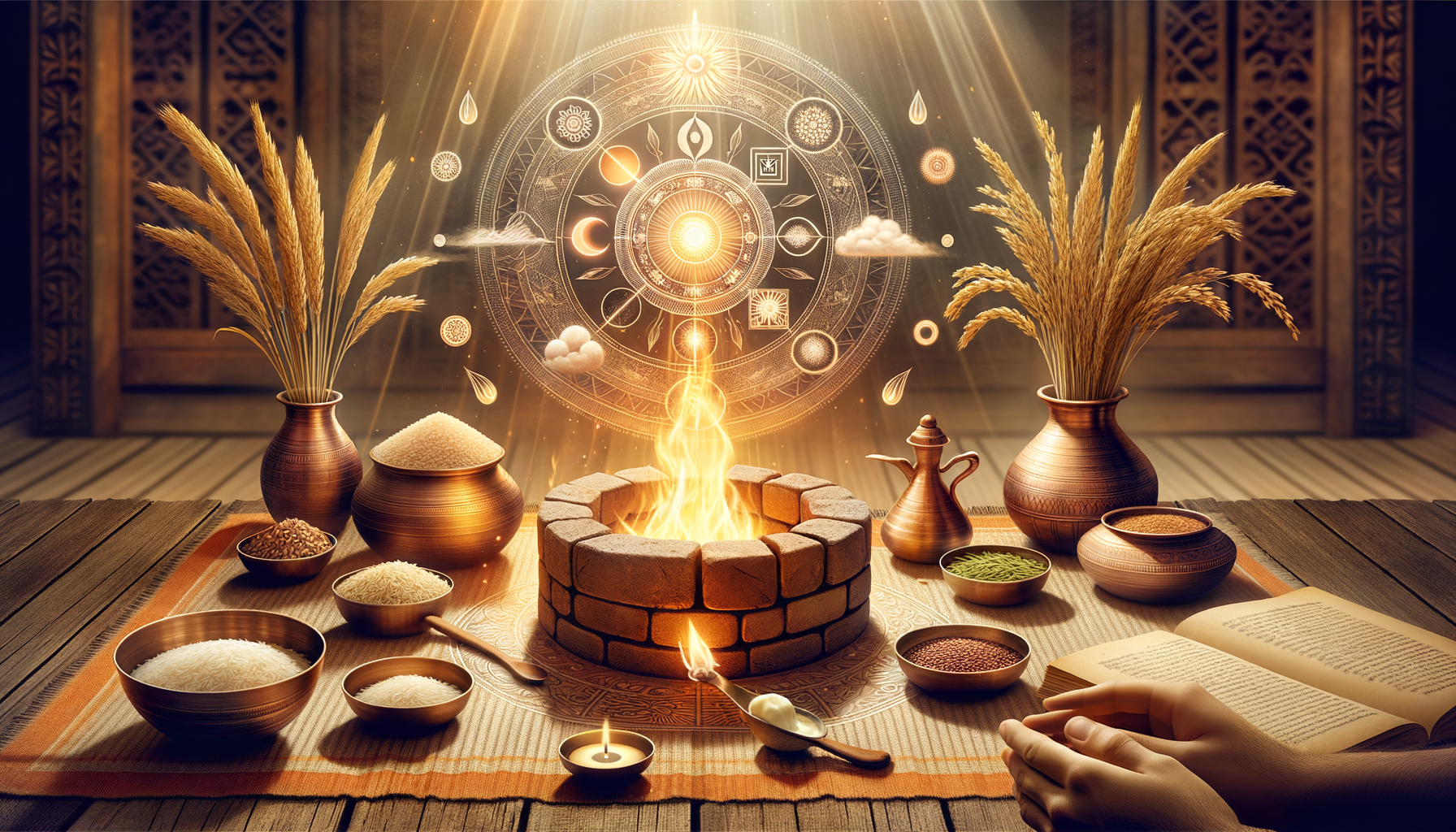
Mahahavis, literally the “great offering,” stands as a pivotal element within the Chaturmasya cycle of Vedic rituals in ancient Hindu religion. In the Shrauta tradition, Chaturmasya designates a recurring sequence of seasonal observances marked by ishti-type sacrifices. This framework illuminates how nourishment, reciprocity, and cosmic order (ṛta) are affirmed through offerings, prayer, and disciplined conduct.
Chaturmasya consists of three specific Vedic sacrifices performed at four-monthly intervals: Vaishvadeva, Varuna-praghasa, and Sakamedha. Each rite reflects a distinct theological emphasis and seasonal sensibility. Within this sequence, the Mahahavis underscores the expansive and integrative character of the offering: havis signifies the oblation cast into the sacred fire, while mahā conveys a heightened, comprehensive scope that gathers many strands of meaning—sustenance, debt to the cosmos, and the continuous reweaving of social and ecological harmony.
Sakamedha, traditionally regarded as the concluding sacrifice in the Chaturmasya series, is presented in Vedic literature as the culmination of the seasonal cycle. While specific ritual details vary across Shrauta-sūtras, the broader consensus affirms its role in sealing the rhythm of observances that began with Vaishvadeva and progressed through Varuna-praghasa. In this light, the Mahahavis operates not as a single discrete act but as a theological horizon—an intensification of offering that anchors the ethical, liturgical, and cosmological intentions of the series.
Across the textual tradition—including strands associated with Āpastamba, Baudhāyana, and Kātyāyana—descriptions of the Chaturmasya sacrifices and their components display regional and liturgical variation. Such plurality is an enduring feature of Vedic literature and practice, reflecting the adaptive integrity of Hindu scriptures over centuries. Despite these differences, the shared grammar of oblation, mantra, and seasonal attunement sustains a recognizable ritual identity rooted in ancient India.
In contemporary practice, echoes of the Chaturmasya ethos endure wherever communities reaffirm Vaishvadeva-like gratitude to all beings, honor water and rain through Varuna-centered remembrance, and conclude cycles with the integrative spirit associated with Sakamedha. Many practitioners find that the Mahahavis theme—offering elevated to its fullest ethical and spiritual meaning—cultivates mindfulness, stewardship, and mutual care, aligning personal devotion with communal well-being and ecological responsibility.
The Chaturmasya ideals also resonate across Dharmic traditions. The Buddhist Vassa (rains retreat), the Jain observances during Paryushana and Chaturmas, and Sikh seva and langar embody parallel commitments to restraint, reflection, generosity, and service. While liturgies differ, the shared values of discipline, compassion, and truthful living provide a unifying thread—affirming that diverse paths can reinforce a common pursuit of inner clarity and societal harmony.
Viewed through this wider lens, Mahahavis and the Chaturmasya sacrifices invite renewed engagement with Vedic traditions as living sources of insight. Through careful study of Vedic literature, thoughtful participation in community rites, and dialogue across Hinduism, Buddhism, Jainism, and Sikhism, communities can deepen unity without erasing distinctiveness. In doing so, the great offering becomes a shared ethic: to nourish life, uphold balance, and honor the sacred in all.
Inspired by this post on Hindu Blog.