The Dattatreya Upanishad, a minor Upanishad of the Atharva Veda, occupies a distinctive place within Hindu scriptures as a concise and contemplative text of the Vaishnava tradition. It centers on transcendental wisdom (jnana) and the devotional worship (bhakti) of Dattatreya, revered as an incarnation of Narayana. In just a few verses, it conveys a focused pathway to inner liberation grounded in Vedic wisdom and the broader ethos of dharmic spirituality.
Structured into three brief sections (khandas) and comprising nine mantraspredominantly in prose with one in versethe Upanishad exemplifies the precision of the minor Upanishads. Its brevity invites careful reading and repeated reflection, encouraging a contemplative engagement that distills essential insights rather than elaborating extended narratives. This form lends itself to study circles, temple discourses, and individual svadhyaya, demonstrating how concise scripture can transmit profound meaning.
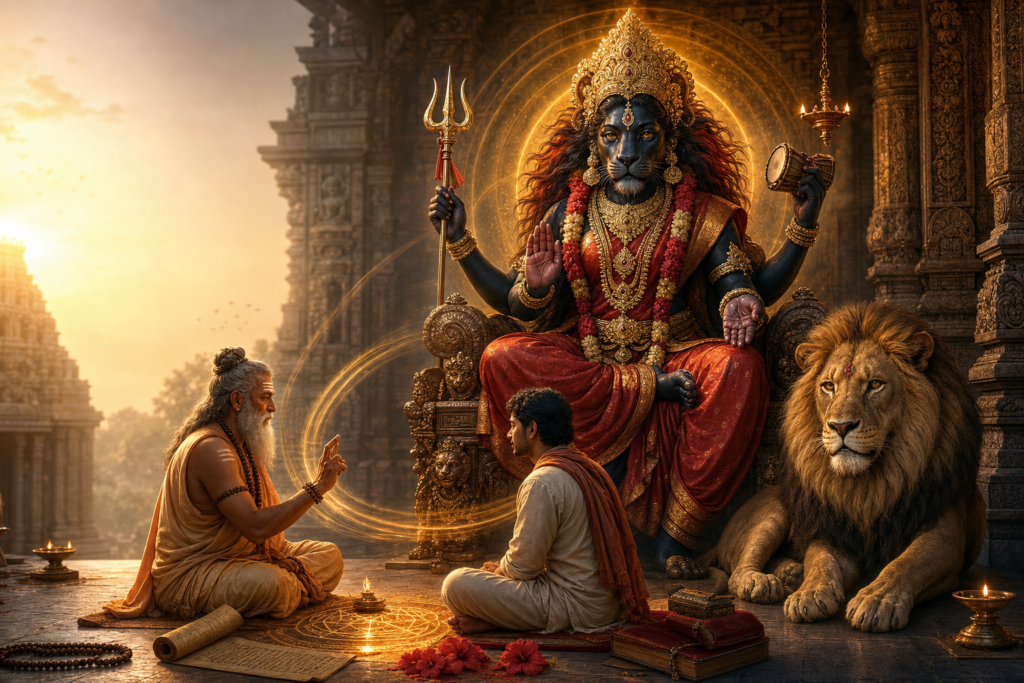
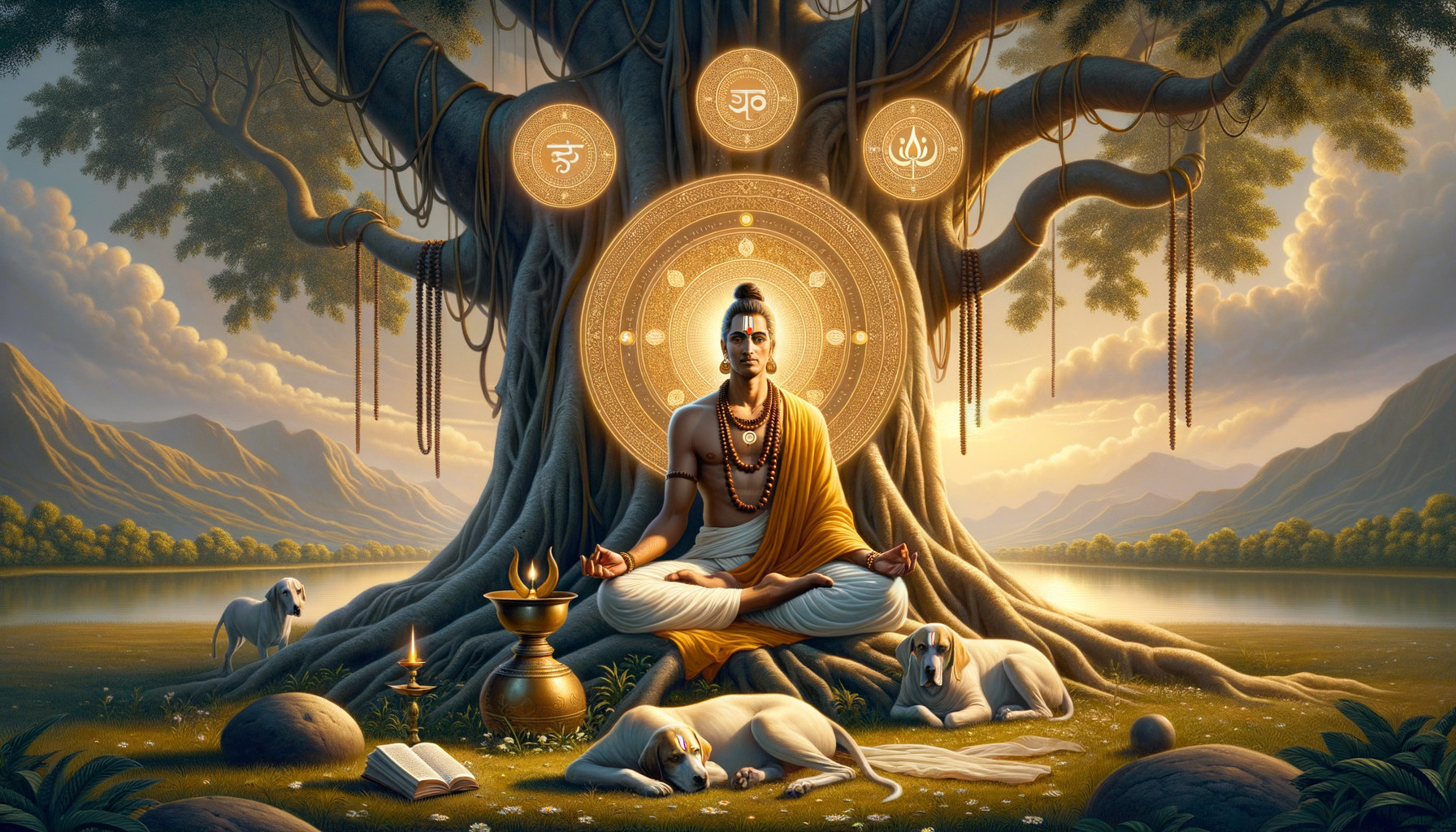
At its theological core, the Dattatreya Upanishad presents Dattatreya as a radiant manifestation of Narayana, uniting the experiential force of devotion with the lucidity of non-dual insight. The text suggests that the worship of Dattatreya moves beyond ritual form into the recognition of the deity as the living symbol of Brahman, the ultimate reality. This synthesis reflects a hallmark of the Upanishads: the convergence of jnana, bhakti, and disciplined practice (yoga) as complementary avenues to moksha.
In practical terms, the Upanishad encourages remembrance, contemplation, and ethical steadiness as mutually reinforcing disciplines. Practitioners often turn to its mantras and teachings as a daily anchor for meditation, integrating them with traditional observances in the Vaishnava tradition. The emphasis on inner stillness and steadfastness resonates with wider dharmic practices: Buddhist mindfulness and insight, Jain commitment to ahimsa and tapas, and the Sikh remembrance of Naam. Such resonances affirm a shared spiritual grammar across India’s dharmic traditions.
Philosophically, the Dattatreya Upanishad articulates a route from devotional focus to the realization of the Self’s identity with the supreme reality. By guiding the mind toward contemplative clarity, it reframes worship as a gateway to knowledge and knowledge as a refinement of devotion. This two-way movement aligns closely with other Upanishads, where the inquiry into Atman–Brahman culminates in both inner freedom and compassionate living.
Culturally, Dattatreya has long been honored as a figure who bridges ascetic wisdom and household virtue, inspiring seekers across regions and lineages. The Upanishad’s Vaishnava orientation is presented not as exclusivist, but as one thread in the larger tapestry of dharmic spirituality. By acknowledging diverse forms of worship and inner practice, the text reflects a civilizational commitment to unity in spiritual diversityan ethic upheld across Hinduism, Buddhism, Jainism, and Sikhism.
For contemporary readers, the Atharva Veda affiliation underscores the Upanishad’s place within a vast and living tradition of sacred texts. Its compact form makes it accessible to newcomers while offering seasoned practitioners a distilled source of reflection on jnana, bhakti, and meditation. As a study companion, it encourages deliberate pacing, memorization of key passages, and integration into daily sadhana, thereby transforming understanding into embodied insight.
Ultimately, the Dattatreya Upanishad invites a balanced spiritual life: devotional warmth, philosophical clarity, and mindful conduct. By honoring Dattatreya as Narayana and recognizing the Brahman-centered aim of all authentic practice, it provides seekers a luminous guide to inner liberation. In affirming many paths toward one truth, it strengthens the shared foundation of dharmic traditions and offers a thoughtful model for unity grounded in knowledge, reverence, and compassionate living.
Inspired by this post on Hindu Blog.