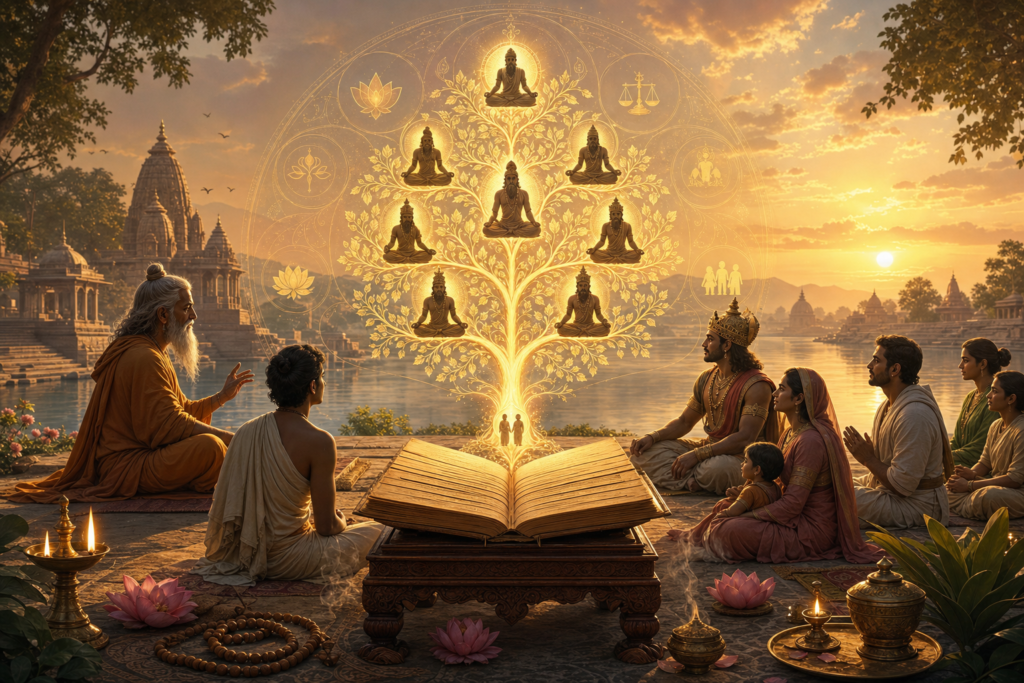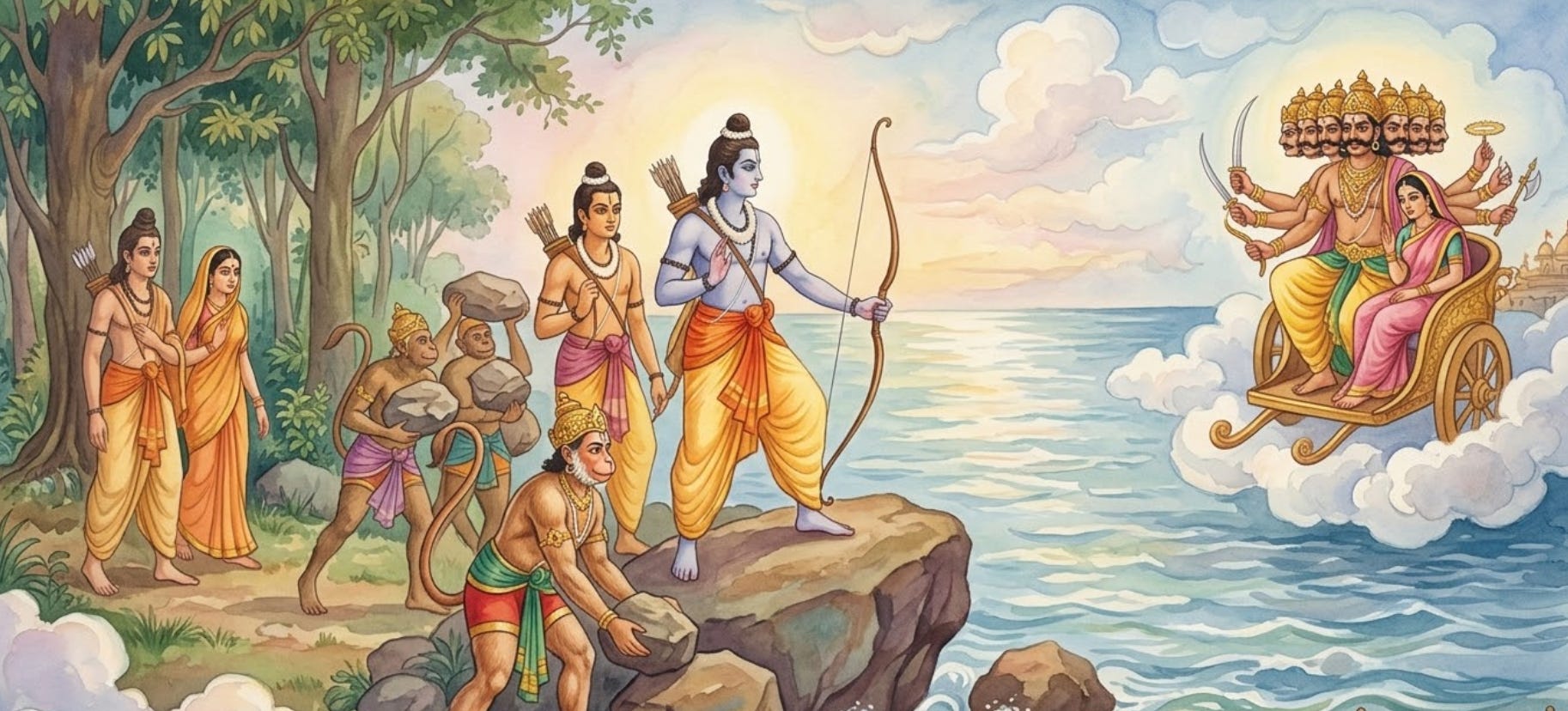
A clear, rigorous understanding of the Rāmāyaṇa’s textual ecology matters not only for literary history but also for civilizational self-understanding. Across centuries, the epic has inspired creative retellings throughout Greater India and beyond, yet the Sanskrit Rāmāyaṇa attributed to Vālmīki remains the aesthetic and ethical anchor. This analysis synthesizes the principal strands of evidence: the flourishing of adaptations across dharmic traditions, the centrality of rasa-driven poetics in the ādi-kāvya, and the risks of reading the epic primarily through modern ideological lenses. The aim is unityshowing how Hindu, Buddhist, Jain, and, by broader resonance, Sikh ethical thought can recognize a shared moral horizon in and around the Rāmāyaṇa without erasing the primacy of Vālmīki’s vision.
From the earliest attestations, poets and communities have repeatedly returned to Rāma’s story as a touchstone for character, virtue, and statecraft. Murāri, in Anargha-rāghava, articulates why this narrative remains inexhaustible raw material for great poetry:
yadi kṣuṇṇaṃ pūrvairiti jahati rāmasya caritam
guṇair-etāvadbhir-jagati punaranyo jayati kaḥ|
svam-ātmānaṃ tat-tad-guṇa-garima-gambhīra-madhura-
sphurad-vāg-brahmāṇaḥ katham-upakariṣyanti kavayaḥ|| 1.9
Rendered plainly: abandoning Rāma’s story because earlier poets used it would be self-defeating; where else would one find such plenitude of noble qualities, and how else might poets discharge their debt to language? Murāri’s insight emphasizes two intertwined criteria by which traditional India has evaluated the epic: its rasa-centric aesthetic power and its moral architecture, both intended to refine life, not merely to entertain.
For clarity, the manifold “other” Rāmāyaṇas can be organized into four broad, overlapping streams. This classification highlights literary intention, philosophical purpose, and reception while recognizing porous boundaries between written texts and living performance traditions.
First, articulations by dharmic subtraditions within Sanātana Dharma (Buddhist, Jain, Śaiva, Vaiṣṇava, Śākta, among others) often repurpose the epic’s narrative framework to convey their theological or ethical emphases. Buddhist tellings such as the Pāli Dasaratha Jātaka and Jain masterpieces like Vimalasūri’s Paumacariya exemplify this pedagogical thrust. These works generally honor Rāma’s character while prioritizing doctrinal instruction or ethical exemplarity. Their value lies in expanding how communities reason about dharma, non-violence, kingship, and liberation, even when their poetics diverge from Vālmīki’s rasa-first composition.
Second, texts attributed to Vālmīki and cognate narrative corporaAdhyātma-rāmāyaṇa, Ānanda-rāmāyaṇa, Adbhuta-rāmāyaṇa, and Yoga-vāsiṣṭhacirculate alongside a vast folk archive. These compositions often introduce didactic dialogues, amplify devotional motifs, or include marvels and wonders for popular relish. Many episodes serve to contextualize or ethically justify pivotal character choices. A vivid example from Citra-paṭa-rāmāyaṇa imagines a domestic exchange in which Sītā, asked to sketch her abductor, draws only Rāvaṇa’s feet, explaining she never looked upon his facetranslating everyday familial idioms into epic canvas. Such texts showcase how households and village theaters metabolize the epic’s lessons into intimate, memorable forms.
Third, classical kāvya and nāṭaka in Sanskrit and regional languages draw primarily from Vālmīki while exercising deliberate poetic license. Bhāsa’s plays (including his striking rehabilitation of Kaikeyī), Kālidāsa’s Raghuvaṃśa (with its famed stone-transformation in the Ahalyā episode), Bhavabhūti’s Uttararāmacarita, Murāri’s Anargha-rāghava, Rājaśekhara, Kṣemendra, Jayadeva, Kumāradāsa, Abhinanda, and Śaktibhadra (Āścaryacūḍāmaṇi) illustrate how courtly aesthetics, regional tastes, and philosophical fashions shape retellings. By the late classical period, theoreticians warned against whimsical alteration of a perfected rasa-structure. Ānandavardhana’s celebrated counsel remains decisive:
santi siddha-rasa-prakhyā ye ca rāmāyaṇādayaḥ |
kathāśrayā na tairyojyā svecchā rasa-virodhinī || (Udyota 3, segment after kārikā 14)
In effect: epics like the Rāmāyaṇa are paradigms of accomplished rasa; therefore, creative innovations ought not to violate their core aesthetic logic. Sensible liberties dwell in secondary details; the epic’s moral telos and emotional architecture should remain intact.
Fourth, modern reductionist readingsbe they Marxian, psychoanalytic, subaltern, or narrowly politicalsometimes treat the epic primarily as a vehicle for contemporary agendas. Comparative frameworks can illuminate reception histories and social textures; however, when they eclipse the text’s aesthetic-spiritual horizon, they risk flattening complexity and forfeiting rasānanda. A balanced approach respects philology, performance, and aesthetics while situating the epic in lived ethical life across Hindu, Buddhist, Jain, and, by resonance, Sikh communities that value discipline, rectitude, and service.
Within this landscape, the debate surrounding the phrase “300 Ramayanas” deserves calm, scholarly framing. The well-known comparative essay by A. K. Ramanujan mapped a spectrum of tellings to illustrate plural reception; enumeration, however, does not and need not displace Vālmīki’s primacy in Sanskrit literary history. Counting adaptations documents cultural reach; genealogy and poetics determine textual centrality. The dharmic archive has long distinguished between the ādi-kāvya’s rasa-siddhi and later pedagogical or regional revoicings. Seen this way, plurality attests to civilizational vitality, not to a negation of the original.
The Rāmāyaṇa is often described as India’s national epic because it interlaces literature, ethics, and civic imagination. Its footprint pervades classical and folk arts: Bharatanāṭyam, Kathakaḷi, Yakṣagāna, Kūṭiyāṭṭam, puppetry traditions like Tolubommalāta and Rāvaṇachhāyā, sculpture, painting, temple ritual, and cinema. Retellings in Indian languagesKampa-rāmāyaṇam (Tamil), Kṛttivāsa-rāmāyaṇa (Bengali), and Tulasīdāsa’s Rāmacaritamānasa (Avadhī)have nourished regional bhakti, ethics of householding, and public pedagogy. Across Southeast Asia, cognate traditions such as the Old Javanese Kakawin Rāmāyaṇa, Thailand’s Ramakien, Cambodia’s Reamker, Laos’s Phra Lak Phra Lam, Myanmar’s Yama Zatdaw, and the Malay Hikayat Seri Rama demonstrate the epic’s transregional adaptability without severing it from the Indian aesthetic spine.
On chronology and intertextuality, internal evidence indicates that the Rāmāyaṇa post-dates Vedic revelation yet predates the redaction of the Mahābhārata, which alludes to Rāma’s story in multiple passages, whereas the Rāmāyaṇa does not reference Mahābhārata events. Traditional understanding places the core narrative many centuries before the time of the Buddha; while scholarly discussions continue regarding layers and redactions, a prudent synthesis recognizes a pre-Buddhist core with later accretions shaped by performance and pedagogy. This view preserves both textual primacy and the reality of living transmission.
For contemporary readerswhether first introduced to Rāma in childhood storytelling, school recitations, or university syllabithree navigational heuristics help: (1) Aesthetic integrity: does a retelling preserve the epic’s rasa-structure and the maryādā (ethical boundariedness) of its protagonists? (2) Ethical coherence: do variations deepen dharmic reflection on duty, compassion, and governance shared across Hinduism, Buddhism, Jainism, and, in ethical tenor, Sikh traditions? (3) Contextual humility: can modern frameworks illuminate history without collapsing poetry into polemic? These criteria sustain unity and curiosity together.
Ultimately, plurality within the Rāmāyaṇa tradition is a sign of health, not fracture. Dharmic communities have long honored Vālmīki and treated the Rāmāyaṇa with reverence, even when composing for doctrinal teaching, popular theater, or courtly innovation. Valuing the ādi-kāvya’s aesthetic authority while welcoming responsible retellings keeps the tradition both faithful and supple. Such a posture advances the unity of Hindu, Buddhist, Jain, and Sikh ethical worlds and invites comparative analysis grounded in respect, philology, and the joy of literature’s transformative power.
Inspired by this post on Dharma Dispatch.