-
Ahura vs Deva: The dramatic Indo‑Iranian reversal—and what it reveals about Dharma

Why do Zoroastrian sources revere Ahura while condemning daevas, even as Hindu texts honor devas and oppose asuras? This long-form analysis traces the shared Indo-Iranian roots of these terms and explains how later reforms, rituals, and ethical priorities reversed their valuations. It clarifies early Vedic usage where asura could be a noble epithet, outlines Zarathustra’s…
-
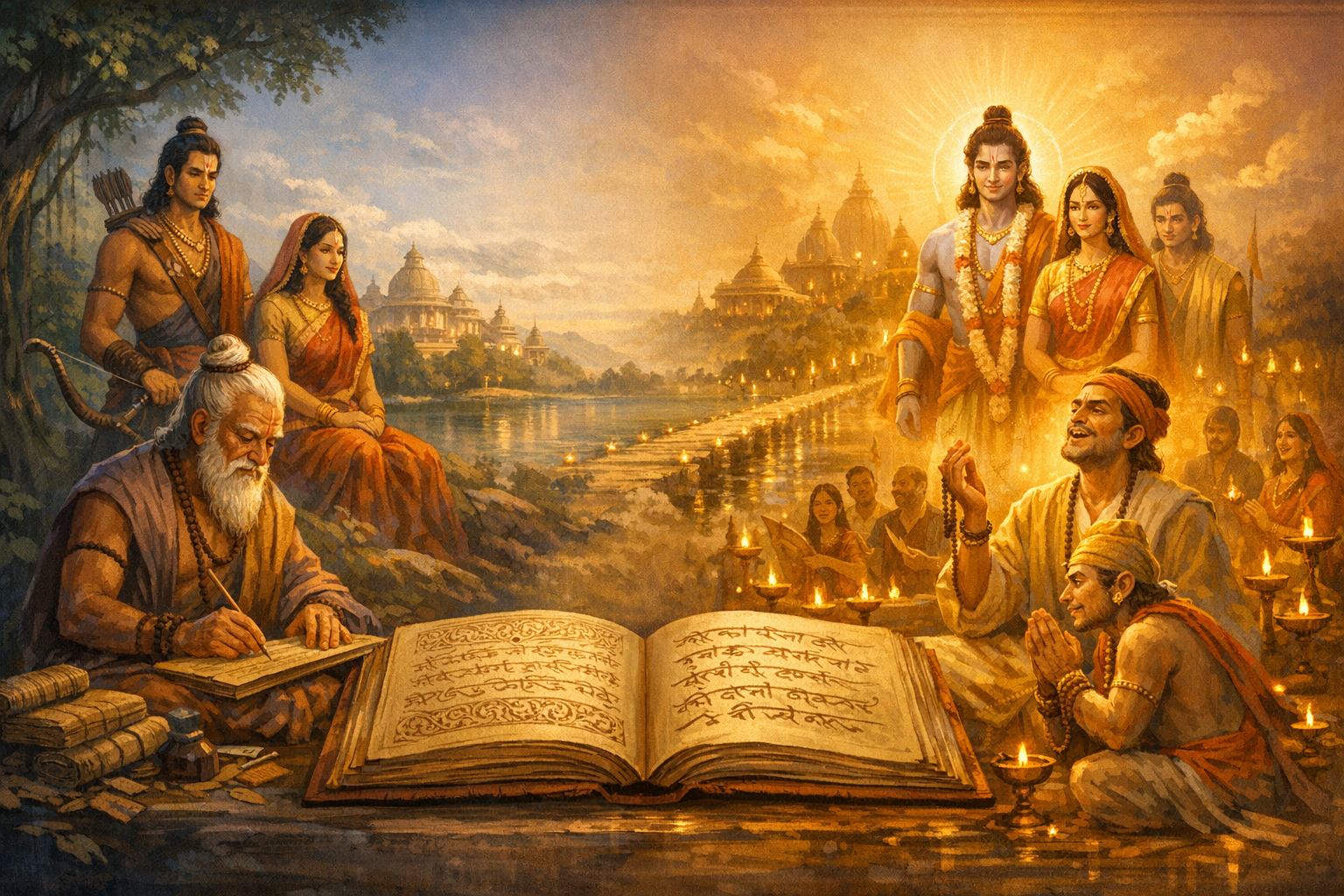
From Valmiki to Tulsidas: Rama’s Journey from Human Ideal to Supreme Divine—Explained

This scholarly comparison explains how Valmiki’s Sanskrit Ramayana and Tulsidas’ Awadhi Ramcharitmanas offer complementary visions of Rama—one as Maryada Purushottama, the ethical human exemplar, and the other as the Supreme Divine of the Bhakti Tradition. It situates both texts in their historical and linguistic contexts, clarifying why Sanskrit itihasa and vernacular kirtan-poetics produce different emphases.…
-
Sacred Bulls Across Civilizations: Nandi in Ancient Hinduism vs Minoan Crete’s Bull Cult

From Indus Valley seals to the palaces of Knossos, this long-form comparative study explores how the bull became a sacred anchor in both ancient Hinduism and Minoan Crete. Readers learn how Nandi, Śiva’s vahana and gatekeeper, embodies dharma, while Minoan bull‑leaping and horns of consecration ritualize courage and communal identity. The analysis integrates archaeology, textual…
-
Unveiling the Serpent Divine: Rigorous Comparison of Hindu Nagas and Ancient Greece’s Glycon

Serpent deities crystallize a universal human intuition about healing, protection, and moral order. This rigorous, evidence-based comparison places Hindu Nagas—plural, ecologically integrated, and cosmologically central—alongside the Greco-Roman Glycon, a historically bounded healing and oracular cult. Drawing on the Mahabharata, Puranas, and living festivals such as Naga Panchami and Nagula Chavithi, it shows how Nagas unify…
-
Decoding Kumbhakarna’s Sleep: Valmiki Ramayana vs Folklore on Duration, Boons, and Symbolism

This analysis clarifies what the Valmiki Ramayana actually states about Kumbhakarna’s sleep and why folk Ramayanas frequently specify a six‑month cycle. It explains how later boons-and-curse narratives—especially the Sarasvatī speech motif—emerged to teach ethics of intention and speech. Drawing on cosmology (Uttarāyaṇa/Dakṣiṇāyana and ṣaḍṛtu), it shows why “six months” became a memorable mnemonic in oral…
-
Beyond ‘300 Ramayanas’: Valmiki’s Legacy, Rasa Aesthetics, and Dharmic Unity in Retellings

This essay maps the many Rāmāyaṇa traditions while reaffirming the aesthetic primacy of Vālmīki’s Sanskrit epic. It classifies adaptations into four clear streams—dharmic subtraditions, texts attributed to Vālmīki and folk narratives, classical kāvya and drama, and modern ideological readings—so readers can evaluate variations without losing the original’s moral and poetic center. Murāri’s verse and Ānandavardhana’s…
-
Enigmatic Two-Headed Golden Deer: What Regional Ramayanas Reveal about Sita’s Abduction

The Ramayana’s Sita abduction episode is not a fixed script but a living tradition across India. In select Kerala and Tamil Nadu repertoires, the golden deer becomes a two-headed marvel, amplifying the epic’s meditation on maya, desire, and deception. Anchored in Valmiki’s Aranya Kanda yet enriched by Kamba Ramayanam, Adhyatma Ramayanam Kilippattu, and folk performance,…
-
Atikaya and Yuyutsu: Dharma Beyond Birth in Ramayana–Mahabharata | A Compassionate Comparison

This essay compares Atikaya of the Ramayana and Yuyutsu of the Mahabharata to show how moral choice, not birth, defines character in the Hindu epics. It explains Atikaya’s courageous yet misplaced loyalty to Ravana and Yuyutsu’s principled decision to side with the Pandavas. The analysis highlights dharma versus adharma as a practical, action-based ethic rather…
-
Reordering Britain’s Myth: A Powerful Satire of Colonial Classification and the Potterverse

Set in a satirical future where Bharat administers Britain, this piece examines how external classification—framed through a Potterverse House system—can reshape social realities. It traces how myths become templates for hierarchy, how census categories can reward strategic identity claims, and how well-intended policy may still rigidify fluid communities. Readers gain a clear, decolonial lens on…
-
Lakshmi and Chicomecoatl: Powerful Cross-Cultural Echoes of Prosperity and Nourishment

A striking visual parallel links Hinduism’s Goddess Lakshmi with Chicomecoatl, the Aztec corn goddess, through shared symbols of flowers and grain. This comparison clarifies how agrarian civilizations independently envisioned prosperity, abundance, and ethical well-being. Readers gain an accessible, evidence-based perspective on cross-cultural symbolism without overstating historical contact. The discussion highlights values central to dharmic traditions—compassion,…
-
Kubera and Plutus Compared: Timeless Lessons on Ethical Wealth Across Hindu and Greek Traditions

A cross-cultural comparison of Kubera in Hinduism and Plutus (Ploutos) in Greek mythology reveals how civilizations frame wealth as a moral responsibility. Kubera represents ritualized stewardship and the dharmic integration of artha with generosity and social duty. Plutus, by contrast, functions primarily as an allegory in Greek literature, symbolizing the capricious distribution of riches and…
-
Origins of the Universe: A Thoughtful Bridge Between Srimad Bhagavatam and Big Bang Theory

This piece compares the Srimad Bhagavatam’s concept of pradhana with the Big Bang theory’s initial singularity, highlighting resonances without conflating scripture and science. It clarifies that both accounts point to a pre-manifest state where familiar space, time, and physical laws do not yet operate. Readers gain an accessible overview of Vedic cosmology alongside contemporary astrophysics.…
-
Alvars and Maharashtrian Bhakti Saints: Parallels in Devotion, Poetry, and Social Reform

This comparative study explores how the Tamil Alvars and Maharashtrian Bhakti saints shaped devotional culture, social ethics, and vernacular literature in medieval India. It highlights shared Vaishnava foundations, yet distinct accents—temple-based Prabandham recitation in the South and Varkari abhang–kirtan in the West. Readers learn how both traditions democratized spirituality through Tamil and Marathi, expanded participation…
-
Discover Surprising Parallels: A Complete, Balanced Comparison of Trump and Mahatma Gandhi

An intergenerational conversation sparked a balanced comparison between Mahatma Gandhi and Donald Trump, examining abstinence, economic nationalism, and strategic non-cooperation across distinct historical contexts. The analysis highlights Gandhi’s Swadeshi and Satyagraha alongside MAGA-era reshoring and intraparty discipline, showing where tactics appear parallel and where they fundamentally diverge. It addresses contested leadership choices, complex stances on…
-
Unveiling the Unexpected Parallels: Trump and Gandhi

Explore the surprising similarities between Donald Trump and Mahatma Gandhi. Discover how their ideologies and actions mirror each other in unexpected ways, from economic strategies to personal choices.