
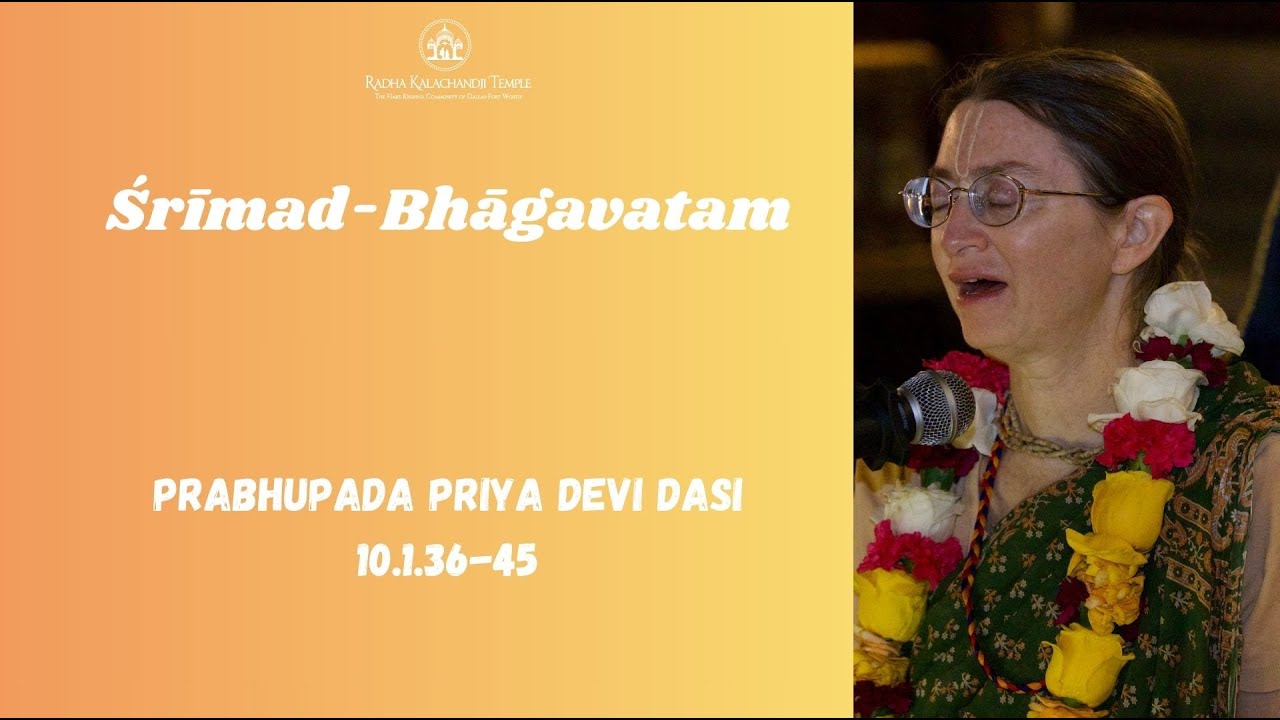
Srimad Bhagavatam 10.1.36–45 presents a concise yet profound principle of Vedic philosophy: at the time of death, the mind’s thinking, feeling, and willingaccumulated through fruitive activitiesshape the next embodiment. This teaching, discussed on January 1, 2026 by Prabhupada Priya Devi Dasi, frames embodiment as a lawful outcome of consciousness. The body develops in accordance with the activities of the mind; changes in body follow the mind’s flickering, whereas the soul itself remains unchanged.
Philosophically, these verses illuminate the pathway from subtle to gross (gross to subtle in reverse during cultivation). Impressions (saṁskāras) formed by habitual thoughts, desires, and actions configure mental disposition, and this disposition directs one’s trajectory at life’s end. In this view, karma operates not as fatalism but as a precise moral psychology: intention (bhāva), attention, and action co-produce character and, consequently, destiny.
Practically, the message resonates with common human experience around life’s final moments. Families often observe how deep-set habits surface at the endprayers remembered, mantras recalled, or anxieties revived. The teaching suggests that daily cultivation of attention through study of Hindu scriptures, meditation, and ethically grounded living (dharma) gently trains the mind to rest in clarity rather than agitation. This perspective offers solace and responsibility at once: what is practiced consistently becomes available when it matters most.
Ethically, the Bhagavatam’s insight links inner life and outer consequence. The mind-body connection is not merely physiological; it is moral and spiritual. When the mind is absorbed in compassionate service (seva), truthfulness, and steadiness (sattva), consciousness becomes lucid. When driven by unchecked craving and rivalry, it becomes turbulent. The verses therefore encourage disciplined remembrance of the Divine and purposeful living to align intention with upliftment.
These themes harmonize with broader dharmic thought. Buddhism underscores how intention (cetana) and mental formations condition future experience; Jainism emphasizes the purification of karma through right view, right knowledge, and right conduct; Sikh tradition centers the remembrance of the Divine Name and ethical action as pathways to liberation. While metaphysical frameworks vary, the shared emphasis on cultivating consciousness, moral accountability, and compassion reflects a unifying thread among Hinduism, Buddhism, Jainism, and Sikhism.
For contemporary readers, this wisdom remains actionable. Consistent contemplation of sacred texts such as the Puranas, mindful breath and mantra practice, and service-oriented routines stabilize attention. Over time, this steadiness reframes hardship, reduces reactivity, and prepares consciousness for a peaceful transition at life’s closeaffirming that death mirrors the quality of one’s living.
In sum, Srimad Bhagavatam 10.1.36–45 articulates a precise law of consciousness: the mentality at death follows from the mind trained across a lifetime. By aligning thought, speech, and deed with dharma, and by nurturing love and remembrance of the Divine, one participates in shaping a future characterized by clarity, responsibility, and grace. This is not merely metaphysical speculation; it is a practical roadmap for inner transformation supported within the ISKCON tradition and across the wider tapestry of dharmic philosophies.
Inspired by this post on Dandavats.










