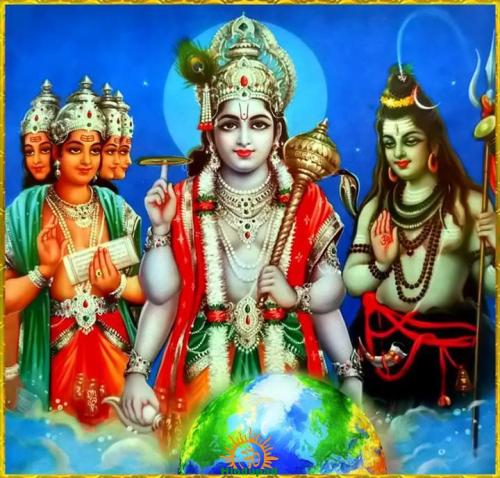
In Hindu cosmology, the universe unfolds across many lokas, or planes of existence, each reflecting a distinct state of consciousness. At the summit of these realms stands Satyalokaalso called Brahmalokathe exalted abode of Lord Brahma. The very name clarifies its essence: satya (truth) and loka (realm). Satyaloka is thus understood as the plane where truth abides in its most luminous expression, a sphere emblematic of clarity, wisdom, and harmony with cosmic order.
Described across the Puranas and Upanishads, Satyaloka symbolizes the culmination of sattvathe quality of purity, light, and balance. It is portrayed as the highest celestial sphere attainable through profound knowledge, steadfast dharma, and refined meditation. While not synonymous with ultimate liberation for all, classical texts often present Brahmaloka as a gateway to moksha through krama-mukti, where resident seekers advance beyond cyclical existence when the grand cosmic cycle concludes.
In symbolic terms, Satyaloka represents reality unobscured by maya. Time itself is reframed: the vast cycles associated with Brahma’s creative rhythm remind seekers that truth endures while appearances evolve. As the seat of Vedic wisdom, Brahmaloka conveys the integration of jnana (knowledge), bhakti (devotion), and karma (righteous action) into a coherent life-orientation rooted in satya. This vision resonates with the Vedantic ideal of abiding in sat–cit–ananda (being–consciousness–bliss), where truth is not mere statement but lived ontological reality.
Ethically, Satyaloka’s symbolism touches daily life. Satya, as emphasized in classical yoga and dharmic ethics, is more than accurate speech; it is alignment of thought, word, and deed with what is real and beneficial. Cultivating truthfulness purifies intention, steadies perception, and reduces inner conflict. Through tapas (disciplined effort), dhyana (meditation), and svadhyaya (self-study of sacred texts), aspirants refine awareness so that truth is recognized not as abstraction but as guiding presence.
This ideal harmonizes with the broader dharmic family of traditions. In Buddhism, the distinction between samvriti-satya (conventional truth) and paramartha-satya (ultimate truth) parallels the ascent from conditioned views to direct insight; Mahayana depictions of the highest pure realms, such as Akaniṣṭha, evoke a similar pursuit of unclouded knowing. In Jainism, the vow of satya and the vision of Siddhashilathe abode of liberated beingsaffirm truth as foundational to spiritual freedom. In Sikh wisdom, Sachkhand and the invocation Satnam bring truth into the heart of remembrance and devotion. These convergences underscore a shared civilizational insight: truth is both a path and a destination, uniting seekers across dharmic lineages.
Contemporary relevance emerges clearly. In an age of rapid information and shifting narratives, Satyaloka invites a steady orientationdiscerning the real from the transient, the essential from the distracting. By grounding in satya, individuals cultivate clarity, integrity, and compassionate action. The symbol of Brahmaloka thus functions as a living compass: it points to a life where wisdom guides creativity, duty is illumined by understanding, and spiritual aspiration matures into inclusive harmony.
Ultimately, Satyaloka is called the “abode of truth” because it represents truth realized, not merely contemplated. It gathers cosmology, ethics, and meditative insight into a single image of ascenttoward a reality where knowledge ripens into freedom and the many pathways of Sanatana Dharma, Buddhism, Jainism, and Sikhism meet in shared reverence for satya. In honoring this symbol, seekers affirm that truth is both the highest realm and the deepest virtue.
Inspired by this post on Hindu Blog.