Moksha, often translated as liberation, is presented in Hindu philosophy as freedom from the binding sway of material nature. At the heart of this vision lies the insight that sattva (clarity), rajas (activity), and tamas (inertia)the three gunasstructure all psychophysical experience and, when unexamined, hold consciousness captive to samsara. The state called gunatita, “beyond the gunas,” describes a realization in which awareness no longer oscillates under their compulsion. This account does not negate the world; rather, it discloses an abiding freedom that can stabilize compassionate, ethical participation in life while loosening the knots of compulsion and fear.
Within the classical Sankhya-Yoga framework, the gunas are the dynamic constituents of Prakriti. Sattva lends luminosity and balance, rajas projects motion and craving, and tamas produces heaviness, confusion, and concealment. Their ceaseless interplay gives rise to body, senses, and mind, along with the patterns of pleasure and pain that motivate action. Crucially, even sattvathough refinedcan bind through subtle attachments to harmony, knowledge, and virtue when those are claimed as egoic possessions.
The Bhagavad Gita situates the human problem precisely here: the gunas tie consciousness to cycles of reactivity, achievement, aversion, and self-definition. Liberation is not the triumph of one guna over the others; it is the recognition that all three are features of Prakriti, not of the Self. To see “the gunas revolving among the gunas” without identifying with their movement is a decisive cognitive and existential shift. This de-identification opens a clarity in which action continues, but its motives are no longer driven by grasping or fear.
In different Hindu schools, liberation bears allied namesmoksha, kaivalya, and apavargayet a common thread runs through them: emancipation from Prakriti’s hold and the return to one’s original, unconditioned nature. This state is not nihilistic emptiness; it is a luminous freedom marked by fearlessness, serenity, and unwavering discernment. It also assumes ethical gravity, because genuine release from the gunas dissolves the very tendencies that cause harm to oneself and to others.
Sankhya articulates the metaphysical foundation for this transformation. Purusha, the witnessing consciousness, is intrinsically free and changeless. Prakriti, composed of the three gunas, unfolds into the manifold cosmosincluding mind and intellect. Bondage arises from the mistaken superimposition of Prakriti’s activities onto Purusha, while kaivalya is realized when this confusion ceases and Purusha stands apart in its own light. In this view, the gunas do not have to be destroyed; their operations are simply no longer misattributed to the Self.
Advaita Vedanta frames the same drama through the nondual identity of Atman and Brahman. Avidya projects multiplicity and confers reality to the gunas and their evolutes within Maya’s domain. Liberation arises by self-knowledgediscerning the Seer from the seen, the changeless from the changingoften expressed through the incisive method of “neti neti” (not this, not this). Even sattva, prized for facilitating clarity, is eventually transcended as knowledge dawns that Brahman alone is real and that awareness was never truly modified by Prakriti.
Vishishtadvaita and Dvaita introduce meaningful theistic nuances without losing the central insight. For Vishishtadvaita, moksha culminates in unbroken loving union and service to Narayana, free from material nature. Dvaita underscores the eternal difference between the soul and Ishvara while equally affirming deliverance from the gunas through divine grace. Across these schools, liberation is inseparable from Ishvara’s sovereignty; what changes is the soul’s bondage to Prakriti, not the Lord’s transcendence. The unifying message is clear: practices centered on surrender (prapatti), devotion (bhakti), and right knowledge converge on emancipation from the three gunas.
Yoga philosophy operationalizes this transformation through discipline. Yogic psychology treats the mind (citta) as a product of the gunas. Its fluctuations (vrittis) perpetuate identification and suffering. Through yama, niyama, asana, pranayama, pratyahara, dharana, and dhyana, the mind becomes increasingly sattva-predominant, reflecting awareness with greater fidelity. In samadhi, discernment (viveka-khyati) matures into abiding recognition of the Seer. Kaivalya follows naturally when citta’s dependency on the gunas no longer entangles awareness.
Four classical pathways illuminate how bondage loosens. In Jnana Yoga, discriminative inquiry separates the Real from the non-real, revealing that the gunas are objects, not the Self. In Karma Yoga, action is consecrated and offered without attachment to outcomes, dissolving rajas-driven restlessness and tamas-born aversion. In Bhakti, devotion redirects desire and emotion toward Ishvara, allowing sattva to mature into graceful surrender and love without possession. In Raja Yoga, meditative stability quiets reactivity at its root, preventing the gunas from imposing their habitual colorations upon experience.
Because the gunas are developmental, optimizing their balance is both skillful and necessary. Cultivating sattvathrough ethical living, study of scriptures (svadhyaya), wholesome diet, disciplined sleep, and sanghacreates a stable platform for insight. Yet one must finally transcend even sattva, recognizing it as a proximate aid rather than the goal itself. The metaphor of a ladder is apt: climb with sattva, then let the ladder go when the vantage of freedom is established.
Liberation during life (jivanmukti) has distinctive signs. Equanimity persists amid pleasure and pain; praise and blame lose their capacity to disturb the heart; and action proceeds from clarity rather than compulsion. The gunatita person is not apathetic; rather, there is a quiet, steady strength that neither chases nor resists experience. Such stability allows compassionate responsivenessdharma in actionunclouded by rajas or tamas.
At a practical level, what binds are samskaras and vasanas: deep impressions that predispose perception and behavior. Rajas amplifies craving and anxiety; tamas fuels procrastination, resentment, and delusion. Systematic sadhana unwinds these forces. Daily meditation refines attention; self-inquiry exposes the structure of identification; devotional remembrance (smarana) warms the heart; and selfless service (seva) weakens egoic centrism. Over time, consciousness learns to witness the rise and fall of guna-driven states without being captured by them.
Ethical life plays an indispensable role in this maturation. Ahimsa, satya, asteya, brahmacharya, and aparigraha conserve inner energy and align intention with truth. The Bhagavad Gita’s ideal of loka-sangrahaacting for the welfare of the worldexpresses how freedom from the gunas does not culminate in isolation but in wise, compassionate participation. Similar currents flow through other dharmic traditions: Buddhist karuna, Jain ahimsa, and Sikh seva. In each case, inner freedom blossoms as outward care.
Seen through a dharmic-unity lens, the destination resonates across traditions. Buddhism describes nirvana as the extinguishing of the fires of greed, hatred, and delusion; though its ontology differs from Vedanta, the experiential freedom from compulsion parallels going beyond the gunas. Jainism teaches kevalajnana, the soul’s pure omniscience realized by shedding karmic matter that colors consciousnessagain, an emancipation from binding qualities. Sikh teachings speak of mukti through remembrance of Naam and alignment with Hukam, including transcendence of the “trai guna” that agitate the mind. Across these paths, the shared aspiration is unmistakable: release from conditioning and the flourishing of wisdom and compassion.
Common misconceptions deserve careful correction. Moksha is not world-denial or emotional numbing; nor is it license to ignore responsibility. A gunatita life is supple and responsive, not inert. Emotions continue to arise, but without appropriation; ethics continue to bind, but as joyful commitments rather than anxious obligations. Far from disinterest in society, freedom clarifies service.
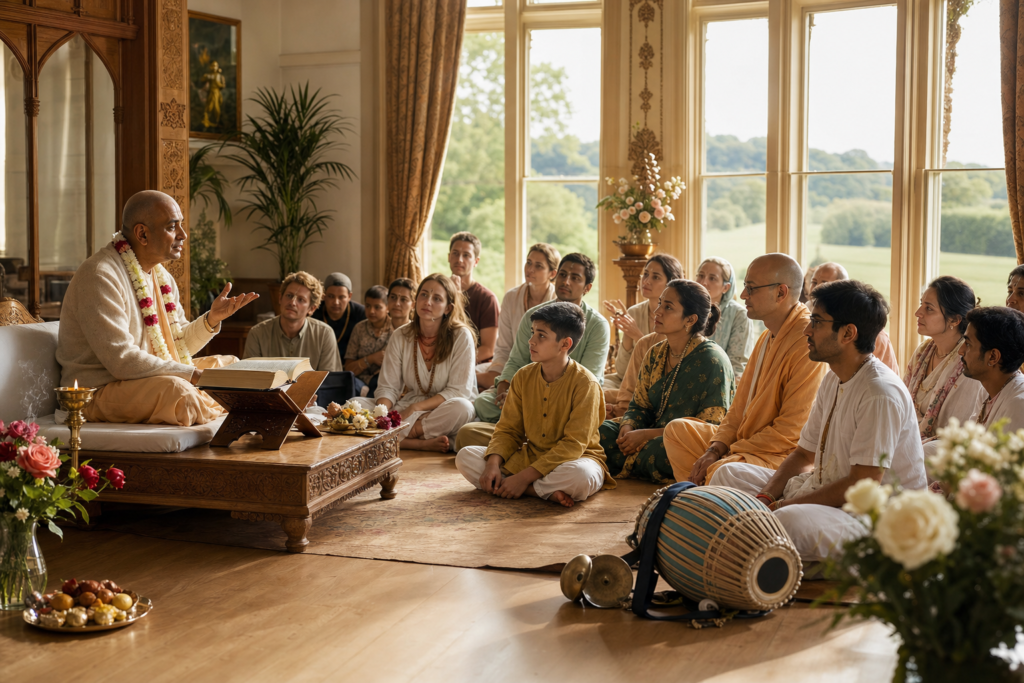
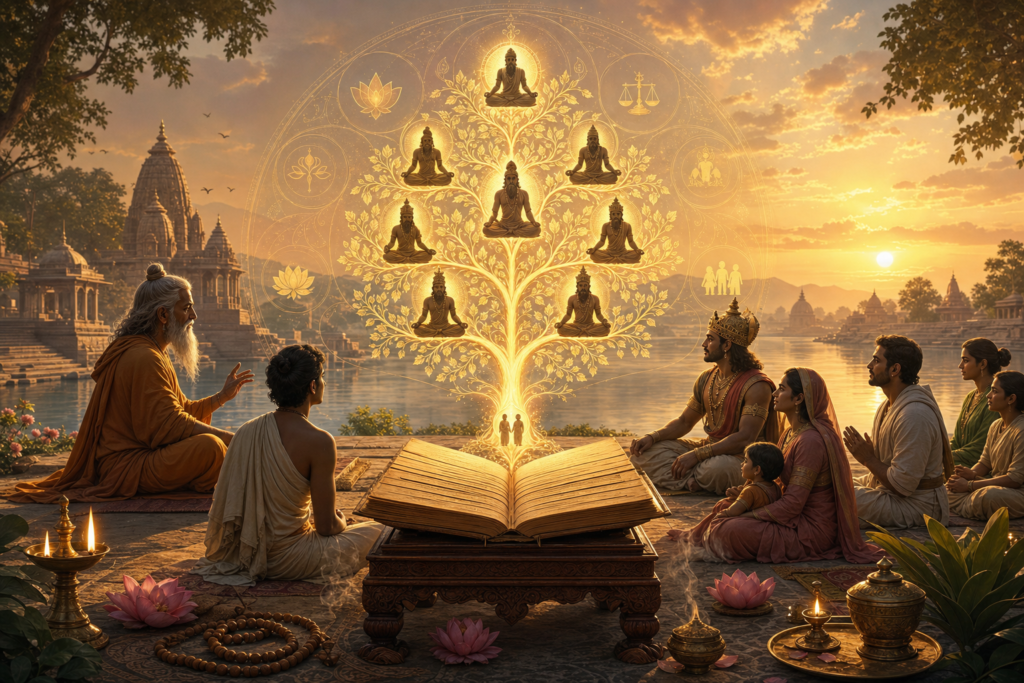
Grace and guidance are integral. Traditions differ in emphasisAdvaita stresses knowledge, Vishishtadvaita and Dvaita highlight grace and devotion, and Yoga outlines sustained methodbut all converge on the indispensability of a living current of wisdom transmitted through teacher, community, and scripture. In practice, this means study of the Upanishads and Bhagavad Gita, participation in satsang, remembrance of the Divine, and steady, humble application of techniques that pacify the mind and purify motive.
Transcending the gunas does not erase moral discernment; it refines it. “Beyond good and evil” never means beyond dharma. It signifies freedom from egoic entanglement in outcomes and identities, not indifference to right and wrong. When reactivity subsides, insight into what truly benefits oneself and others becomes clearer, more timely, and less self-referential.
From a contemplative standpoint, several experiential markers indicate wholesome progress: reduced compulsive reactivity; quicker recovery from disturbance; spontaneous goodwill; a stabilizing background of quiet awareness; and a declining need for external validation. These are not trophies to collect but signals that identification with the gunas is thinning. Periodic reactivity will continue; the shift is that awareness recognizes, allows, and releases it more easily.
Ultimately, to say that moksha is being “devoid of gunas” is to affirm that consciousness in its essence is not a product of Prakriti. Whether framed as Purusha’s isolation, Atman-Brahman identity, servant-hood to the Lord, or the flowering of bodhi, the liberative horizon points to the same freedom: life lived from clarity rather than compulsion, love rather than fear, and wisdom rather than confusion. The three gunas remain as the texture of the manifest world, but they no longer dictate the measure of one’s being.
This integrative understanding also reinforces unity among Hinduism, Buddhism, Jainism, and Sikhism. Each tradition offers a complete path suited to different temperamentsjnana, bhakti, karma, raja, mindfulness, ahimsa, sevaand all refine the mind’s tendencies while orienting the heart toward truth. In honoring this shared aspiration, seekers can appreciate the diversity of methods without losing sight of the singular aim: liberation from the forces that confine awareness, and the realization of a freedom that naturally expresses itself as compassion, responsibility, and peace.
Inspired by this post on Hindu Blog.