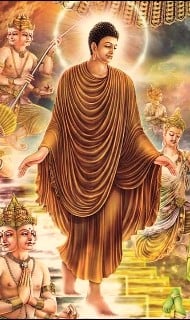
The place of Lord Buddha within Vaishnava thought is an intricate and layered subject. The breadth of Buddhist philosophy and practice, alongside the depth of the Vedic tradition, makes any comprehensive treatment far beyond the scope of a brief essay. Yet a core insight can be stated clearly: within the Vaishnava tradition, Lord Buddha is revered as an avatar of Vishnu, a perspective that invites careful, respectful reflection across the family of dharmic traditions.
Historically, Lord Buddha transformed religious discourse in India roughly 2,500 years ago and, over time, his influence extended worldwide. From a Vaishnava lens, this transformation emphasized ahimsa, compassion, and ethical clarity while strategically de-emphasizing ritualism that had obscured the essence of dharma for many. Seen this way, what appears to some as a refutation of Vedic ritual can also be understood as a restoration of Vedic ethical essencean act consonant with the protective and guiding role of Vishnu and the universal compassion of Krishna.
This theological paradoxseeming critique yet ultimate restorationnaturally evokes humility and wonder. It also offers a powerful bridge for unity among Hinduism, Buddhism, Jainism, and Sikhism. Shared commitments to compassion, truth-seeking, self-discipline, and non-violence reveal a deep civilizational continuity within Sanatana Dharma, while preserving the distinct identities and contributions of each tradition.
Practitioners often report that contemplative disciplineswhether framed as dhyana, japa, or mindfulnessnurture similar inner qualities: clarity, empathy, and steadiness. Approaching Lord Buddha as Vishnu’s avatar, in the Vaishnava understanding, need not diminish the autonomy or originality of Buddhism; rather, it can enrich interfaith respect by highlighting convergences in lived practice and ethical aspiration. In this spirit of Religious Pluralism and Unity in Diversity, dialogue becomes an invitation to recognize a shared moral grammar across dharmic paths.
Such a view encourages scholarship and practice that honor both textual sources (including Puranic accounts and Buddhist canons) and lived spiritual experience. It recommends a posture of reverence toward the Lord’s mysterious ways and an ethic of gentle inquiryone that advances harmony within the dharmic family while safeguarding the integrity of each tradition’s insights into dharma, ahimsa, and ultimate truth.
Inspired by this post on Dandavats.