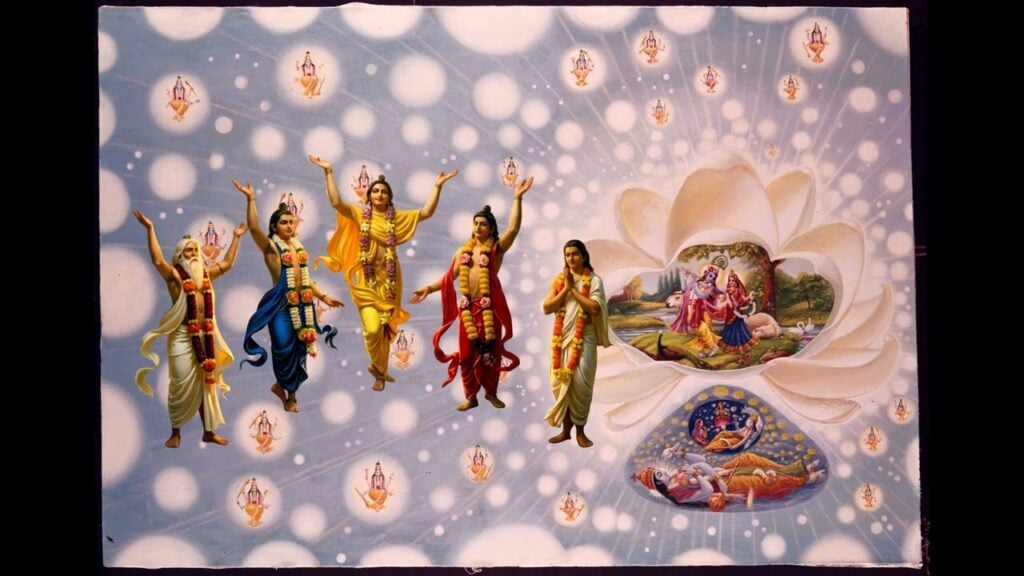
“Life’s long journey presents daily opportunities for change” is a teaching that aligns closely with Hindu philosophy and resonates across the broader dharmic traditions. Grounded in the cyclical understanding of time (kalachakra) and the evolving nature of consciousness, it frames each day as a living laboratory for Dharma, Karma, and Spiritual Growth. Read through this lens, the idea becomes not merely inspirational but methodologically sound: small, consistent choices reconfigure samskara and redirect life’s trajectory.
At its core, the teaching affirms agency within samsara. The Bhagavad Gita emphasizes intentional action without attachment to outcomes, while the Upanishads orient the seeker toward inner awareness and Self-Realization. In practical terms, this means that every decisionhowever modestparticipates in karma-yoga, shaping character and cultivating clarity. The daily rhythm becomes a canvas for abhyasa (steady practice) and vairagya (wise non-attachment), aligning effort with purpose.
The importance of daily change rests in its accessibility. Many find that transformative shifts rarely arrive as dramatic breakthroughs; they emerge from disciplined attention to what is present now. A commuter pausing for three conscious breaths before a difficult call, a parent choosing patience over reactivity, or a student returning to study after distractionthese moments exemplify nairantarya abhyase, the continuity of effort that strengthens the mind and reshapes habit. Mindfulness, Meditation, and Yoga complement this process, stabilizing attention and integrating insight into routine.
This principle harmonizes with parallel insights in Buddhism, Jainism, and Sikhism, underscoring unity in spiritual diversity. Buddhism highlights anicca (impermanence), inviting skillful response to change; Jainism refines character through ahimsa and aparigraha, modeling ethical transformation; Sikhism cultivates seva and chardi kala, sustaining resilient optimism and service. Taken together, these perspectives support a shared dharmic vision: daily life is a sacred site of learning, compassion, and renewal.
Symbolically, dawn represents renewed possibility, each sunrise echoing the promise of a fresh karmic imprint. The flow of a river mirrors the mind’s continuity and plasticity, capable of carving new channels through steady movement. Even the breath (prana) offers a profound metaphor: inhalation welcomes awareness; exhalation releases rigidity. Such symbols are not abstractions; they are practical reminders that align attention with action.
Modern-day relevance is immediate. In a digital age marked by constant stimuli, the capacity to anchor attention and choose wisely under pressure has become essential. Mindfulness can precede sending an email; a brief Meditation can reset emotional tone between meetings; Yoga can restore balance after sedentary hours. These micro-practices translate ancient guidance into contemporary resilience, improving decision-making, emotional regulation, and relational harmony.
For those seeking a simple framework, a three-step pattern is effective: set a morning sankalpa that aligns with Dharma; practice one concrete act of mindfulness or kindness; close the day with honest reflection, noting one change to carry forward. Over time, this cycle refines samskara, strengthens integrity, and nurtures Spiritual Growth without overwhelm.
Ultimately, the teaching invites a compassionate rigor: honor the present moment as sufficient for meaningful change while remaining committed to long-term maturation. By integrating insights from the Bhagavad Gita, the Upanishads, and allied dharmic traditions, daily life becomes a disciplined, hopeful journey. The result is not only personal transformation but also a culture of carean expression of unity in spiritual diversity that benefits the individual, the community, and the world.
Inspired by this post on Hindu Blog.