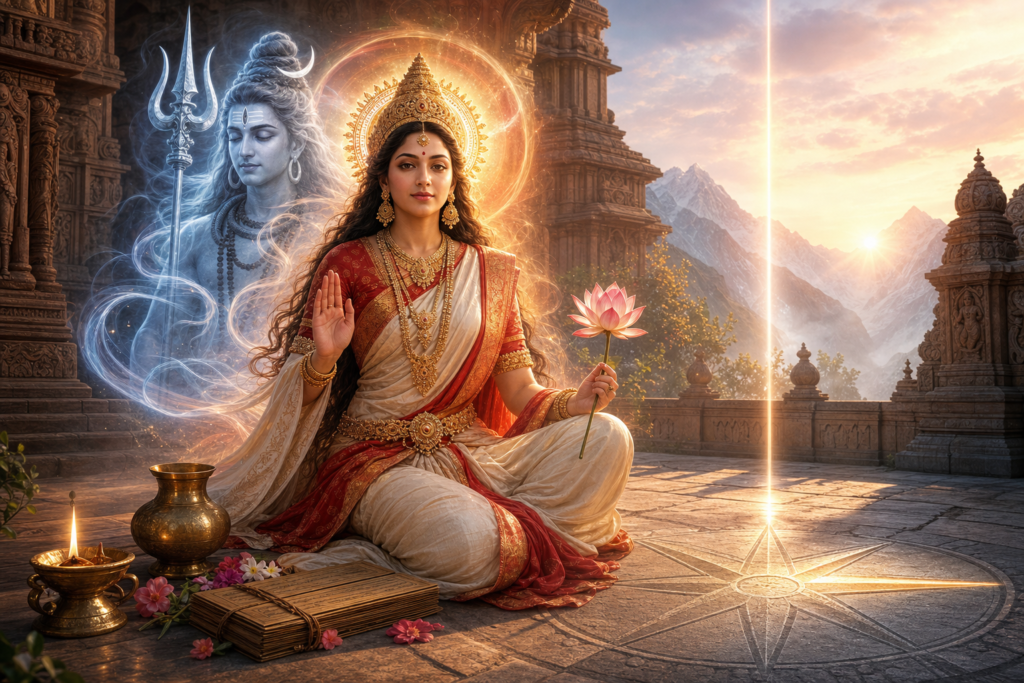
Goddess Durga stands in Hinduism as a luminous symbol of liberation and righteous power. Etymologically linked to “Durgam”that which is difficult to reach, overcome, or conquerthe name encapsulates an unwavering force that protects, uplifts, and ultimately frees. This resonance of Shakti is neither abstract nor distant; it is experienced in daily life as inner courage, clarity of purpose, and a steadfast commitment to dharma.
Puranic narratives consistently portray Durga as the one who restores balance when adharma threatens collective well-being. Accounts of victories over asuric forcesevoked in names such as Durgamasura and Mahishasurahighlight a clear ethical framework: strength is virtuous when it serves protection, justice, and the common good. In this vision, Durga’s valor is inseparable from compassion and wisdom, aligning righteous power with moral responsibility.
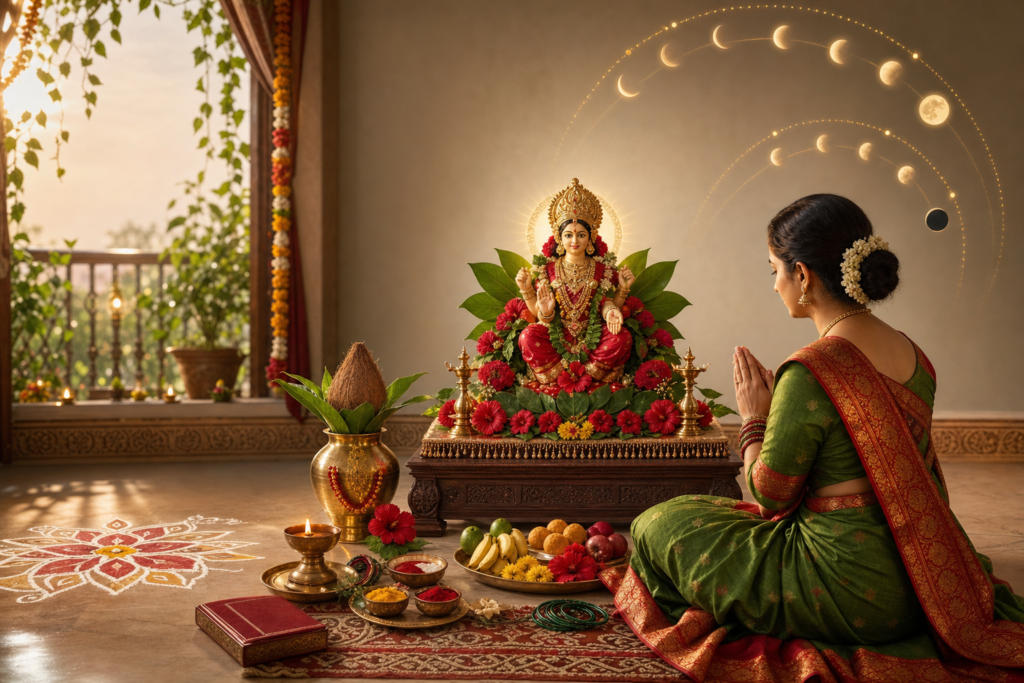
Durga’s liberating dimension extends far beyond martial imagery. In spiritual terms, liberation (moksha) signifies freedom from fear, ignorance, and inner fragmentation. Devotional practicessuch as recitation from the Durga Saptashati, contemplative puja, and mindful participation in Durga Puja and Dusserahare understood as methods that refine attention, fortify ethical resolve, and open pathways toward inner freedom. The symbolism becomes practical: facing life’s difficulties with steadiness is itself a sacred act.
Across dharmic traditions, the values Durga embodiesfearlessness, compassion, and truthfulnessfind profound echoes. Buddhism’s union of prajñā and karuṇā, Jainism’s commitment to ahiṃsā and self-mastery, and Sikhism’s ideal of “nirbhau, nirvair” converge with the Durga archetype as shared ethical aspirations rather than sectarian markers. In this sense, Durga’s Shakti illuminates a common civilizational horizon: inner strength in service of harmony, justice, and the dignity of all beings.
In lived experience, practitioners often observe that Durga’s presence is felt most vividly during times of uncertainty. Communities gather in Kolkata and across the world for Durga Puja, celebrating not only a deity but a collective renewal of courage and compassion. Participants describe a heightened sense of belonging, the courage to address personal and social challenges, and a renewed commitment to ethical action grounded in dharma. This communal devotion amplifies personal transformation.
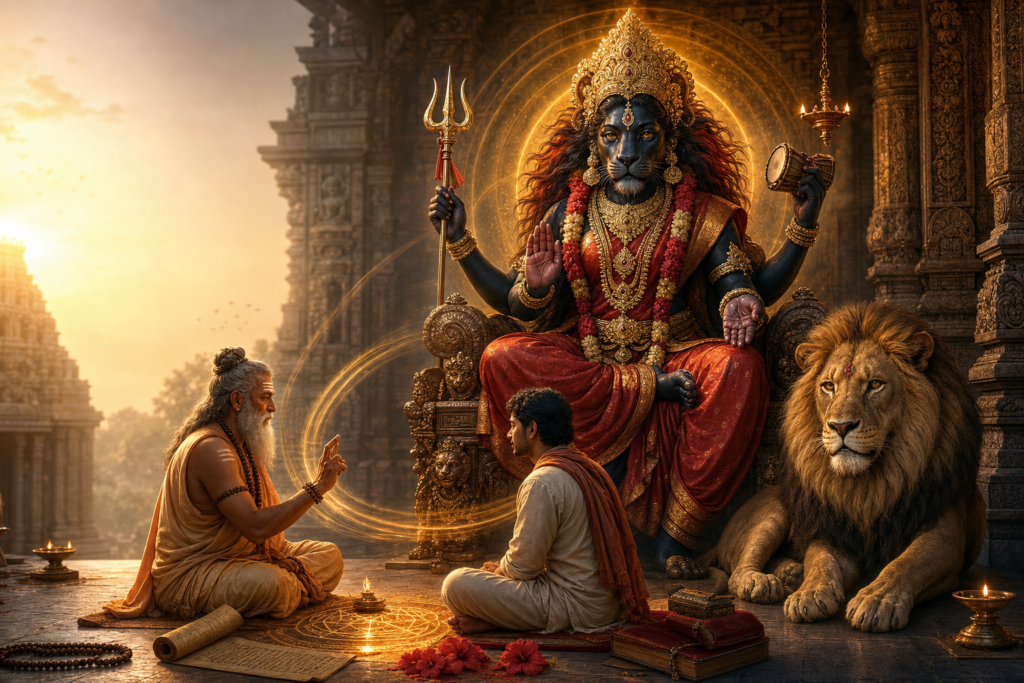
Durga’s iconography also teaches an integrated ethic: kṣatra (protective strength) guided by dayā (compassion) and viveka (discernment). The many arms bearing symbolic implements do not glorify force; they signify competencies required to meet diverse challengesclarity to dispel confusion, restraint to temper power, and steadfastness to act when duty calls. The ethical message is academic in articulation yet deeply human in application: power is redemptive only when yoked to responsibility.
For contemporary seekers, this symbolism provides a practical compass. Whether confronting social injustice, personal adversity, or collective polarization, Durga’s example encourages courage without aggression, resolve without rigidity, and devotion without exclusion. The aspiration is unity in diversityan ethos intrinsic to Hinduism and resonant with Buddhism, Jainism, and Sikhismwhere many paths converge toward truth, compassion, and liberation.
Ultimately, Durga is revered not as a conqueror for conquest’s sake, but as the unconquerable ground of dignity and freedom. The name “Durga” thus becomes a living reminder: what is difficult to reach becomes attainable when guided by Shakticourage illumined by wisdom, strength softened by compassion, and devotion directed toward the welfare of all. In this light, Durga remains a timeless embodiment of liberation and righteous power, inspiring ethical clarity and inner fearlessness across the dharmic world.
Inspired by this post on Hindu Blog.