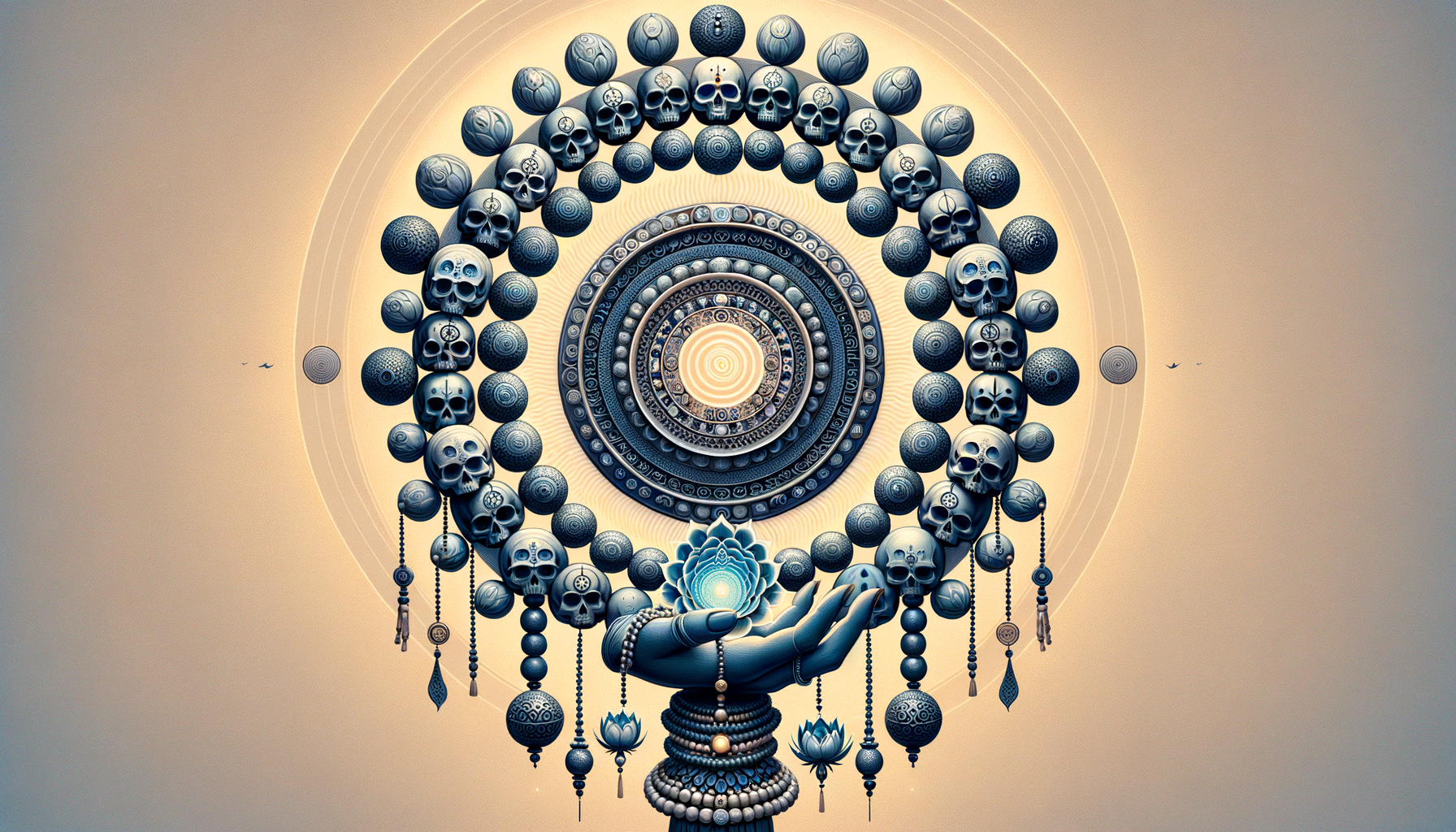
The garland of fifty skulls, or mundamala, in the iconography of Kali occupies a central place in Hindu symbolism. Far from being macabre ornamentation, it functions as a precise philosophical statement about creation, destruction, and renewal. In Hindu iconography and philosophy, this image invites contemplation of impermanence, fearlessness, and the cyclical nature of existence that underpins Sanatana Dharma.
The number of skullsoften fifty, sometimes fifty-onealigns with the varnamala, the traditional enumeration of Sanskrit phonemes associated with the Matrika goddesses. In Tantric exegesis, each skull represents a letter, and each letter embodies śabda (sound), Vāk (speech), and the creative potency of Shakti. Variations in count reflect regional and script traditions (50/51/52), yet the underlying meaning remains stable: the universe is articulated and sustained by sacred sound, and Kali wears this totality as an emblem of sovereignty over creation.
Kali’s mundamala also articulates mastery over kāla (time) and the limits of ego. The skulls symbolize the severance of avidya (ignorance) and the end of clinging to transient identities. As Shakti in her most uncompromising form, Kali embodies the paradox of compassionate ferocity: she dissolves delusion to restore the rhythm of dharma. Thus, the garland communicates an integrated visioncreation emerges from sound, form dissolves into time, and life flows onward through cycles of becoming.
Read psychologically, the garland encourages fearlessness (abhaya) and ethical clarity. By confronting mortality directly, practitioners cultivate detachment, courage, and compassion. The image becomes a meditative aid: relinquishing attachment to name and form reveals inner resilience and a deeper alignment with dharma. In this way, Kali’s iconography supports both inner transformation and social responsibility, harmonizing personal liberation with moral action.
This symbolism resonates across Dharmic traditions while honoring their distinct practices. In Buddhism, wrathful deities also employ skull garlands as pedagogical devices to cut through ignorance and awaken insight, echoing the primacy of impermanence. Jain teachings emphasize shedding karmic accretions and recognizing the transience of embodied existence, a perspective consonant with the mundamala’s lesson of non-attachment. Sikh thought, while distinct in practice, affirms living in harmony with hukam and cultivating fearlessness (nirbhau), reinforcing the shared ethical arc of courage, compassion, and truthfulness across Dharmic pathways.
Art-historically, depictions vary by region and lineage: some traditions render skulls, others heads; some emphasize fifty, others fifty-one or fifty-two. Textual references in the Puranas and Tantric manuals contextualize these variations without altering the core meaning. Such diversity reflects the broader Hindu ethosunity in spiritual pluralityand demonstrates how living traditions express a stable philosophical center through diverse local forms.
For contemporary seekers, Kali’s fifty-skull garland offers a rigorous spiritual framework. It integrates non-dual insight with embodied practice: honoring sound as creative principle, time as purifier, and fearlessness as ethical stance. As a symbol, mundamala reframes life’s anxietiesloss, change, uncertaintyinto opportunities for clarity and renewal. It invites engagement with ancient wisdom while supporting the practical cultivation of resilience, mindfulness, and compassion in daily life.
Ultimately, the garland’s message is inclusive: creation and dissolution are not opposites but phases of one continuous reality. Recognizing this continuity affirms shared values across Hinduism, Buddhism, Jainism, and Sikhismtruth-seeking, non-attachment, courage, and service. In honoring Kali’s mundamala as a SacredSymbol, communities strengthen a common Dharmic commitment to inner freedom and harmonious coexistence.
Inspired by this post on Hindu Blog.