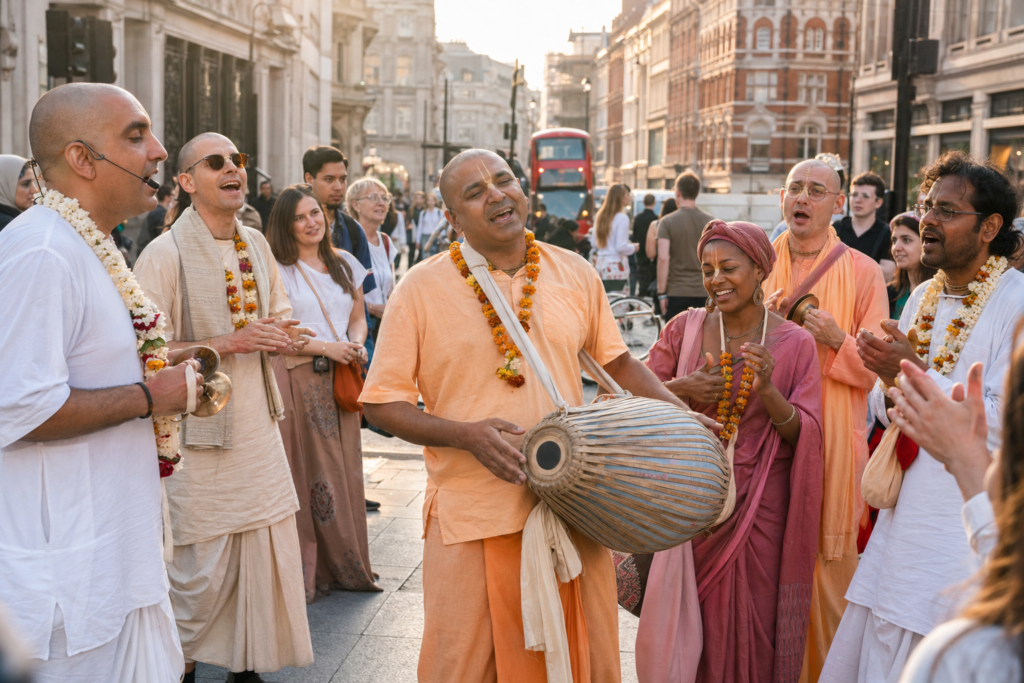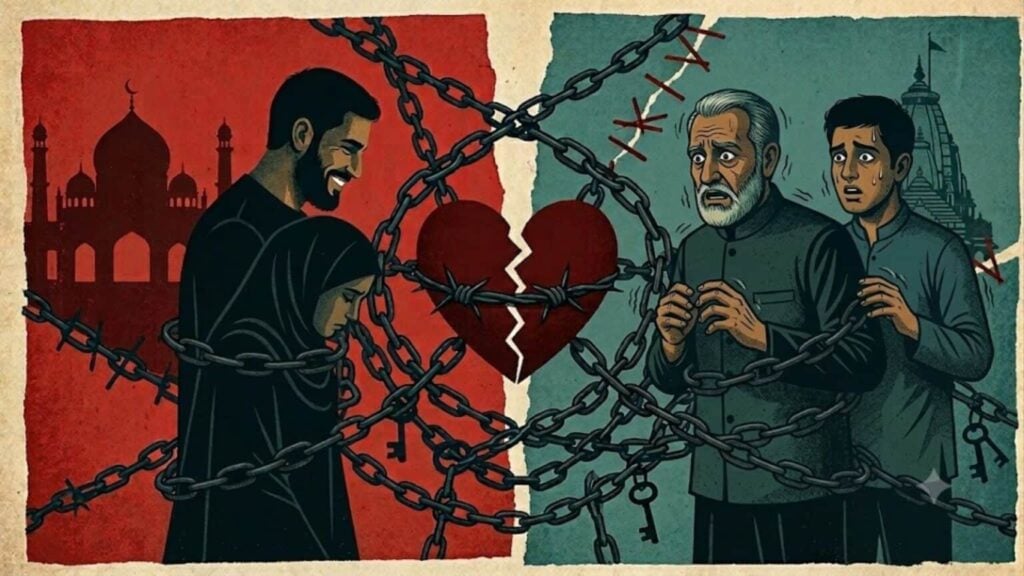
Hindu philosophy often portrays the Supreme Reality not merely as a distant creator but as an ever-present guardian of order. In this view, God functions as the most just and compassionate “policeman” precisely because cosmic and social order are upheld by self-executing principles rather than arbitrary force. The terms dharma (normative order), karma (moral causality), and ṛta (cosmic regularity) together form an integrated architecture that preserves balance in the universe, in society, and within the human heart. This framework is not punitive at its core; it is pedagogical, restorative, and deeply ethical, designed to elevate beings toward wisdom, responsibility, and ultimately, liberation.
The metaphor of a divine lawkeeper illuminates how Hinduism and related dharmic traditions understand justice. Law here is not merely what kings proclaim or courts administer. Rather, order is embedded into reality itself: causes yield effects with a moral grain, duties shape social harmony, and inner conscience reflects the immanent presence of the Divine. When alignment falters, correction arises first through inner awareness and karmic feedback, and only thereafterwhen necessarythrough institutional danda (coercive power) under the norms of rajadharma (statecraft oriented to dharma). This multi-layered system ensures that the least-violent, most-educative form of justice is prioritized.
Ṛta, invoked throughout the Ṛg Veda, is the primordial template of order. It is the intelligible rhythm by which the cosmos coheres: seasons turn, rivers flow, bodies heal, and cycles of life and time (kāla) unfold. Ṛta is not an external imposition; it is the lawful character of reality. Dharma, emerging from and aligned with ṛta, is the applied normativity guiding human action, institutions, and collective life. If ṛta is the music of the universe, dharma is the score for a flourishing society.
Karma supplies enforcement without surveillance. By karma is meant that intentional actions (karma) mature into consequences (karma-phala) that educate the agent. Unlike a merely human justice system, karma is omnipresent, impartial, and continuous; it is impossible to escape one’s own actions. The “policing” is self-referential: reality returns to each person the taste of what has been sown, refining conduct through experience. Because this process is both moral and developmental, it encourages reform over retribution, and insight over fear.
Classical sources present multiple vectors through which this lawfulness acts. Antaryamin (the Inner Controller) as pure awareness stirs conscience, producing a felt sense of right and wrong. Deities symbolically figure specific modalities of order: Yama represents limits and accountability; Shani (Saturn) is the stern teacher of consequences; and Kāla (Time) is the impartial auditor of all deeds. Far from fatalistic, these lenses invite agency: alignment with dharma transforms how karma matures, allowing even difficult lessons to become catalysts for growth.
Scripturally, the Bhagavad Gita offers the most lucid statement of active divine guardianship: “yadā yadā hi dharmasya glanir bhavati bhārata… dharma-saṁsthāpanārthāya sambhavāmi yuge yuge.” When systemic decay defeats ordinary correctives, the Divine intervenesmost often through avatārasnot to avenge but to re-establish equilibrium (dharma-saṁsthāpana). This is principled and restorative: protection of the noble (paritrāṇāya sādhūnām) and reform or neutralization of destructive forces (vināśāya ca duṣkṛtām) so that a just order can resume.
Dharma is not abstract. Dharmasastra codifies obligations suitable to life-stages and professions; the Mahābhārata explores conflicts where duties intersect; and the Arthasastra articulates statecraft (nīti) and disciplined coercion (daṇḍa) to preserve public welfare. Within this architecture, rajadharma governs rulers: sovereignty is constrained by dharma and the consent or well-being of the people (lokasangraha). The ruler is a trustee, not a proprietor of powera guardian deputized by the Divine law that precedes and supersedes all offices.
Institutions historically reflected this subsidiarity of order. Village assemblies, guilds, and temple networks managed resources, resolved disputes, and encoded social trust. Local dharma, articulated through custom and counsel, pre-empted the need for heavy-handed policing by cultivating shared norms and mutual accountability. Where conflict arose, mediation and restitution were valorized alongside proportionate sanctions, revealing a sophisticated preference for restorative justice.
The remedy for wrongs extended beyond punishment into purification (prāyaścitta). Dharmic texts emphasize sincere acknowledgment, restitution, disciplined practices (vrata), and renewed commitment to virtue. This is neither leniency nor moral relativism; it is a science of ethical rehabilitation rooted in the recognition that humans learn and transform. Because God, as the ultimate lawkeeper, desires the uplift of all beings, the legal imagination privileges correction over cruelty.
A striking strength of the dharmic vision is its resonance across Hinduism, Buddhism, Jainism, and Sikhism. Buddhism articulates Dhamma as the law of reality and ethical path; karmic causality educates intention; and the Vinaya sustains social discipline within the Saṅgha. Jainism’s rigorous karma theory and the principle of ahiṃsā shape a non-violent jurisprudence, while anekāntavāda (the doctrine of many-sidedness) cultivates humility in judgment and pluralism in dialogue. Sikhism’s concept of hukam (Divine Order) grounds an ethic of justice, courage, and seva (selfless service), integrating spiritual authority (piri) with responsible social action (miri). Together these traditions affirm that true lawkeeping is anchored in truth, compassion, and self-discipline.
In everyday life, the system’s elegance becomes palpable. Consider a simple dilemma: someone notices an unclaimed wallet. Even before any police appear, conscience awakens; karma’s logic reminds that unearned gain never truly enriches; dharma suggests returning the item as an act of truth (satya) and non-stealing (asteya). The act restores trust. The “policeman” was within all along, reinforced by family example, social expectation, and spiritual teaching.
Yogic literature details the inner training that makes such choices durable. The yamas and niyamasahiṃsā, satya, asteya, brahmacarya, aparigraha; and śauca, santoṣa, tapas, svādhyāya, īśvara-praṇidhānaform a personal constitution that internalizes law. Prāṇāyāma steadies reactivity; meditation clarifies discernment (viveka). When inner order stabilizes, social order needs less compulsion. The divine lawkeeper’s subtlest instrument is therefore interior: a mind attuned to dharma requires little external correction.
Hindu statecraft cautions that coercion (daṇḍa) remains necessary in a world of mixed motives, but its use is norm-governed. The Arthasastra and epics converge on proportionality, evidence, and the ruler’s accountability to dharma. Applied well, daṇḍanīti deters predation without brutalizing society, reflecting a graded ethic sometimes summarized as an order of minimum necessary force. The preference is always to prevent rather than to punish, to educate rather than to humiliate, and to reintegrate rather than to exclude.
Moral ambiguity is also anticipated. Dharmic texts discuss apad-dharmacontext-sensitive duty under emergencyacknowledging that rule conflicts occur. The key is not opportunism but fidelity to the higher aims of dharma: preservation of life, protection of the vulnerable, and restoration of long-term harmony. By making intention, context, and consequence explicit, apad-dharma provides principled flexibility without sacrificing ethical clarity.
Education anchors the system across generations. Saṁskāras, the guru–śiṣya tradition, and study of the Upanishads and the Bhagavad Gita cultivate virtues long before crises arise. Households become academies of ethics; temples are schools of beauty and responsibility; communities function as laboratories of trust. Because preventive ethics are more humane than reactive enforcement, cultural transmission is itself a form of divine lawkeeping.
This integrative vision also explains the celebrated pluralism of Sanatana Dharma. Many paths (marga)karma, bhakti, jñāna, and rāja yogaconverge upon inner refinement and social responsibility. Diversity of worship (ishta-devata), schools of thought, and practice-lines is not a threat to order; it is its vitality. Unity in spiritual diversity emerges because the same dharma and karma govern all, even as they are realized through different temperaments and cultural forms. By honoring manifold approaches across Hinduism, Buddhism, Jainism, and Sikhism, society strengthens its collective alignment with the Divine Order.
Seen against modern challengesurban complexity, digital anonymity, and globalized riskthe dharmic architecture remains compelling. When ethics are internalized, institutions can be leaner and more trusted. When rulers accept rajadharma, surveillance gives way to legitimacy; when citizens practice lokasangraha, polarization yields to participation. The result is resilience: a society in which God’s “policing” is experienced less as compulsion and more as conscience, character, and community.
In this light, calling God the best policeman is neither anthropomorphic flattery nor an invitation to theocracy. It is a recognition that the highest justice is woven into reality, animated by compassion, and aimed at awakening. The cosmos itself teaches; society echoes its lessons; and each heart can become a microcosm of order. Where this triadcosmic law, social dharma, and inner disciplinealigns, peace does not depend on fear. It flowers from understanding.
Thus, across the dharmic traditions, the Divine is experienced as the guardian of balance, the educator of conscience, and the liberator from suffering. The “best policeman” description endures because it is ultimately about the triumph of wisdom over compulsion. Justice is not merely done; it is learned, loved, and lived.
Inspired by this post on Hindu Blog.