Darshan in Hinduism signifies a sacred reciprocity: the devotee sees the divine, and the divine, in turn, sees the devotee. Etymologically linked to the Sanskrit root “drsh” (to see, to behold), the term designates far more than visual contact. It encodes a comprehensive theology of presence, a ritual phenomenology of perception, and a lived ethic of recognition. As a cornerstone of Hindu spirituality, darshan integrates symbolic meaning, temple architecture, ritual procedure, and inner contemplation into a single, two-way exchange that informs everyday practice and advanced sadhana alike.
Within the dharmic lexicon, “darshan” and “darshana” also denote philosophical vision. The six schools of classical Hindu thought (Nyaya, Vaisheshika, Samkhya, Yoga, Mimamsa, Vedanta) are collectively called darshanas because each offers a distinct way of “seeing” reality. In ritual life, however, darshan most immediately names the encounter with a deity, guru, sacred text, or holy placean encounter construed not as passive viewing but as mutual acknowledgement. This dual registerphilosophical insight and devotional encounterunderscores how Hindu spirituality fuses metaphysics with practice.
The ontological basis of temple darshan rests on the understanding that a murti is not a mere representation but a real presence. Through prana-pratishtha (ensoulment), nyasa (ritual consecratory placement), and netronmilanam (opening of the eyes), the image becomes a locus of consciousness (chaitanya). Alankara (adornment) and abhishekam (ritual bathing) further prepare the icon as a dynamic field of relation. Devotees approach not a symbol empty of power but an arca-avataraan accessible manifestation of divinity that invites relational participation.
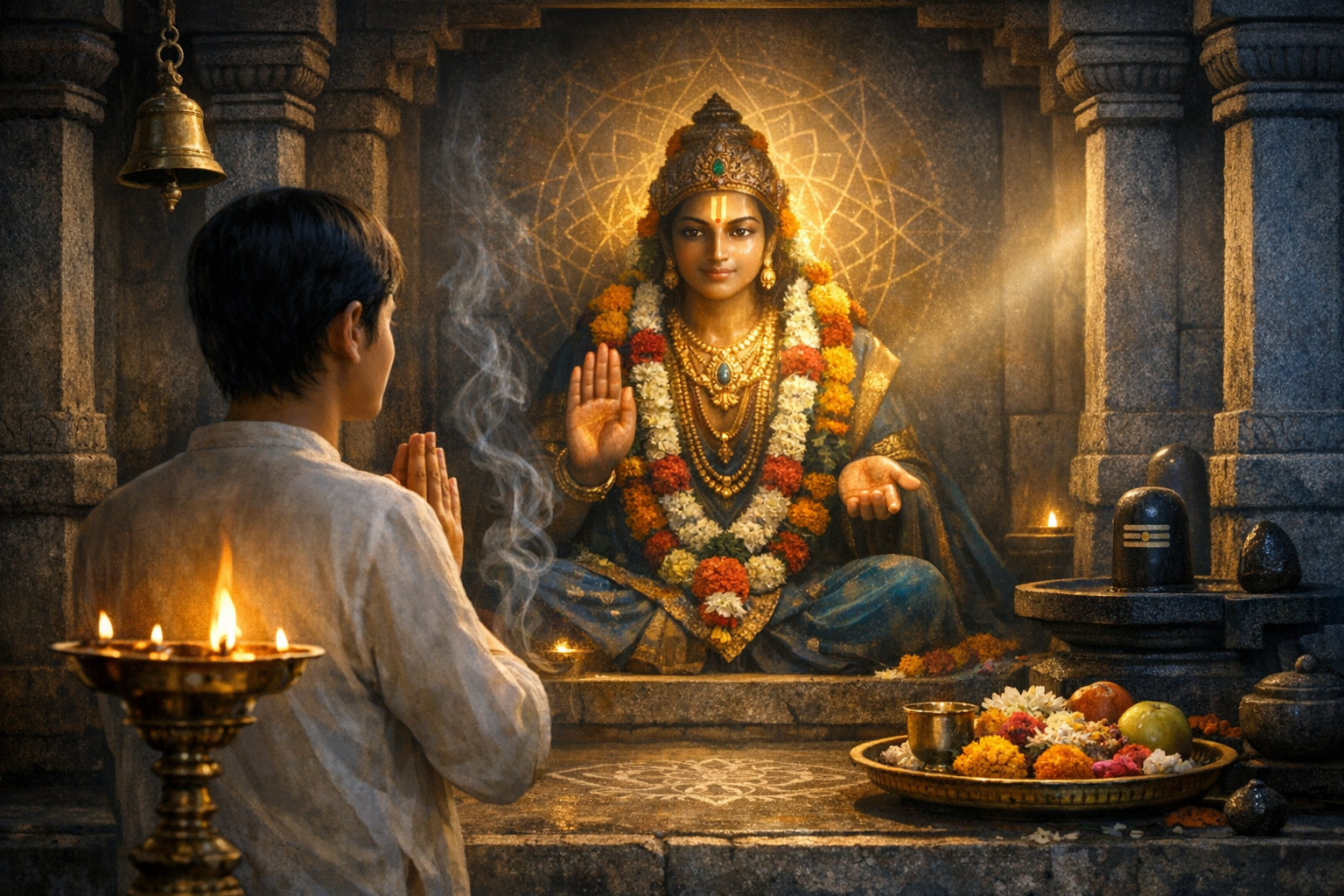
Temple space choreographs this participation. Passing beneath the gopuram, devotees traverse mandapas and cross thresholds that gradually quiet the senses. At the garbha-griha, the sanctum’s gentle dark and the flare of deepa shift perception from ordinary seeing to reverent beholding. Bells, incense, mantra, and the priest’s arati amplify sensory consonance, culminating in a moment of darshan when the deity’s gaze, often signified by vividly painted eyes or specific mudras, meets the devotee’s steady attention. Prasad and tirtha then extend the exchange into embodied blessing that can be carried beyond the shrine.
The two-way nature of darshan is articulated through visual theology. Abhaya and varada mudras (gestures of fearlessness and boon-giving) signal protective and generous attention flowing from the deity toward the community. Conversely, the devotee’s bhava (devotional mood), steadied gaze, and inward recollection signal readiness to receive and to reflect divine qualities. In this mutuality, seva (service) and prasad (grace made shareable) complete a loop: attention becomes offering; offering returns as recognition and ethical impulse.
Classical Indian theories of perception help clarify the gravitas of darshan. Nyaya’s account of visual knowledge emphasizes contact (sannikarsa) between sense, light, and object, reminding that seeing in the Hindu worldview is an event of relation rather than mere image capture. Mimamsa, attentive to ritual efficacy, illumines how correctly performed offerings open channels for apurva (subtle potency), a concept that resonates with the felt depth of darshan. In the Bhagavad Gita’s contemplative praxis (6.13–15), stabilized posture and a gentle, single-pointed gaze (nasikagram) cultivate interior sight, suggesting that the physiology of attention is central to theophany.
Darshan extends beyond anthropomorphic imagery. Aniconic forms such as the Shiva linga, the sacred saligrama, and geometric yantras invite recognition of presence without figurative likeness. Sound and sight interpenetrate as mantra and mudra align with light (tejas) during arati, encoding the intuition that divinity discloses itself through multiple, convergent modalities. In Vaishnava traditions, the arca-avatara explicitly affirms that the deity makes itself available to communal gaze, while in Shaiva and Shakta lineages, the same availability is perceived through both iconic and abstract symbolism.
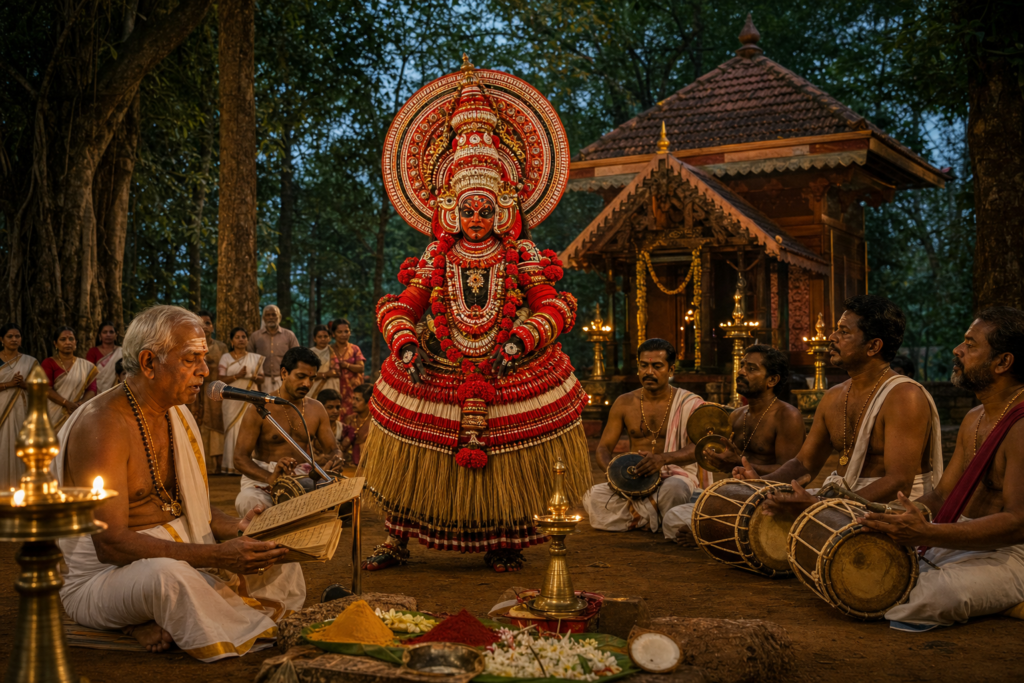
Festivals magnify darshan’s social and processional dimensions. During Jagannath Ratha Yatra at Puri, the deities’ movement into the public square transforms urban space into a rolling sanctum, emphasizing that darshan is also civic and inclusive. Shaiva observances like Arudra Darsanam foreground Shiva Nataraja’s cosmic vision, while deepotsava rites on Kartik Purnima dramatize how light mediates presence across the congregation. In each case, collective sight and shared blessing reinforce the bond between sacred center and everyday life.
Inner darshan complements public ritual. Upanishadic insights into the seer of seeing (drashta) cultivate awareness that the ultimate witness is not an external object but the luminosity of consciousness itself. Texts and traditions speak of atma-darshan, the experiential recognition of one’s innermost reality as not-other than the ground of the divine. In this contemplative mode, outer darshan becomes a mirror that trains vision to discover the same presence within, integrating bhakti, jnana, and yoga.
A unifying feature across dharmic traditions is the ethical and contemplative centrality of “right seeing.” In Buddhism, samyag-drishti (right view) on the Noble Eightfold Path names the foundational orientation that makes liberation possible, and pilgrimage to sites like Bodh Gaya replicates a form of darshan through circumambulation and reverent beholding. In Jainism, samyag-darshan (right faith or right vision) stands with right knowledge and right conduct as a pillar of the path, and both dravya-puja and bhava-puja express outer and inner dimensions of reverence. In Sikhism, darshan of the Guru Granth Sahib within the sangat is an encounter with the living Shabad, complemented by seva and langar as embodiments of grace received and shared. These convergences underscore a civilizational ethos in which vision is relational, transformative, and ethically generative.
Darshan thus carries social consequence. To learn to see the deity’s gaze as compassionate is to learn to look upon the world with the same compassion. Scriptural affirmations that the divine resides in all beings translate into practical commitments: non-harming (ahimsa), generosity (dana), and service (seva) in community. The ritual exchange at the sanctum prepares the devotee to recognize dignity in every person, bridging shrine and street through sustained, ethical attention.
Contemporary practice increasingly includes digital darshan for those distant from Hindu temples and sacred geography. While physical presence before the murti remains a classical ideal, traditions also affirm manasa-puja (mental worship) and the primacy of shraddha (devotional intent). Live-streamed arati and virtual darshan can sustain rhythm, memory, and devotion between in-person visits, keeping the thread of reciprocity alive through disciplined remembrance.
Preparation refines the exchange. A brief inward pause before the sanctum, steady breathing, and recollection of a simple mantra align body and attention. Allowing the gaze to rest naturally on the deity’s eyes or heart while acknowledging the return gaze of anugraha (grace) deepens the moment. Receiving prasad not as a token but as a vow to embody the deity’s qualities carries darshan into decisions, speech, and service beyond the temple.
Common misunderstandings mistake murti veneration for idolatry conceived as worship of “mere objects.” Hindu philosophy clarifies that symbol (lakshana) and presence (sannidhya) are not mutually exclusive. Through consecration and continuous worship, the murti becomes a relational medium of encounter, much as sacred text, guru, or tirtha can be. In this light, darshan is less about projecting meaning onto stone and more about consenting to be seen and transfigured by a presence that meets devotees through consecrated forms.
Ultimately, the symbolism of darshan is a pedagogy of vision. It teaches that seeing is an ethical act, that attention is a form of offering, and that grace is relational. As a two-way concept, darshan integrates Hindu symbols, Hindu rituals, and Hindu philosophy into a coherent practice that unites outer worship with inner realization. Read through the wider dharmic lensacross Hinduism, Buddhism, Jainism, and Sikhismdarshan and right seeing converge in cultivating wisdom, compassion, and shared flourishing.
Inspired by this post on Hindu Blog.