Beyond Survival: Rediscovering Human Purpose Through Hindu Wisdom
The fundamental question of human existence often begins with a stark observation: biologically, humans share the basic drives of eating, excreting, and procreating with other species. Yet human life unmistakably reaches beyond these impulses, building civilizations, philosophies, and technologies. Within Hinduism and the broader dharmic familyBuddhism, Jainism, and Sikhismthis difference is framed not as superiority but as an invitation to responsibility: the capacity to know, to choose, and to align action with dharma.
Hindu teachings locate this capacity in self-awareness (ātma-bodha) and moral discernment (viveka). The Bhagavad-Gita describes human life as an arena where action (karma) can bind or liberate, depending on intention, clarity, and detachment. The Upanishads point to an inner witness that observes the mind and senses (indriyas) and can reorient them toward the good. Rather than denying the “animal within,” dharma disciplines it, transforming instinct into insight and energy into service.
Across the dharmic traditions, a shared ethic emerges. Buddhism articulates interdependence through pratītyasamutpāda, cultivating karuṇā to reduce suffering. Jainism radicalizes non-violence through ahimsa and simplifies desire through aparigraha. Sikhism centers seva and the ideal of sarbat da bhalawelfare for all. Hindu thought synthesizes these commitments through lokasaṅgraha, the “holding together” of the world through righteous action. Together, these perspectives frame human nature as relational, purposeful, and accountable to a cosmic order.
The puruṣārthasdharma, artha, kāma, and mokṣaorganize life beyond mere survival. Artha and kāma are not rejected; they are refined by dharma and ultimately oriented toward mokṣa. This model respects material and emotional needs while preventing them from becoming ends in themselves. Responsibility thus becomes expansive: to self (inner integrity), to society (justice and compassion), to nature (stewardship), and to the transcendent (truth).
Practical pathways translate vision into habit. Yama and niyama ground conduct in ahimsa, satya, and self-discipline. Meditation, japa, and prāṇāyāma cultivate steadiness (samatā) and clarity, while dana and seva transpose inner aspiration into outer care. Small choicesmindful speech, ethical consumption, ecological restraint, and digital civilitybecome concrete expressions of dharma in daily life.
Many recognize a recurring experience: moments of quiet reveal a longing for meaning that productivity cannot satisfy. Dharmic practice meets this longing without denying the world. It teaches how to work skillfully, love responsibly, and rest deeply, aligning intention with consequence. Karma is no longer fate but feedback; each act participates in a moral ecology where inner states ripple outward through society and the environment.
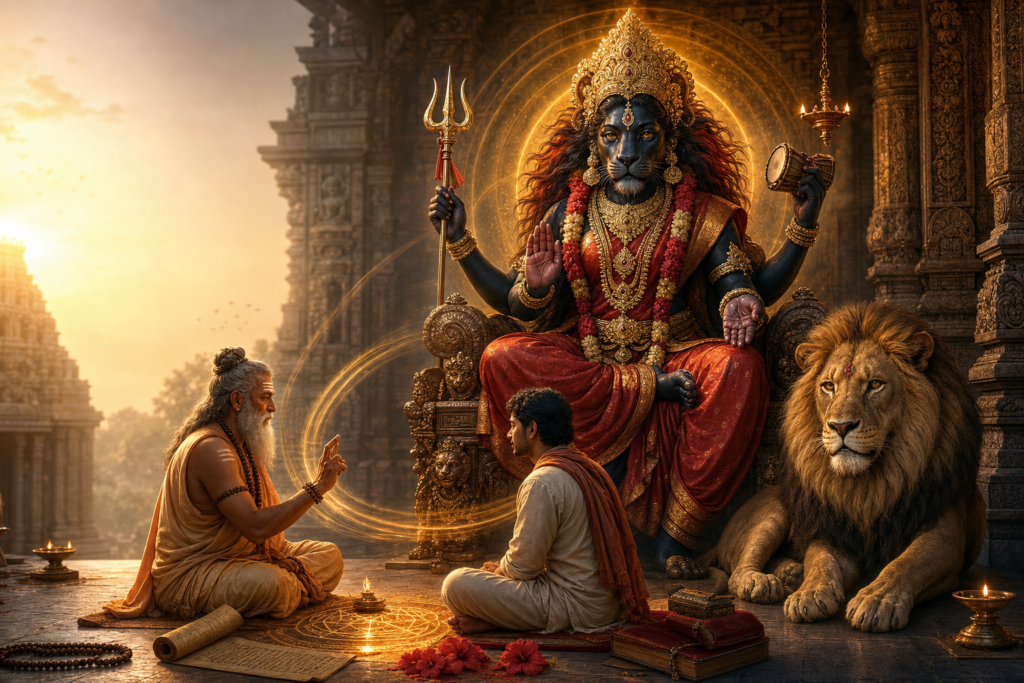
Seen in this light, “the animal within” is not an enemy but unrealized potential. Through discipline of the guṇasreducing tamas, refining rajas, and elevating sattvathe same energies that fuel survival can support wisdom and compassion. The dharmic goal is not escape from life but transformation of life, so that personal fulfillment and the common good converge.
Cosmic responsibility, then, is neither abstract nor distant. It is the living consequence of recognizing interconnectedness and choosing alignment with dharma. By integrating insights from Hinduism, Buddhism, Jainism, and Sikhism, seekers find a coherent path: cultivate self-knowledge, practice non-violence, serve all beings, and act for lokasaṅgraha. In doing so, humanity moves from impulse to intention, from survival to significance, and from isolation to unity in spiritual diversity.
Inspired by this post on Hindu Blog.