
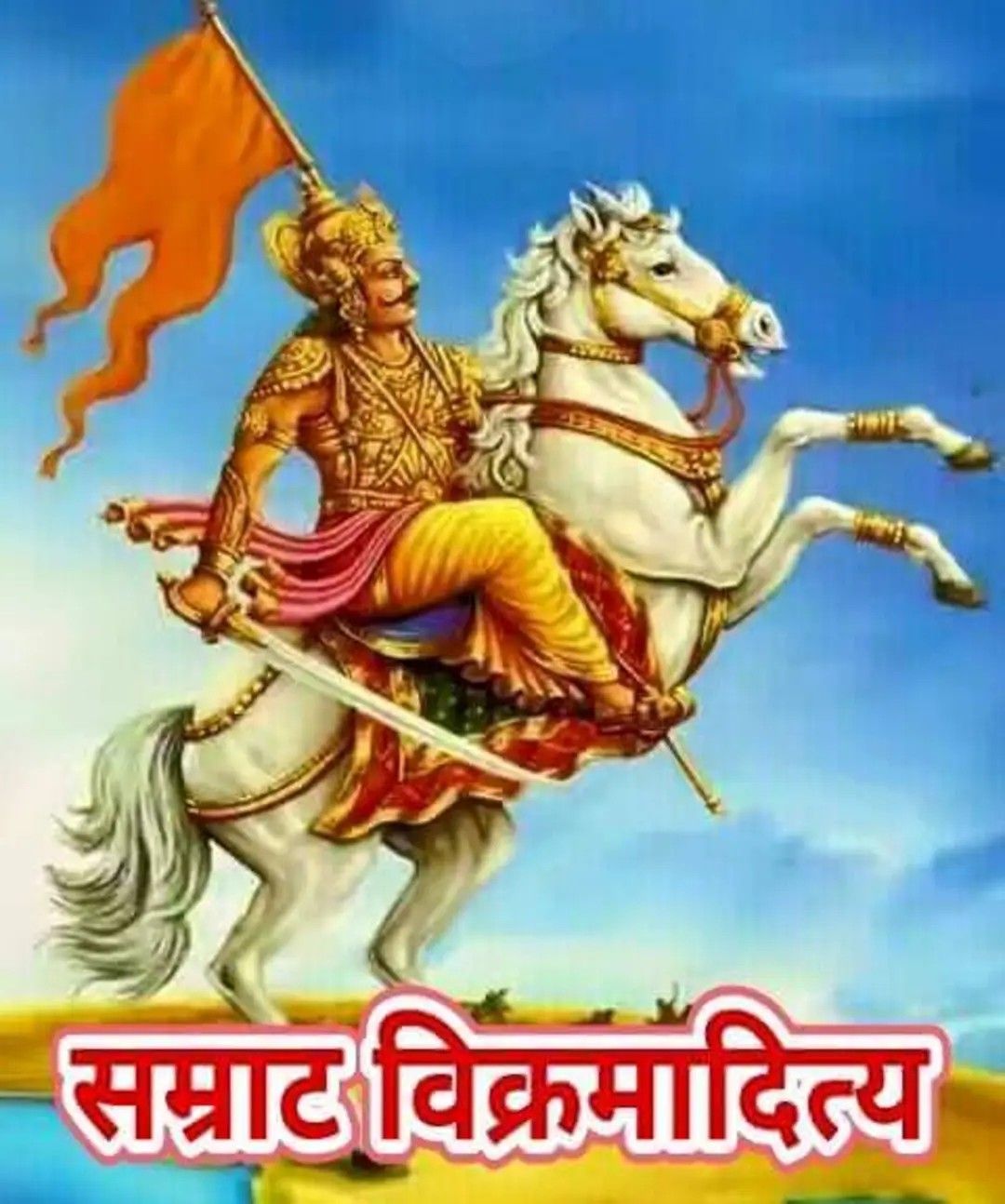
Vikramaditya Paramara occupies one of the most magnetic places in Indian historical memory. Few royal names carry the same emotional force across Sanskrit literature, regional storytelling, calendrical tradition, and civilizational debate. The name Vikramaditya evokes the image of a ruler who combined courage, judgment, scholarship, and truthfulness, while the Paramara connection links that memory to the Agnivamsa tradition and to the political imagination of Malwa and Ujjain.
The subject requires care because Vikramaditya is not a simple figure of chronicle history. The name was used as an imperial title, appears in legendary cycles, and is associated with more than one historical ruler. Chandragupta II of the Gupta period bore the title Vikramaditya; later traditions also speak of Sriharsa Vikramaditya and other royal figures. Yet one stream of traditional historical writing, especially within Purana-based and Jain narrative materials, identifies the most celebrated Vikramaditya with the Paramara line of Ujjain.
This layered memory is precisely what makes Vikramaditya Paramara important. He stands at the meeting point of historical reconstruction, literary imagination, dynastic prestige, and dharmic political ideals. Rather than treating legend and history as enemies, a more responsible reading asks what each kind of source preserves: chronology, values, memory, geography, political aspiration, and the moral expectations placed upon a king.
The Paramara context is central to understanding the tradition. The Paramaras are remembered as one of the Agnivamsa or Agnikula lineages, connected in later accounts with a fire-born origin at Mount Arbuda, now commonly identified with Mount Abu. The name Paramara is often interpreted as “enemy-slayer” or “destroyer of adversaries,” a martial meaning that suited a dynasty celebrated for kshatra, statecraft, learning, and cultural patronage.
Modern academic historiography usually places the historically documented Paramara dynasty of Malwa between the early medieval centuries and the early fourteenth century, with Dhara and Ujjain forming major centers of power and culture. Traditional accounts, however, extend Paramara memory much further back and associate Vikramaditya, Shalivahana, and Bhoja with a wider civilizational arc. This tension between epigraphic caution and traditional chronology should not be dismissed casually; it calls for disciplined comparison of inscriptions, royal genealogies, literary sources, Jain prabandhas, and Purana vamsanucharita materials.
The source tradition summarized here presents Gandharvasena, also called Mahendraditya, as the father of Vikramaditya. In that narrative, Ujjain and the kingdom of Avanti faced severe disruption during a Shaka incursion. Vikramaditya is then remembered as a young prince forced into exile, shaped by adversity, austerity, and preparation before returning to liberate his homeland.
The details are framed in traditional terms. Vikramaditya is said to have been born in 101 BCE, to have experienced the fall of his father’s position while still a child, and to have returned after years of tapas and training. At the age of seventeen, according to the account, he drove out the Shakas from Ujjain and began the victorious career that later memory connected with the Vikrama era.
These claims should be read with methodological clarity. The association of the Vikrama Samvat era with a king Vikramaditya is deeply embedded in Indian tradition, but many modern epigraphists note that the term “Vikrama Samvat” appears in inscriptions later than the era’s starting point of 57 BCE. That does not make the tradition meaningless; it means the historian must distinguish between the beginning of an era, the later naming of that era, and the memory of a heroic ruler attached to it.
The Shaka conflict forms the martial core of the Vikramaditya tradition. In the traditional narrative, the Shakas were not merely a foreign political force but a civilizational challenge that disturbed the social, ritual, and moral order of Malwa and surrounding regions. Vikramaditya’s victory over them made him Saakari or Saakaantha, the enemy or destroyer of the Shakas.
The Battle of Korur is presented as the decisive moment in this struggle. The account describes Vikramaditya defeating a Shaka ruler named Roomaka, humiliating him ritually, and sending him back beyond the Indus. Whether every detail is accepted literally or read as political memory, the episode preserves a vital civilizational theme: Indian traditions did not remember themselves only as passive victims of invasion; they also remembered successful resistance, recovery, and restoration.
This point matters for Indian history because military defeat and military recovery are both part of a mature historical consciousness. A balanced narrative neither exaggerates every legend into unquestioned fact nor erases indigenous memories of victory because they do not fit colonial or postcolonial assumptions. Vikramaditya’s legend endured because it gave later generations a model of courage joined to order, not conquest joined to vanity.
The story of Kalakacharya and the Shaka invasion requires special sensitivity. Jain sources preserve important material related to Vikramaditya, and several traditional accounts connect a Jain acharya’s grievance with the circumstances that enabled a Shaka incursion. In a dharmic reading, this episode should not be used to condemn an entire sampradaya. Jainism, like Hinduism, Buddhism, and Sikhism, belongs to the larger family of dharmic traditions that have shaped Bharatavarsha through tapas, ethical discipline, learning, and community life.
The more constructive lesson is ethical and political. Personal injury, however grave, cannot justify actions that expose the wider society to disorder, violence, and suffering. The dharmic traditions differ in metaphysics and practice, but they converge on the need to restrain ego, anger, and revenge. In that sense, the Kalakacharya episode becomes a cautionary reflection on prathishodha, rajadharma, and the responsibility of learned persons in times of crisis.
The same spirit of unity appears in the later portrayal of Vikramaditya’s court. The presence of Jain intellectuals and diverse scholars in accounts of his sabha indicates that the remembered ideal was not sectarian persecution but disciplined sovereignty under which learning could flourish. Dharmic civilization has repeatedly been strongest when debate, scholarship, and principled difference were held within a larger framework of shared responsibility.
Vikramaditya’s political profile is described in imperial terms. The source tradition calls him a Samrat and presents his polity as a Samrajya, an imperial order organized through vassal kings, tributaries, and allied rulers. Such a structure was normal in many premodern Indian contexts. It did not require the uniform centralization associated with modern states; sovereignty could be layered, negotiated, and ritually expressed through tribute, military support, marriage alliances, and court recognition.
The account credits Vikramaditya with organizing a broad dharmic coalition across Bharatavarsha. Tributary rulers from different regions are said to have joined his imperial order, while even powers beyond the subcontinent, including Persian or Parthian rulers in the traditional description, are portrayed as acknowledging his superiority. The scale of these claims is vast, and academic caution is necessary, but the political imagination is clear: Vikramaditya represented an all-India ideal of kingship.
That all-India ideal is significant in itself. It shows that older Indian political thought did not lack a sense of civilizational unity. Bharatavarsha could contain many janapadas, languages, sects, kingdoms, and local customs while still being imagined as a connected sacred and cultural geography. Vikramaditya’s memory belongs to that older grammar of unity in diversity.
The achievements attributed to Vikramaditya include military, administrative, cultural, and religious restoration. He is remembered as the ruler who defeated the Shakas, restored stability in Ujjain, expanded influence across Bharatavarsha, subdued hostile powers, and revived the prosperity of Vaidika and dharmic life. In the traditional account, his reign was not merely successful; it was exemplary.
His administrative image is equally important. A strong king in dharmic political thought was not one who indulged arbitrary power, but one who restrained officials, protected subjects, honored learning, punished disorder, and maintained the conditions for prosperity. The tradition’s emphasis on disciplined bureaucracy and wealthy provinces reflects an ancient concern still familiar to modern readers: the state must serve society rather than turn society into a servant of the state.
The numbers attached to Vikramaditya’s empire are grand: hundreds of vassal kings, immense armies, elephants, horses, ships, and wealth from tributary regions. Such figures in royal literature often combine memory with poetic amplification. Even so, they communicate how later generations understood his stature. He was not remembered as a local chieftain but as a chakravartin-like sovereign whose authority radiated outward from Ujjain.
Ujjain itself deepens the significance of the tradition. The city has long been associated with astronomy, pilgrimage, Sanskrit learning, Shaiva devotion, and calendrical reckoning. A ruler linked with Ujjain was therefore never merely political. He stood within a sacred geography in which time, kingship, ritual, and scholarship met.
This is why the association with Vikrama Samvat carries such emotional force. Calendars are not neutral devices alone; they encode memory, sovereignty, sacred rhythm, and collective identity. When a civilization remembers an era through the name Vikramaditya, it signals that the ruler became a symbol of restored time after disorder.
The cultural flowering of Vikramaditya’s court is one of the most celebrated parts of the legend. Traditional accounts speak of the Navaratnas, the Nine Gems, who adorned his sabha. The most frequently named luminaries include Dhanvantari, Kshapanaka, Amarasimha, Shanku, Vetalabhatta, Ghatakarpara, Kalidasa, Vararuchi, and Varahamihira.
Each name represents a field of knowledge: medicine, lexicography, poetry, drama, astronomy, astrology, architecture, religious learning, and narrative imagination. The list expresses the ideal of a court where shastra and kala were not ornamental extras but part of statecraft. A ruler’s greatness was measured not only by armies and revenue but by the scholars, healers, poets, and thinkers who could thrive under his patronage.
Modern scholarship debates whether all the Navaratnas were historical contemporaries of one ruler. Kalidasa, Varahamihira, Amarasimha, and others are difficult to place together within a single chronological frame according to many academic reconstructions. Yet the traditional list remains valuable as cultural memory. It shows that Vikramaditya became the imagined center of classical Indian intellectual excellence.
Kalidasa’s association with Vikramaditya is especially powerful. Whether treated as court history, literary convention, or retrospective memory, the pairing of the poet and the king reflects a deep Indian expectation: political power reaches its highest form when it protects refined speech, aesthetic excellence, and moral imagination. Literature becomes a civilizational archive, not merely entertainment.
Varahamihira’s association with the Vikramaditya cycle similarly places jyotisha and astronomical learning within the aura of the court. Ujjain’s historical connection with astronomical observation makes this link culturally plausible even where exact chronology is debated. The broader point remains that knowledge systems were integral to royal prestige in classical India.
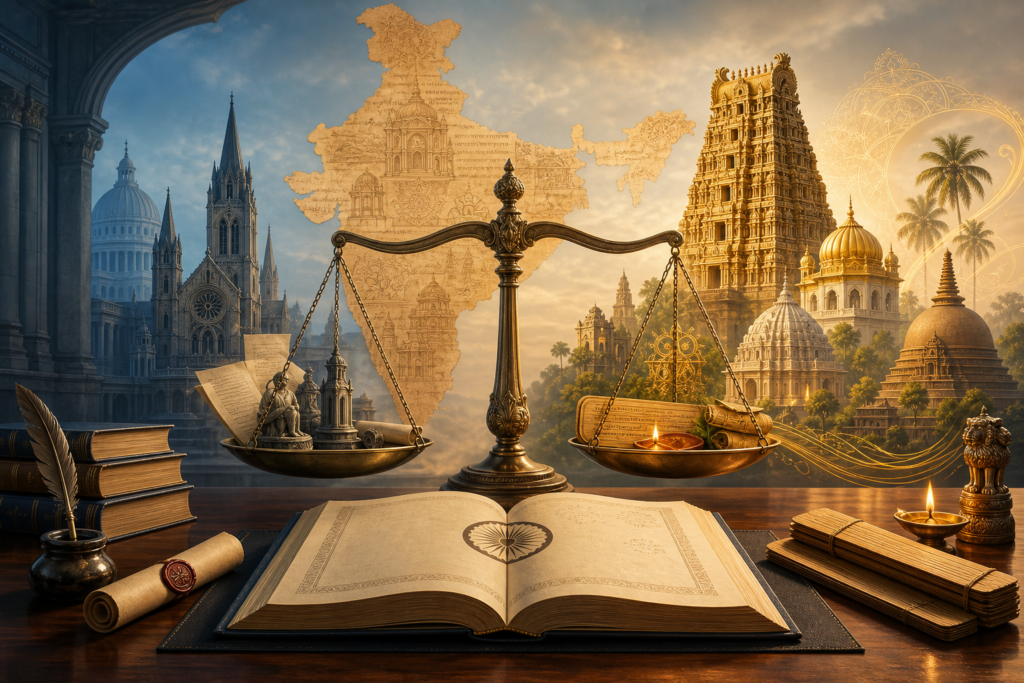
The sources for Vikramaditya Paramara are diverse. The tradition draws upon Jain Harivamsa materials, Jain pattavalis, Prabandha-chintamani by Merutunga Suri, Prabandhakosha by Rajasekhara Suri, Kalakacharya Katha in Prabhavaka-charita by Prabhachandra Suri, Vikrama Charita traditions, Puratana Prabandha Samgraha, Simhasana Dvatrimsika, Purana materials, Brihatkatha Manjari by Kshemendra, and Katha Sarit Sagara by Somadeva.
This range of sources matters because it prevents a narrow reading. Vikramaditya is not preserved only in one sectarian archive or one royal genealogy. His memory appears across Sanskrit, Jain, narrative, didactic, and courtly traditions. Even when these sources disagree in chronology or embellish events, their convergence around Ujjain, kingship, Shaka conflict, generosity, truth, and learning deserves serious attention.
The Puranas also require a more nuanced treatment than they often receive. They contain cosmology, theology, ritual material, sacred geography, genealogies, and dynastic memories. Their vamsanucharita sections cannot be handled exactly like modern archival records, but neither should they be dismissed as fiction. A rigorous method compares them with inscriptions, regional chronicles, archaeological evidence, and literary cross-references.
Jain prabandhas and pattavalis deserve the same respect. They preserve monastic lineages, moral narratives, royal interactions, and community memories. For a subject like Vikramaditya, Jain materials are especially important because they often retain details about Ujjain, Kalakacharya, Shaka movements, and the relationship between kings and ascetic communities. Their presence also demonstrates the shared intellectual world of dharmic traditions.
The Simhasana Dvatrimsika, or Thirty-Two Tales of the Throne, is central to Vikramaditya’s moral legacy. In this celebrated frame narrative, King Bhoja encounters the throne of Vikramaditya. The throne is associated with thirty-two figures, each of whom narrates an episode demonstrating Vikramaditya’s virtue, generosity, courage, justice, and self-command.
The literary structure is revealing. Bhoja, himself remembered as a great Paramara king and scholar, must measure himself against Vikramaditya before claiming the throne. The throne is therefore not a piece of furniture but a test of adhikara, the inner qualification required for sovereignty. Power is legitimate only when the ruler has the moral stature to bear it.
For modern readers, this idea remains strikingly relevant. Institutions, titles, and offices can be inherited or acquired, but authority in the dharmic sense requires character. The tales insist that kingship is not a license for self-display; it is a burden of truth, protection, and sacrifice.
The famous story of Truth, Wealth, and Power captures this ideal beautifully. In the tale, Vikramaditya sees divine feminine powers leaving his city because the people have become morally degraded. Power departs, then Wealth departs, and finally Truth prepares to leave. The king accepts the possible loss of power and wealth, but he pleads that Truth must remain.
The moral is direct: where Truth remains, Wealth can return; where Wealth returns under Truth, Power can also return. But without Truth, power becomes coercion and wealth becomes corruption. This is not merely a pious lesson. It is a theory of political order expressed through story.
Such stories explain why Vikramaditya remained alive in popular imagination long after debates over chronology became complex. A society needs models of conduct that are larger than administrative detail. Vikramaditya became a model of the ruler who would rather lose everything than abandon satya, because satya is the foundation through which dharma becomes visible in public life.
The family traditions around Vikramaditya also serve a political function. The source account describes him as the son of Mahendraditya and Queen Saumyadarsana, as a ruler with multiple queens, and as the father of Devabhaktha. It also identifies Shalivahana as a great descendant, thereby linking the Vikrama and Shalivahana cycles within a Paramara framework.
This genealogy differs from many mainstream reconstructions, which usually treat Vikramaditya and Shalivahana as legendary figures connected to different eras and later calendrical associations. Still, the traditional linkage is meaningful because it tries to create continuity between resistance to Shakas, dynastic restoration, and the protection of dharmic order across generations.
Genealogies in Indian tradition often do more than record biological descent. They establish legitimacy, transmit ideals, connect regions, and preserve memory across disruptions. The Paramara association with Vikramaditya should therefore be examined not only as a factual claim but also as a claim about identity, inheritance, and civilizational duty.
The Agnivamsa dimension gives the narrative a larger Rajput and kshatriya frame. The fire-born symbolism of the Agnikula clans communicates purification, martial responsibility, and emergence in a time of crisis. Whether approached as myth, political theology, or dynastic memory, the symbolism is powerful: when disorder rises, kshatra must be rekindled.
This should not be reduced to caste pride or regional rivalry. The healthiest reading of Agnivamsa memory is civilizational rather than exclusionary. It honors the duty of rulers and warriors while recognizing that dharma is sustained by many groups: scholars, monks, householders, merchants, artisans, farmers, saints, and servants of society. Vikramaditya’s remembered greatness lies in coordinating these energies, not in narrowing them.
The blog’s broader objective of unity among Hinduism, Buddhism, Jainism, and Sikhism is well served by this interpretation. Dharmic traditions have argued intensely, but they have also shared concepts of discipline, karma, tapas, compassion, truthfulness, and liberation. A civilizational reading of Vikramaditya should strengthen mutual respect rather than inflame inherited grievance.
The debate over historicity remains unavoidable. Some scholars treat Vikramaditya primarily as a legendary king whose stories absorbed features of multiple rulers, especially Chandragupta II. Others give greater weight to traditional sources that place a Vikramaditya in first-century BCE Ujjain. Still others view the figure as a composite symbol of kingship, memory, and resistance.
A careful conclusion need not flatten these positions. The historical Vikramaditya question involves at least four layers: a possible early ruler connected with Ujjain and the Shakas, the later use of Vikramaditya as an imperial title, the naming and spread of Vikrama Samvat, and the literary expansion of Vikramaditya as an ideal king. Confusing these layers leads either to uncritical acceptance or excessive dismissal.
The most fruitful path is comparative. Inscriptions provide hard chronological anchors. Puranic and Jain sources preserve dynastic and moral memory. Literary cycles reveal ideals of kingship. Regional traditions show how communities remembered political restoration. Together, they form a richer archive than any single category can provide by itself.
Vikramaditya Paramara’s lasting importance lies in the ideal he represents. He is remembered as a ruler of courage without cruelty, learning without vanity, ritual seriousness without narrowness, and sovereignty without moral emptiness. The portrait may be embellished, but its ethical core is unmistakable.
His legacy also challenges modern habits of reading Indian history. Colonial frameworks often minimized indigenous political power, while reactionary retellings sometimes answer by exaggerating without method. A mature civilizational history requires both confidence and discipline. It must be willing to recover erased memories while also testing claims through evidence.
The appeal of Vikramaditya is therefore not only nostalgic. His story asks what kind of leadership can hold a diverse society together. It asks whether power can remain answerable to truth. It asks whether learning, military strength, economic prosperity, and spiritual seriousness can support one another instead of competing for dominance.
In that sense, Vikramaditya Paramara remains more than a figure in old tales. He is a civilizational standard, a memory of restored confidence, and a reminder that Bharatavarsha has long imagined leadership as a union of satya, dharma, vidya, and kshatra. Whether studied through history, literature, or cultural memory, his legacy continues to invite deeper research and more responsible reflection.
Inspired by this post on Indic Portal.


Leave a Reply
You must be logged in to post a comment.