
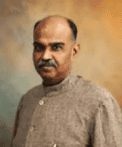
Dr Syama Prasad Mookerjee’s political legacy is often compressed into a slogan about national unity. A closer reading reveals a more demanding constitutional argument. He envisioned Bharat as one sovereign political community whose regions could preserve their languages, cultures and local institutions without weakening equal citizenship or the authority of the Union. His position on Jammu and Kashmir emerged from this wider concern: accommodation could assist integration, but it should not harden into permanent constitutional separation.
This interpretation has renewed relevance during the 125th anniversary of his birth. Born on 6 July 1901, Mookerjee worked as an educationist, legislator, Union minister and opposition leader during a period shaped by colonial rule, Partition, refugee movements and the difficult integration of princely states. The constitutional choices of that era were not abstract exercises. They determined whether citizens with different religious, linguistic and regional identities would inhabit a common republic or remain divided by competing sovereignties.
A constitutional vision formed during national upheaval
Mookerjee entered public life with an unusually strong academic background. He became Vice-Chancellor of the University of Calcutta at the age of 33 and promoted Indian languages, educational access and institutional reform. This experience influenced his politics. A nation, in his understanding, could not be consolidated by administrative power alone; it also required universities, industries, legislatures and cultural institutions capable of cultivating competence and a shared civic consciousness.
His intervention in the Constituent Assembly on 17 December 1946 helps establish the foundations of that outlook. Although the Muslim League was absent, he opposed indefinitely postponing the Assembly’s work. The Assembly, he maintained, derived its legitimacy from the people rather than from the British Parliament or government. His concise declaration that “Our sanction is the people of India” placed popular sovereignty at the centre of constitution-making. At the same time, he argued that the emerging Constitution had to treat minorities fairly and apply safeguards without reducing India to mutually suspicious communal compartments.
This combination is essential for understanding his nationalism. It was not merely a demand for a powerful central executive. It joined sovereignty, equal citizenship, institutional discipline and cultural confidence. He wanted a Constitution capable of holding a civilisationally diverse society together while preventing religious or regional identity from becoming the basis for another sovereign political order.
Such a framework is particularly significant for a society shaped by Hindu, Buddhist, Jain and Sikh traditions, alongside Muslim, Christian and other communities. Unity did not require the erasure of sampradayas, languages or regional memories. It required a civic structure within which differences could coexist without becoming instruments of political exclusion. In this sense, constitutional nationalism and cultural plurality were not opposites; each depended upon the security supplied by the other.
Accession and the exceptional circumstances of Jammu and Kashmir
The constitutional position of Jammu and Kashmir arose from an exceptional historical sequence. Maharaja Hari Singh signed the Instrument of Accession on 26 October 1947 while armed raiders advancing from Pakistan threatened the state. The Governor-General accepted the accession on 27 October, after which Indian forces were deployed. Like the standard instruments executed by princely rulers, the document initially conferred legislative authority on the Dominion in specified fields, principally defence, external affairs and communications, with associated matters.
The Instrument of Accession and Article 370 should not be conflated. Accession was the legal act by which Jammu and Kashmir joined India. Article 370, originally introduced as draft Article 306A, subsequently regulated how provisions of the Indian Constitution would apply to the state. It created a mechanism involving presidential orders, consultation on subjects covered by the Instrument of Accession and concurrence for the extension of other constitutional provisions.
When N. Gopalaswami Ayyangar introduced draft Article 306A on 17 October 1949, he identified several unresolved conditions: hostilities had not fully ended, part of the territory was outside India’s control, the dispute had reached the United Nations and a constituent assembly for the state had yet to decide its internal constitutional arrangements. He therefore described the provision as an interim system. The article was placed in Part XXI of the Constitution, dealing with temporary, transitional and special provisions.
Its legal design was nevertheless more complex than the everyday description of a temporary exception suggests. Article 370(3) authorized the President to declare the article inoperative or modify its operation, but its original proviso required a recommendation from the Constituent Assembly of Jammu and Kashmir. That body dissolved in 1957 without recommending abrogation. Over succeeding decades, numerous presidential orders extended substantial portions of the Indian Constitution and Union legislation to the state, producing an evolving rather than static constitutional relationship.
An important correction to the documentary record
The source article attributes two polished statements about temporary special provisions to Mookerjee and cites the Constituent Assembly Debates. Those formulations should not be repeated as verified quotations. The searchable record of the 17 October 1949 debate on draft Article 306A contains no recorded intervention by Mookerjee, and the quoted wording could not be confirmed in that debate. His position is documented far more securely in his Lok Sabha speech of 7 August 1952, delivered during the debate on Jammu and Kashmir and the Delhi Agreement.
This distinction does not invalidate the broader claim that he regarded Article 370 as transitional and favoured fuller integration. It makes that claim more precise. Historical analysis is strongest when it distinguishes a later summary of a leader’s views from words demonstrably present in the parliamentary record.
The 1952 speech: integration without coercive simplification
Mookerjee’s 1952 Lok Sabha intervention displays a more nuanced position than retrospective slogans sometimes imply. He acknowledged that Jammu and Kashmir had entered the Union under extraordinary conditions. He recognized that a peaceful settlement required consent and explicitly rejected the indiscriminate use of coercion. He was prepared to support an interim arrangement if the sovereignty of the Indian Parliament was accepted and the proposed concessions were examined openly and constitutionally.
He also accepted the importance of Kashmir as an experiment in democratic coexistence after the trauma of Partition. India, he said, had to demonstrate in practice that Hindus, Muslims, Christians and everyone else could live without fear, accompanied by equality of rights. This passage matters because it places his demand for national integration within an inclusive constitutional order rather than within a hierarchy of religious citizenship.
His central anxiety was what he called the “Balkanisation of India”. The term referred to the danger that different constitutional sovereignties, flags, offices and categories of citizenship might encourage the belief that India was merely a collection of separate nationalities. Having witnessed the violence and displacement of Partition in Bengal, he feared that loosely connected political units could reopen questions that the Constitution was intended to settle.
Yet his response was not to dismiss every regional concern. He urged Parliament to examine each proposal calmly and ask two practical questions: whether a concession would injure India and whether it would genuinely strengthen Kashmir. That test reveals a constitutional pragmatism. Accommodation was acceptable when it improved trust and administration; it became objectionable when it implied a rival source of sovereignty or institutionalized unequal citizenship.
One sovereignty and the limits of asymmetry
The first boundary he drew concerned legislative sovereignty. Sheikh Abdullah had described Jammu and Kashmir’s Constituent Assembly as fully sovereign and had questioned the jurisdiction of the Indian Parliament over the state. Mookerjee considered that claim incompatible with accession to India. In his formulation, two sovereign Parliaments could not operate within one nation. A state legislature could possess substantial autonomy, but its authority had to arise within the Constitution of India rather than alongside it as an equal sovereign power.
The second boundary concerned political symbols. Mookerjee objected to arrangements under which the national flag appeared subordinate to a separate state flag and to the continued use of the title “Prime Minister” for the head of the Jammu and Kashmir government. Symbols can appear ceremonial, yet in constitutional systems they communicate the location of final authority. His argument was that a distinctive regional identity could be honoured without creating ambiguity about national sovereignty.
The third boundary concerned citizenship and fundamental rights. Mookerjee questioned the continuation of multiple classes of state subjects and argued for a single class of Indian citizenship. He did not deny that land, employment or educational protections might be justified for vulnerable populations. His objection was to placing such protections beyond the ordinary constitutional framework. If restrictions were necessary, he argued, they should be enacted through transparent laws, justified by public interest and tested against constitutional guarantees.
This was a technical but consequential distinction. A constitutional restriction can be reviewed, debated and applied through identifiable legal standards. A separate citizenship structure can instead imply that Indians from different states possess fundamentally unequal relationships with the Union. Mookerjee therefore treated mobility, public employment, property regulation and access to institutions as questions of common citizenship, even when local safeguards remained possible.
The fourth boundary involved national institutions. He sought clarity about the jurisdiction of the Supreme Court, the application of emergency provisions and the Union’s authority when constitutional government failed. From his perspective, these were not instruments for the routine suppression of state autonomy. They were components of a common constitutional safety architecture. A region could not be described as an integral part of India while remaining indefinitely outside the institutions responsible for enforcing rights and resolving federal disputes.
Constitutional method mattered as much as constitutional outcome
Mookerjee’s speech repeatedly returned to procedure. He described the Constitution as a document produced through immense labour and warned against altering its basic arrangements through improvised executive action. Where special treatment was genuinely necessary, he preferred provisions framed broadly enough for Parliament to debate and apply according to public criteria. The underlying principle was that constitutional exceptions should remain accountable to constitutional institutions.
He also asked the government to consult opposition leaders rather than present completed agreements as faits accomplis. This aspect of his thought deserves attention because national unity can be weakened by opaque decision-making even when a policy is defended in the name of integration. Durable federal settlements require legislative scrutiny, reasoned explanation and opportunities for dissenting voices to test executive assumptions.
His position on the territorial integrity of Jammu and Kashmir was similarly qualified. He stated that he did not seek the partition of the state and understood the horrors that another partition could produce. He nevertheless insisted that the aspirations of Jammu and Ladakh could not be ignored if the Kashmir Valley sought a different constitutional relationship. This exposed a genuine federal problem: protecting the identity of one region should not silence the identities and democratic preferences of other regions within the same state.
Resignation from the Union Cabinet: another necessary clarification
Mookerjee’s resignation from Jawaharlal Nehru’s Cabinet in April 1950 is sometimes retrospectively presented as a resignation over Article 370. The parliamentary record does not support that simplified claim. His formal statement focused on the condition of minorities in East Bengal and his opposition to the Nehru-Liaquat Agreement, which he believed did not adequately address their insecurity and displacement. His organized campaign against Jammu and Kashmir’s special constitutional arrangements developed subsequently and became especially prominent in 1952 and 1953.
The correction strengthens rather than diminishes an understanding of his politics. It shows continuity in his concern for equal protection and national responsibility while preserving the actual chronology. His Cabinet resignation, the founding of the Bharatiya Jana Sangh in 1951 and his later Jammu and Kashmir agitation were related expressions of his political outlook, but they were not a single event with a single immediate cause.
National strength through education and industry
Mookerjee’s vision of a strong Bharat extended beyond territorial integration. As the first Minister for Industry and Supply in independent India, he participated in the early construction of industrial capacity and economic self-reliance. Institutions and projects associated with that formative period included the Damodar Valley Corporation, Sindri fertilizer production and the development of locomotive manufacturing at Chittaranjan. Heavy industry, infrastructure, small enterprise and technical education formed parts of a common nation-building project.
His educational and economic work explains why constitutional unity was so important to him. A common market, coordinated infrastructure, national universities, courts and public institutions require predictable constitutional authority. Integration was therefore not simply a territorial ideal. It was the institutional foundation on which citizens in different regions could participate in shared development.
At the same time, he did not equate national development with cultural uniformity. His support for Indian languages and regional intellectual traditions demonstrates that a confident Union could contain many forms of cultural expression. A strong nation was not one in which Bengal, Kashmir, Ladakh, Jammu or any other region lost its personality. It was one in which these identities contributed to a larger political and civilisational community.
Article 370 after 2019
In August 2019, the Union government used presidential orders and parliamentary action to render the operative special arrangements under Article 370 inapplicable and to extend the Constitution of India fully to Jammu and Kashmir. Parliament also enacted the Jammu and Kashmir Reorganisation Act, 2019. With effect from 31 October 2019, the former state was reorganized into the Union Territory of Jammu and Kashmir, with a legislature, and the Union Territory of Ladakh, without a legislature.
On 11 December 2023, a five-judge Constitution Bench of the Supreme Court upheld the constitutional validity of the principal 2019 measures relating to Article 370. The judgment examined accession, sovereignty, the temporary character of Article 370, presidential power and the consequences of the disappearance of the Jammu and Kashmir Constituent Assembly. It supplied a judicial resolution to many legal questions, although political and federal debates concerning representation, statehood, security and regional confidence continue.
The post-2019 position should therefore be assessed through more than symbolic victory. Mookerjee’s broader standard would ask whether common constitutional rights are implemented fairly, democratic institutions function effectively, regional cultures are respected and citizens experience both security and accountable government. Legal integration is a foundational step; social trust and institutional performance determine whether integration becomes durable.
What his constitutional philosophy offers contemporary Bharat
Mookerjee’s lasting contribution lies in the proposition that diversity requires a secure constitutional centre, while national authority requires democratic restraint. Too little common authority can produce fragmentation. Too little space for local identity can produce alienation. His preferred balance placed final sovereignty, equal citizenship and enforceable rights at the national level while allowing legislatures to address genuine regional needs through constitutionally reviewable laws.
For ordinary citizens, this balance has an immediate human meaning. National unity is experienced when a person can rely on equal dignity, seek judicial protection, pursue education or employment and participate in democratic life without being treated as constitutionally foreign within the same country. Cultural security is experienced when local languages, sacred traditions, regional histories and community institutions are not dismissed as obstacles to modern citizenship.
This understanding also supports harmony among Dharmic traditions. Hindu, Buddhist, Jain and Sikh communities possess distinct philosophies, practices and institutional histories, yet they share a long civilisational landscape marked by dialogue and mutual influence. A constitutional order that protects every path while resisting separatist hierarchies allows those traditions, and all other faith communities, to flourish without converting difference into political estrangement.
Mookerjee’s legacy consequently resists two inadequate readings. It cannot be reduced to centralization for its own sake, because his speeches emphasized equality, parliamentary consultation and peaceful settlement. Nor can it be detached from his firm rejection of competing sovereignties and permanent constitutional barriers between Indian citizens. His strong Bharat was meant to be united, plural, institutionally capable and governed through a Constitution that applied with credibility.
That is why his ideas remain consequential. They invite contemporary Bharat to treat unity not as a rhetorical demand but as a disciplined constitutional practice: one sovereignty, equal civic dignity, room for cultural distinctiveness, transparent lawmaking and institutions strong enough to protect every citizen. Such an order does not fear diversity. It gives diversity a common and durable home.
Research note and primary references: This analysis expands upon The Sunday Guardian article published on 5 July 2026. Documentary references include the Constituent Assembly debate of 17 December 1946, the debate on draft Article 306A, the Lok Sabha debate of 7 August 1952, Parliament’s Eminent Parliamentarians volume on Mookerjee, the Jammu and Kashmir Reorganisation Act, 2019 and the Supreme Court’s 2023 judgment in In Re: Article 370 of the Constitution.
Inspired by this post on Hindu Post.




Leave a Reply
You must be logged in to post a comment.