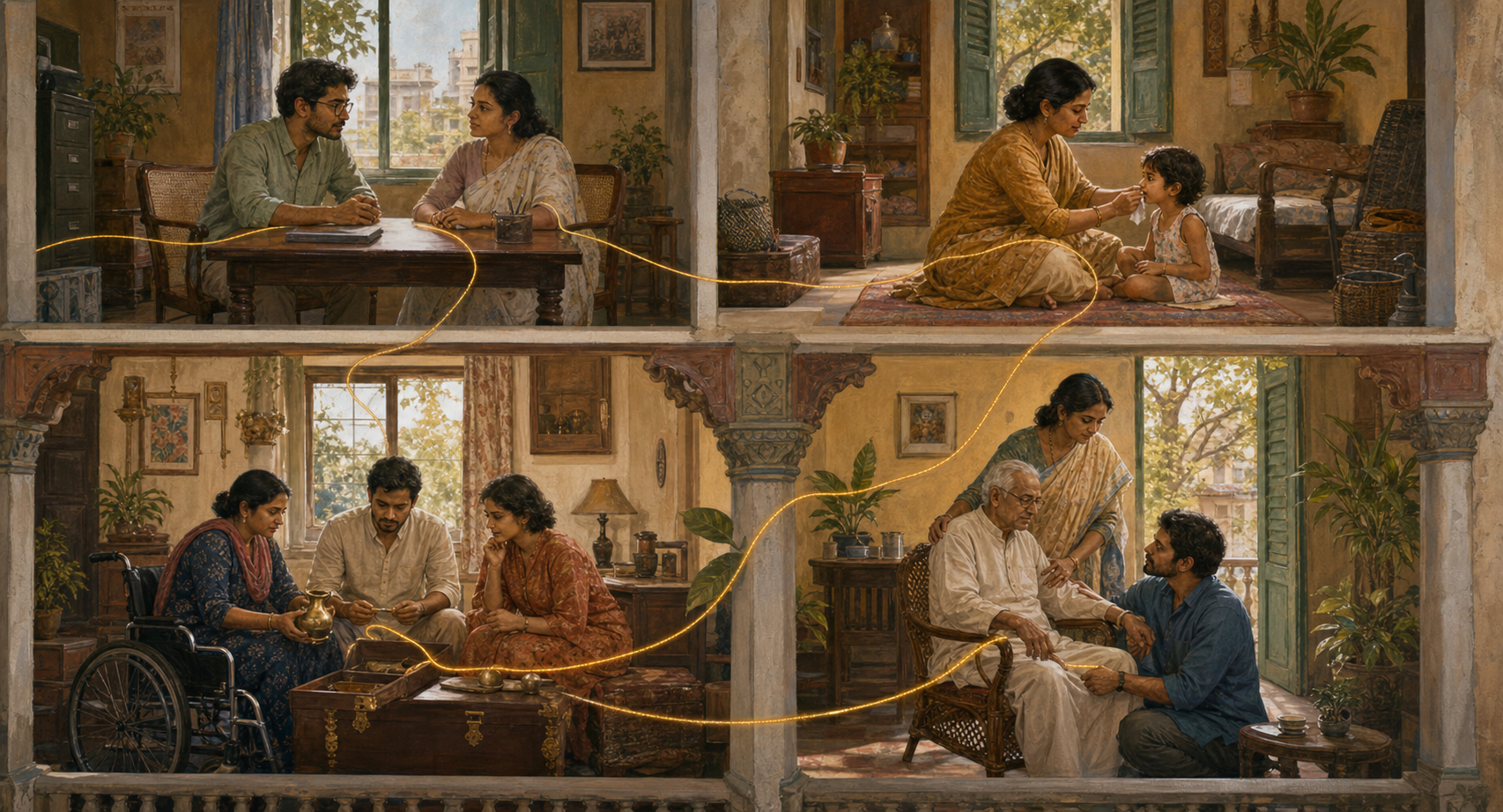
West Bengal has moved from political commitment to institutional scrutiny in its pursuit of a state-specific Uniform Civil Code. On July 11, 2026, the state government constituted a nine-member high-level committee to examine the draft West Bengal Uniform Civil Code Bill, 2026. The panel is headed by retired Supreme Court judge Justice Ranjana Prakash Desai, whose previous work on Uniform Civil Code initiatives gives the committee considerable legal and policy significance. The development does not mean that a UCC has already become law in West Bengal. It marks the beginning of a formal review process in which the draft must be tested against constitutional guarantees, existing central and state legislation, Bengal’s social diversity, and the practical realities of family life.
The formal constitution of the nine-member panel follows a sequence of announcements made by the government of Chief Minister Suvendu Adhikari. During the Assembly’s Budget Session on June 29, the chief minister said that a committee led by Justice Desai would review the proposed legislation. The Cabinet approved the committee’s formation on July 2 and gave it four weeks to scrutinise the draft and recommend changes. The government has indicated that the revised Bill could be introduced in the West Bengal Legislative Assembly in August. This timetable also connects the measure to the Bharatiya Janata Party’s 2026 Sankalp Patra, which promised implementation of a Uniform Civil Code within six months of the party forming the state government.
The committee’s composition is intended to combine judicial, legal, administrative, academic and social experience. Public accounts of the panel’s design have referred to a retired civil servant, a legal expert, an educationist, a social worker and a senior officer from the state’s general administration machinery, in addition to its judicial leadership. Earlier reports described a smaller core group, while the subsequent announcement confirmed a nine-member body. That evolution matters because the review cannot be reduced to statutory drafting alone. A family-law code affects courts, registration offices, local administration, social-welfare institutions, religious communities and, most directly, individuals facing marriage, separation, inheritance, guardianship or maintenance disputes.
The panel has reportedly been asked to study a wide range of subjects, including marriage, divorce, maintenance, inheritance, succession, adoption, child custody and live-in relationships. Chief Minister Adhikari earlier said that nine broad issues would be examined and that the committee would invite proposals from the public. It is also expected to study customary practices and compare the Bengal draft with the Uniform Civil Code framework adopted in Uttarakhand and the more recent legislative models reported from Gujarat and Assam. The comparison may provide useful drafting lessons, but it should not be mistaken for automatic replication. West Bengal requires a law designed for its own legal institutions, population, customs and administrative capacity.
A Uniform Civil Code concerns civil status rather than religious belief itself. In its conventional legal meaning, a UCC establishes common rules for defined family-law matters regardless of a person’s religion. It does not inherently require citizens to abandon ceremonies, sacred vows, community festivals, forms of worship or theological teachings. A couple may continue to solemnise a marriage according to Hindu, Buddhist, Jain, Sikh, Muslim, Christian, Parsi or another recognised tradition while the state applies common rules to questions such as minimum age, consent, registration, monogamy, divorce, maintenance and succession. The distinction between religious solemnisation and civil consequences is therefore central to any fair analysis of the Bengal proposal.
India’s present family-law landscape is already a complex combination of general statutes, community-linked legislation and customary rules. The Hindu Marriage Act, 1955, the Hindu Succession Act, 1956, the Special Marriage Act, 1954, the Indian Succession Act, 1925, the Indian Christian Marriage Act, 1872, the Parsi Marriage and Divorce Act, 1936, the Muslim Personal Law (Shariat) Application Act, 1937, the Dissolution of Muslim Marriages Act, 1939, the Guardians and Wards Act, 1890, the Juvenile Justice framework and several other laws intersect in different ways. Courts must sometimes determine not only what rights exist, but which statute, custom or personal-law rule governs the parties. A UCC seeks to reduce this fragmentation, although the quality of the result depends entirely on the text ultimately enacted.
For families, these technical distinctions can have deeply personal consequences. A widow seeking her lawful share of property, a child requiring financial support, an abandoned spouse pursuing maintenance, or siblings contesting succession experience family law not as an abstract ideological debate but as a question of security and dignity. Delayed registration can make it harder to prove a marriage. Ambiguous succession rules can prolong disputes for years. Unequal guardianship provisions can affect schooling, healthcare and travel decisions for children. The human value of reform therefore lies less in the slogan of uniformity than in whether ordinary people receive rights that are intelligible, enforceable and accessible.
The constitutional starting point is Article 44 of the Constitution of India. Located among the Directive Principles of State Policy, it directs the State to endeavour to secure a uniform civil code for citizens throughout India. Article 37 makes Directive Principles non-justiciable, meaning that a court ordinarily cannot compel a legislature to enact a UCC merely because Article 44 exists. The same provision nevertheless describes those principles as fundamental to governance. Article 44 is consequently a constitutional objective rather than a self-executing command, and the design, scope and timing of any code remain matters for democratic legislation subject to constitutional review.
The placement of Article 44 reflects a compromise reached during the framing of the Constitution. Members of the Constituent Assembly debated the relationship between equal citizenship, legal modernisation, religious freedom and India’s extensive cultural plurality. The resulting provision preserved the aspiration for a common civil framework while leaving its realisation to future legislatures. That history supports neither the claim that every UCC proposal is automatically constitutional nor the opposite claim that all such legislation is constitutionally forbidden. Each enactment must be judged on its substance, procedural fairness and compatibility with fundamental rights.
West Bengal possesses a constitutional basis to legislate in many of the fields associated with a UCC. Entry 5 of the Concurrent List in the Seventh Schedule covers marriage and divorce; infants and minors; adoption; wills; intestacy and succession; joint family and partition; and matters in respect of which parties were, immediately before the Constitution, subject to personal law. Both Parliament and state legislatures may therefore enact laws within this field. State competence, however, is only the first stage of the analysis. The draft must be examined clause by clause to determine whether any provision conflicts with an existing parliamentary law.
Article 254 governs repugnancy between central and state laws on Concurrent List subjects. If a Bengal provision is inconsistent with an existing parliamentary enactment, the central law ordinarily prevails and the inconsistent part of the state law becomes inoperative. A state Bill reserved for the President and receiving presidential assent may operate within that state despite such inconsistency under Article 254(2), although Parliament retains the power to amend, vary or repeal it later. The committee must therefore prepare a detailed conflict table identifying every central statute affected, the precise nature of each inconsistency, and whether presidential consideration will be required. Without that exercise, a politically attractive Bill could encounter avoidable legal uncertainty after passage.
Fundamental rights provide the second constitutional test. Equality before law under Article 14, protection against discrimination under Article 15, life and personal liberty under Article 21, freedom of conscience and religion under Article 25, and the rights of religious denominations under Article 26 must be read together rather than in isolation. Cultural protections, including Article 29, may also be relevant where distinctive customs are affected. A valid UCC should pursue legitimate secular objectives through clear and proportionate rules. It should neither reproduce discrimination found in an existing personal law nor introduce new forms of unequal treatment under the language of reform.
The Supreme Court has discussed the desirability of common civil principles in decisions including Mohd. Ahmed Khan v. Shah Bano Begum, Sarla Mudgal v. Union of India and John Vallamattom v. Union of India. These judgments form an important part of the public debate, particularly in relation to maintenance, conversion, bigamy and unequal succession provisions. Judicial observations supporting reform do not eliminate the legislature’s duty to produce a carefully drafted law. Nor do they remove the possibility of judicial review. Courts will assess the enacted provisions, not the political label attached to them.
The proposed exemption for tribal communities requires exceptional precision. A publicly reported extract from the draft states that the Code would not apply to members of Scheduled Tribes within the meaning of Article 366(25), read with Article 342 of the Constitution. Political statements have also referred more broadly to Adivasis, Kurmis and other ancient or indigenous communities. These formulations are not necessarily identical in law. Scheduled Tribe status is constitutionally notified, whereas wider social descriptions may not create a determinate statutory category. The committee must reconcile public assurances with the actual exemption clause and publish an unambiguous schedule or definition.
West Bengal has 40 notified Scheduled Tribe communities, which represented approximately 5.8 per cent of the state’s population in the 2011 Census. The Santhal community is the largest, while the Toto, Birhor and Lodha are among the Particularly Vulnerable Tribal Groups in the state. Their rules relating to marriage, kinship, land, clan membership and succession cannot be evaluated through a generic religious classification. Meaningful consultation must include women, elders, traditional institutions, young people, legal-aid organisations and representatives from different districts. Protecting culture should not become a reason to ignore internal demands for equality, but reform should not erase living traditions without evidence, dialogue and constitutional justification.

Public consultation will be the decisive test of the committee’s credibility. Four weeks is a demanding period for studying a measure that may affect millions of residents. A credible process should publish the draft in Bengali, English and other locally relevant languages; provide a clause-by-clause explanatory paper; accept written and digital submissions; hold accessible regional hearings; and disclose a reasoned summary of the feedback received. Invitations for public comment have limited value if citizens cannot see the text on which they are being asked to comment. Consultation should also reach people who lack reliable internet access or familiarity with legal terminology.
The panel should distinguish numerical support from the quality of evidence. Family-court judges, registrars, women’s groups, child-rights specialists, tribal bodies, minority institutions, bar associations, scholars of Hindu, Buddhist, Jain and Sikh legal traditions, Muslim and Christian organisations, disability-rights advocates and data-protection experts will identify different risks. None should possess an automatic veto, but each can reveal how a provision may operate outside the drafting room. A transparent matrix showing which recommendations were accepted, modified or rejected would help demonstrate that consultation shaped the Bill rather than merely accompanying a predetermined result.
Gender justice is among the strongest arguments advanced for a common civil framework, but formal uniformity is not enough. A rule can apply identically to everyone and still impose a disproportionate burden on women who possess less property, income or bargaining power. The draft should therefore be tested for substantive equality. It should protect equal succession rights, realistic maintenance, residence security, recognition of unpaid care work, remedies against economic abandonment and fair distribution of matrimonial assets. It should also ensure that procedural requirements do not become traps for spouses who lack documents, money or independent mobility.
Marriage provisions should establish free and informed consent, minimum age, prohibited degrees of relationship, monogamy, legal capacity and an accessible registration system. Religious rites may continue to give a marriage its cultural and spiritual character, while civil law defines the conditions under which the state recognises it. The Code must say whether registration is constitutive of a valid marriage or primarily evidentiary. If an otherwise valid ceremonial marriage is not registered on time, invalidating it could punish the spouse who was least able to control the process. A proportionate system would preserve substantive rights while imposing responsibility on the person who deliberately evaded registration.
Divorce law requires equal grounds, fair notice, opportunities for reconciliation where appropriate, and swift relief where violence, cruelty, desertion or severe economic abuse is alleged. A common code should not force parties into prolonged litigation merely to preserve an appearance of marital permanence. At the same time, summary procedures must protect due process. The panel should review jurisdiction, evidentiary standards, interim maintenance, custody orders, protection of shared households and recognition of decrees obtained outside West Bengal or India. It should also clarify how pending proceedings will be treated when the new law comes into force.
Prohibiting bigamy or polygamy is likely to be a prominent part of the proposal. Any prohibition should be expressed in religion-neutral terms and coordinated with criminal law, evidentiary rules and protections for affected spouses and children. A second partner who entered a union without knowing about an existing marriage should not be left without civil remedies merely because the relationship is legally prohibited. Children must not lose inheritance, maintenance or identity rights because of an adult’s violation. Effective reform therefore requires more than punishment; it requires restorative protection for those placed in a vulnerable position.
Child marriage presents a similar drafting challenge. The Prohibition of Child Marriage Act, 2006, already establishes a national framework, but questions concerning whether a marriage is void, voidable or capable of later recognition have produced difficult litigation. If the Bengal draft proposes to invalidate every underage marriage, it must also secure maintenance, residence, legitimacy, custody and property rights for the minor concerned. The objective should be prevention and protection, not the creation of undocumented young mothers or children unable to establish family status.
Maintenance rules should be predictable, gender-just and capable of rapid enforcement. Courts need clear factors for assessing income, earning capacity, disability, childcare, duration of marriage, standard of living and deliberate concealment of assets. Interim maintenance should not take years to decide. The Code should permit effective financial disclosure and consequences for false statements while protecting sensitive personal information. It should also coordinate with remedies available under general criminal procedure and laws addressing domestic violence so that litigants are not forced through duplicative or contradictory proceedings.
Succession and inheritance may produce some of the most consequential economic changes. The review should compare rights of sons and daughters, surviving spouses, parents, adopted children, children born outside a formally valid marriage and other dependants. It must decide how testamentary freedom will interact with family protections, whether any reserved share will exist for dependants, and how agricultural property or family enterprises will be treated. Equal shares on paper will have limited value unless mutation, registration and revenue procedures are aligned with the new rules. Legal literacy and affordable probate or succession services will be equally important.
Adoption and guardianship require a child-centred approach. The governing standard should be the best interests of the child, supported by safeguards against trafficking, coercion and informal transfers that escape oversight. Equal parental status should be reflected in decisions about education, medical care, residence and property management. The committee must determine how a UCC would interact with the Juvenile Justice system and existing adoption regulations. It should also avoid assuming that every family follows a single household model; widowed parents, divorced parents, adoptive families, extended families and guardians caring for orphaned children all require clear legal recognition.
Live-in relationships are likely to be the most privacy-sensitive part of the review. Uttarakhand’s model includes a registration framework, but West Bengal is not legally or administratively bound to reproduce it. If the Bengal draft proposes mandatory disclosure, the state must explain the objective, the information collected, who may access it, how long it will be retained and what safeguards will prevent harassment or data leakage. The constitutional right to privacy recognised in Justice K. S. Puttaswamy v. Union of India requires legality, a legitimate state purpose, necessity and proportionality. Protecting an economically vulnerable partner may be legitimate, but excessive surveillance would demand careful scrutiny.
Any registration database involving marriages, divorces, children or intimate partnerships will contain highly sensitive information. The committee should require data minimisation, role-based access, secure authentication, audit trails, time-bound deletion where appropriate and effective remedies for unauthorised disclosure. Public officials should not be able to search intimate records without a defined statutory purpose. Offline alternatives must remain available for residents who cannot use a digital portal, and accessibility standards should accommodate persons with disabilities. Administrative convenience cannot outweigh dignity and informational privacy.
Religious freedom and civil equality should not be framed as mutually exclusive values. Article 25 protects freedom of conscience and the right to profess, practise and propagate religion, subject to public order, morality, health and the other provisions of Part III. It also permits the state to regulate secular activities associated with religious practice and to enact social-welfare reform. The difficult question is not whether family law has a civil dimension—it plainly does—but whether each proposed intervention is sufficiently connected to equality, welfare or legal certainty and is implemented without hostility toward a particular faith.
This distinction is especially important for a platform committed to unity among Hindu, Buddhist, Jain and Sikh traditions. Several existing statutes classified as Hindu family law apply, for statutory purposes, to Hindus, Buddhists, Jains and Sikhs, even though these traditions retain distinct histories, philosophies, institutions and practices. A modern civil code should not collapse those identities into a single theological category. It can instead protect a shared civic floor of consent, dignity, equality and responsibility while allowing each dharmic community—and every other community—to preserve non-discriminatory rituals, teachings and forms of solemnisation.

The principle of dharmic unity is strongest when it is expressed through mutual respect rather than forced sameness. Hindu, Buddhist, Jain and Sikh traditions contain diverse approaches to household duty, renunciation, compassion, non-violence, service and social responsibility. That diversity need not prevent agreement on civil protections for spouses, children, elders and dependants. A well-designed law can recognise that cultural continuity and equal citizenship are capable of reinforcing each other. A poorly designed law, by contrast, could turn uniformity into unnecessary cultural standardisation.
Comparative study should focus on results rather than political imitation. Uttarakhand offers experience with a comprehensive state UCC, registration mechanisms and implementing rules. Gujarat and Assam provide more recent legislative reference points as reported by the Bengal government. Goa is frequently cited because of its civil-law inheritance, although its system contains historical qualifications and is not perfectly uniform. The committee should examine constitutional challenges, administrative costs, registration rates, privacy safeguards, public response and the treatment of existing marriages. Borrowing language without evaluating its consequences would weaken the Bengal exercise.
The Law Commission of India’s work also deserves attention. Its 2018 consultation paper concluded that a UCC was neither necessary nor desirable at that stage and instead recommended addressing discrimination within individual family laws. The 22nd Law Commission reopened public consultation on the subject in 2023. These positions do not bind the West Bengal Legislature, but they identify an important policy alternative: targeted reform of unequal rules rather than replacement of the entire personal-law structure. The committee should explain why a comprehensive code is preferable, which problems it will solve, and why narrower measures would be insufficient.
Bengal’s own legal and social conditions must shape the draft. The state includes a major metropolitan centre, remote villages, tea-garden communities, border districts, forest areas, island settlements and culturally distinct regions. Access to courts and registrars varies sharply. Family practices may differ by religion, caste, tribe, language, district and economic class. A rule that appears simple in Kolkata may be difficult to comply with in a remote block where transport, documentation or digital connectivity is limited. Equality of law therefore requires equality of access, not merely identical statutory language.
The political debate is already polarised. The government presents the UCC as a fulfilment of its election commitment, an instrument of gender justice and a step toward equal civil rights. Trinamool Congress figures and other opponents have raised concerns about minority rights, the pace of the exercise and the possibility of political polarisation. Muslim organisations have expressed apprehension about interference with personal law, while supporters argue that civil rights should not vary according to religion. An academic assessment must state these positions accurately without treating political accusation as evidence. The draft’s language, consultation record and constitutional reasoning should determine its merits.
Government rhetoric should also remain separate from the legal task before the committee. A Uniform Civil Code is not, by itself, a population-control law, an immigration measure or a criminal-law response to interfaith relationships. State BJP leaders have publicly said that the Bengal proposal is unrelated to limiting the number of children. Combining unrelated political agendas would obscure the legitimate family-law questions under review and make constitutional analysis more difficult. The final Bill should have a precise statement of objects and reasons grounded in equality, legal certainty, child welfare and access to justice.
Transitional provisions will determine whether reform produces order or confusion. The Bill should state whether it applies prospectively, how it treats marriages and adoptions validly completed under prior law, and which rules govern succession when a person dies near the commencement date. It must preserve accrued rights, protect pending cases and define procedures for converting or updating older registrations. Savings and repeal clauses require particular care because sweeping language could unintentionally disturb settled family arrangements. The committee should publish illustrative examples showing how common situations will be handled before and after commencement.
Implementation will require trained judges, registrars, revenue officials, legal-aid lawyers, protection officers and social-welfare personnel. Forms must be simple, fees affordable and decisions subject to timely appeal. Residents should be able to obtain certified records without repeated visits or informal payments. Public education must explain rights and duties without portraying any community as legally backward. A phased commencement may be more responsible than immediate statewide enforcement if digital systems, staffing and rules are not ready. The cost of implementation should appear in a financial and administrative memorandum accompanying the Bill.
Penalties must follow the principle of proportionality. Imprisonment should not become the default response to late registration, clerical mistakes or conduct that can be addressed through civil remedies. Criminal sanctions may be justified for coercion, fraud, deliberate bigamy, trafficking or exploitation, but the elements of each offence must be clear. Officials should have limited discretion, and enforcement data should be reviewed for discriminatory patterns. A code intended to promote equality would lose legitimacy if its administrative offences were used selectively against poorer or politically marginal communities.
Judicial review is foreseeable and should be treated as a design constraint rather than a political obstacle. Challenges may concern legislative competence, repugnancy, religious freedom, privacy, equality, tribal protections or vague penal provisions. A strong committee report should anticipate these questions and explain the constitutional basis for every major clause. It should include severability provisions so that one invalid section does not automatically destroy the entire statute. Reasoned drafting can reduce litigation, but no committee can immunise legislation from constitutional scrutiny.
The public can evaluate the eventual Bill through a practical set of questions. Does it apply equally while accommodating constitutionally protected distinctions? Does it improve the rights of women and children in enforceable terms? Are religious ceremonies preserved where they do not conflict with civil rights? Is the tribal exemption precise? Are privacy-sensitive databases necessary and secure? Have existing central laws been mapped, and has Article 254 been addressed? Are transition rules clear, penalties proportionate and administrative systems ready? Most importantly, does the committee explain how consultation changed the text?
The nine-member committee gives West Bengal an opportunity to transform a polarising political promise into a disciplined exercise in constitutional governance. Its success will not be measured by how quickly the words “Uniform Civil Code” reach the statute book. It will be measured by whether the resulting law is clear, equal, humane, administratively workable and respectful of India’s plural traditions. A common civil framework can strengthen dignity and unity when it protects individuals without treating communities as adversaries. The next four weeks should therefore be devoted to evidence, consultation and exacting legal analysis rather than haste.
As of July 11, 2026, the committee’s appointment is the central confirmed development; the draft remains subject to review, recommendation, Cabinet consideration, legislative debate and any constitutionally required assent. No provision should be treated as final until the authoritative Bill is published and introduced. That distinction protects public understanding and prevents preliminary political statements from being confused with enacted law. West Bengal’s UCC process has begun, but its lasting meaning will depend on the text that emerges and the fairness of the process used to produce it.
Inspired by this post on Struggle for Hindu Existence.


Leave a Reply
You must be logged in to post a comment.