
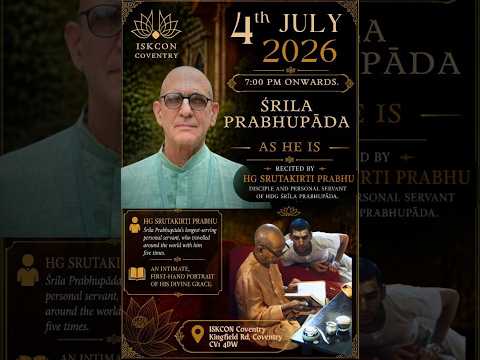

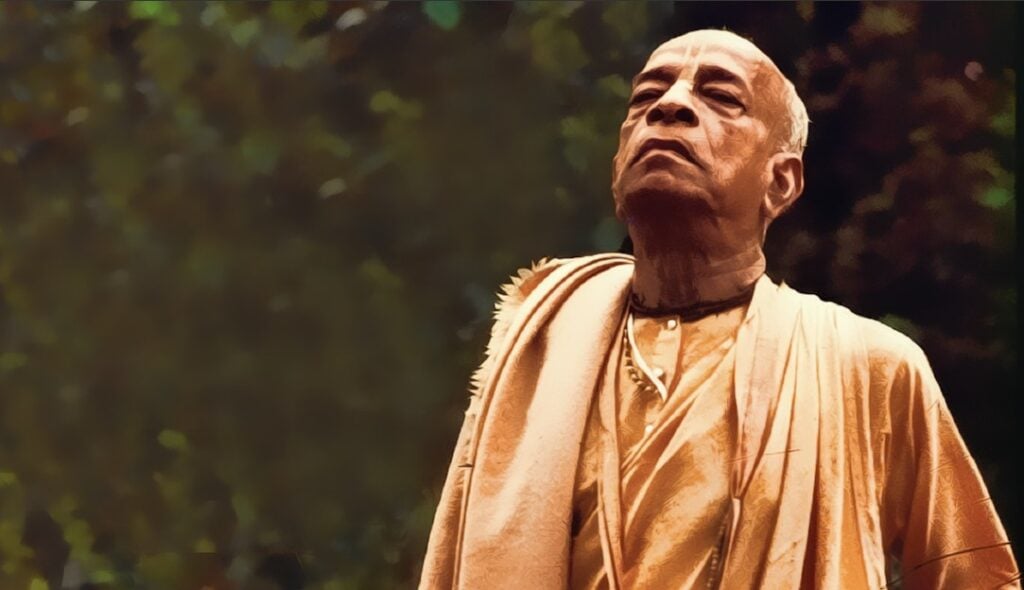
This featured ISKCON Coventry video, Memories of Srila Prabhupada As He Is, presents HG Srutakirti Prabhu’s recollections of Srila Prabhupada through the intimate lens of personal service, devotional discipline, and lived spiritual culture. Rather than functioning merely as a nostalgic recording, the conversation belongs to a wider body of oral history that helps preserve the texture of the early Hare Krishna movement and the practical character of Gaudiya Vaishnava life.
Srila Prabhupada, born Abhay Charan De in 1896, founded the International Society for Krishna Consciousness, or ISKCON, in New York in 1966 after traveling from India to the United States in 1965. His work combined scriptural translation, philosophical commentary, public kirtan, temple worship, prasadam distribution, and systematic community formation. That combination made Krishna consciousness visible in modern cities while keeping its foundation rooted in Bhagavad Gita, Srimad Bhagavatam, Caitanya tradition, and the guru-shishya parampara.
The significance of HG Srutakirti Prabhu’s memories lies in proximity. As one of Srila Prabhupada’s personal servants and traveling assistants during an important period of ISKCON’s global expansion, he observed details that formal biographies often cannot fully convey: the daily schedule, the careful speech, the humor, the correction, the affection, the pace of travel, the seriousness of sadhana, and the unbroken focus on service to Krishna. Such memories do not replace scripture or institutional history, but they give those sources human scale.
The phrase As He Is carries particular resonance in the Prabhupada tradition. It recalls the emphasis on receiving teachings without unnecessary distortion, sentimentality, or selective editing. In this context, remembrance becomes a form of responsibility. It asks listeners to hear not only impressive events but also the moral and spiritual principles that shaped those events: humility before the guru, fidelity to Krishna’s message, steadiness in practice, and respect for the disciplic succession.
From an academic perspective, oral testimony is valuable because it preserves the lived dimension of religious history. Movements are not sustained by texts alone, even when texts are central. They are sustained by habits, gestures, shared meals, modes of address, devotional music, patterns of study, and examples of conduct that disciples witness over time. Srutakirti Prabhu’s recollections therefore help document how Srila Prabhupada’s teachings were embodied in daily devotional life.
The technical structure of Krishna consciousness is often summarized through practices such as shravana, hearing; kirtana, chanting; smarana, remembrance; seva, service; sadhu-sanga, association with devotees; and regulated sadhana. In Prabhupada’s presentation, these practices were not abstract categories. They became a disciplined way of organizing the day, training the mind, purifying intention, and linking ordinary work to divine service. Memories from close disciples illuminate how that framework operated in real time.
One of the enduring lessons in these accounts is that spiritual leadership is not reducible to charisma. Srila Prabhupada’s influence came through philosophical clarity, personal austerity, compassion, administrative intelligence, and a remarkable capacity to translate ancient devotional principles into modern institutional forms. Temples, books, festivals, kitchens, farms, schools, and publishing networks all became instruments of bhakti when aligned with the central purpose of serving Krishna.
The emotional strength of such memories often rests in small details rather than dramatic claims. A brief instruction, a measured correction, a moment of kindness, or a practical decision during travel can reveal a great deal about the relationship between guru and disciple. For many viewers, this is where the video becomes especially relatable: spiritual life is seen not only in public ceremonies but also in obedience, patience, punctuality, attentiveness, and the willingness to serve without demanding recognition.
The guru-shishya tradition occupies a central place across dharmic civilization. In Hindu, Buddhist, Jain, and Sikh traditions, the teacher is not merely a lecturer but a guide who transmits discipline, insight, and ethical formation. Each tradition has its own theology and method, yet all recognize that knowledge becomes transformative when it is received with sincerity and practiced with integrity. Srila Prabhupada’s legacy can be understood within this wider dharmic respect for realized instruction and disciplined learning.
This broader dharmic framing is important because remembrance should deepen unity rather than produce sectarian narrowness. Gaudiya Vaishnavism has its own distinct theology centered on Krishna bhakti, yet its emphasis on devotion, humility, sacred sound, compassion, vegetarian ethics, and disciplined self-culture speaks meaningfully to the larger family of Indian spiritual traditions. A mature reading honors difference without hostility and recognizes shared commitments to dharma, self-mastery, and liberation from material ego.
ISKCON Coventry’s presentation of this discussion also reflects the role of diaspora communities in preserving Hindu spiritual heritage. In the United Kingdom and across the world, temples and devotional centers have become more than places of ritual worship. They serve as classrooms, archives, cultural homes, kitchens of prasadam, intergenerational meeting points, and living bridges between inherited tradition and contemporary life.
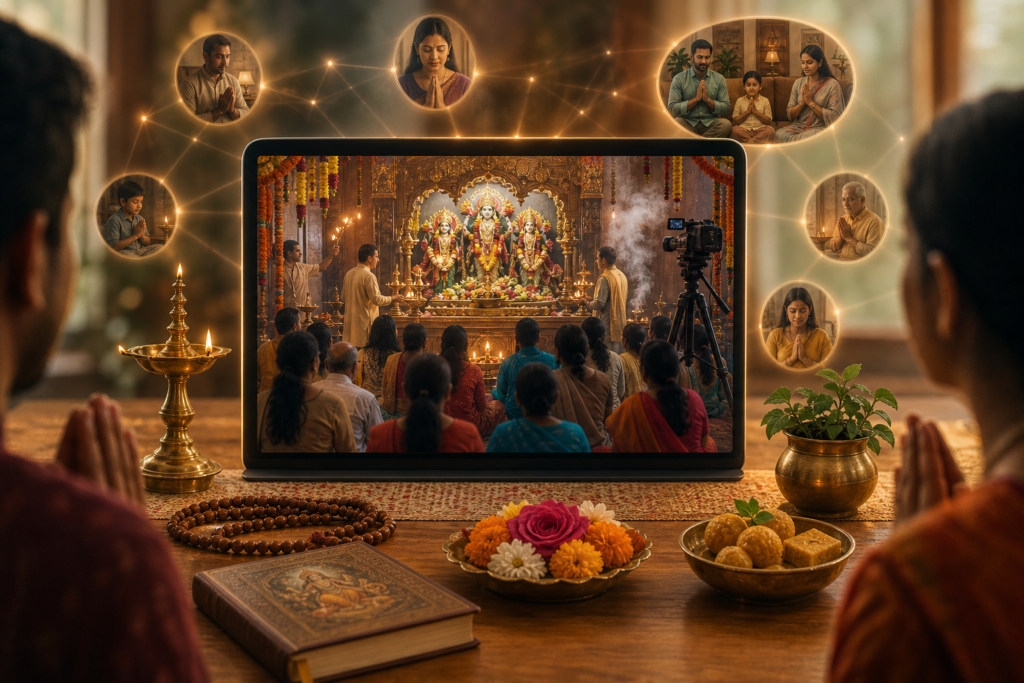
For younger devotees and interested observers, recordings like this offer an accessible entry into the early history of ISKCON. Many did not see Srila Prabhupada personally, yet they encounter him through books, lectures, letters, photographs, temples, festivals, and the testimony of disciples who served him directly. Digital preservation has therefore become a modern extension of remembrance, allowing oral history to travel across geography and generations.
At the same time, responsible engagement requires discernment. Devotional memory is not the same as detached archival description, and academic history is not the same as devotional realization. Both modes can serve a serious reader when approached honestly. Reverence protects the heart from cynicism, while careful historical attention protects memory from exaggeration. The strongest engagement allows both respect and clarity to coexist.
Srila Prabhupada’s public mission was inseparable from books. His translations and commentaries on Bhagavad-gita As It Is, Srimad Bhagavatam, Sri Caitanya-caritamrta, and other works made Sanskrit and Bengali devotional literature available to a global readership. The philosophical architecture of ISKCON rests heavily on these texts, and personal memories of Prabhupada are best understood alongside the scriptural labor that gave the movement its intellectual and theological foundation.
The discipline described in Prabhupada-centered remembrance also has contemporary relevance. Modern spiritual seekers often face distraction, loneliness, information overload, and a fragmented sense of identity. The practices emphasized in Krishna consciousness offer a counter-structure: regular chanting, sacred study, clean living, community service, devotional music, prasadam, and reflection on the distinction between the self and the temporary body-mind complex.
There is also a leadership lesson here for religious institutions. A movement survives beyond its founding generation when memory is joined to practice, and practice is joined to character. Sentiment alone cannot preserve a tradition. Nor can administration alone inspire devotion. Srila Prabhupada’s example continues to matter because it shows how teaching, personal conduct, organizational vision, and devotional tenderness can reinforce one another.
Viewers may benefit from approaching the video with a few guiding questions. What qualities did Srila Prabhupada cultivate in his disciples? How did he balance firmness and compassion? What did personal service teach about surrender and responsibility? How did small daily practices support a global mission? Such questions make the viewing experience more reflective and help transform memory into applied spiritual insight.
The value of HG Srutakirti Prabhu’s recollections is therefore not limited to historical curiosity. They invite contemplation on how a saintly teacher’s presence can shape ordinary behavior, institutional culture, and the inner life of disciples. The memories point toward a practical conclusion: devotion becomes credible when philosophy is lived, service is steady, and remembrance leads to deeper humility.
In this sense, the ISKCON Coventry video is best understood as a devotional archive and a teaching resource. It preserves the memory of Srila Prabhupada while encouraging contemporary readers and viewers to examine their own relationship with spiritual discipline, sacred tradition, and service. Its enduring message is simple but demanding: authentic guru-seva is not nostalgia for the past, but a living commitment to carry forward dharma with sincerity, intelligence, and compassion.
Inspired by this post on Dandavats.



Leave a Reply
You must be logged in to post a comment.