
Spiritual progress often appears more difficult than it is, especially when Krishna consciousness is approached with the expectation of immediate visible results. A person may begin chanting, reading, or trying to regulate daily life, yet still feel impatient when inner transformation does not arrive quickly. This difficulty becomes more pronounced for devotees and seekers who do not live in a temple, cannot regularly visit a temple, or have limited access to the association of temple devotees. In such circumstances, the central question becomes practical rather than abstract: how can devotional life remain steady, meaningful, and spiritually potent in an ordinary home?
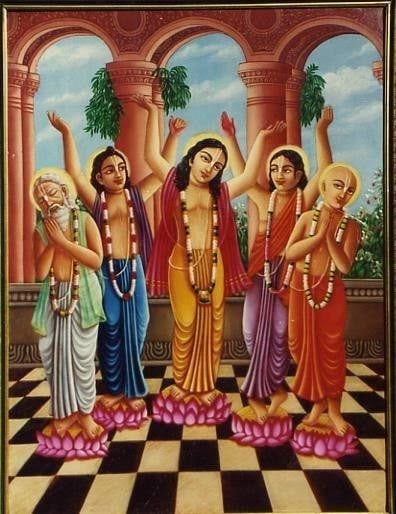
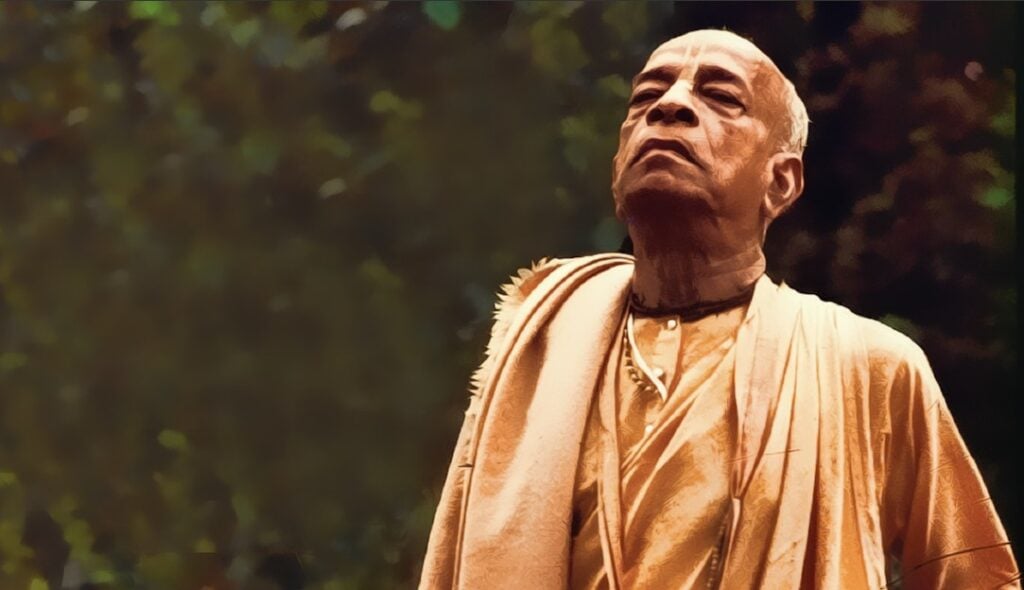
Srila Prabhupada answered this question with striking simplicity. In November 1969, while speaking at Conway Hall in London, he explained that the process of Krishna consciousness does not depend on elaborate institutional access, expensive arrangements, or impressive external display. His instruction was direct: keep a picture of Lord Caitanya with His associates, chant the Hare Krishna mantra, and worship with sincerity. Lord Caitanya appears in the center with Nityananda, Advaita, Gadadhara, and Srivasa, together honored in the Gaudiya Vaishnava tradition as Sri Panca-Tattva. This image, placed respectfully in the home, becomes a focal point for remembrance, worship, and disciplined spiritual practice.
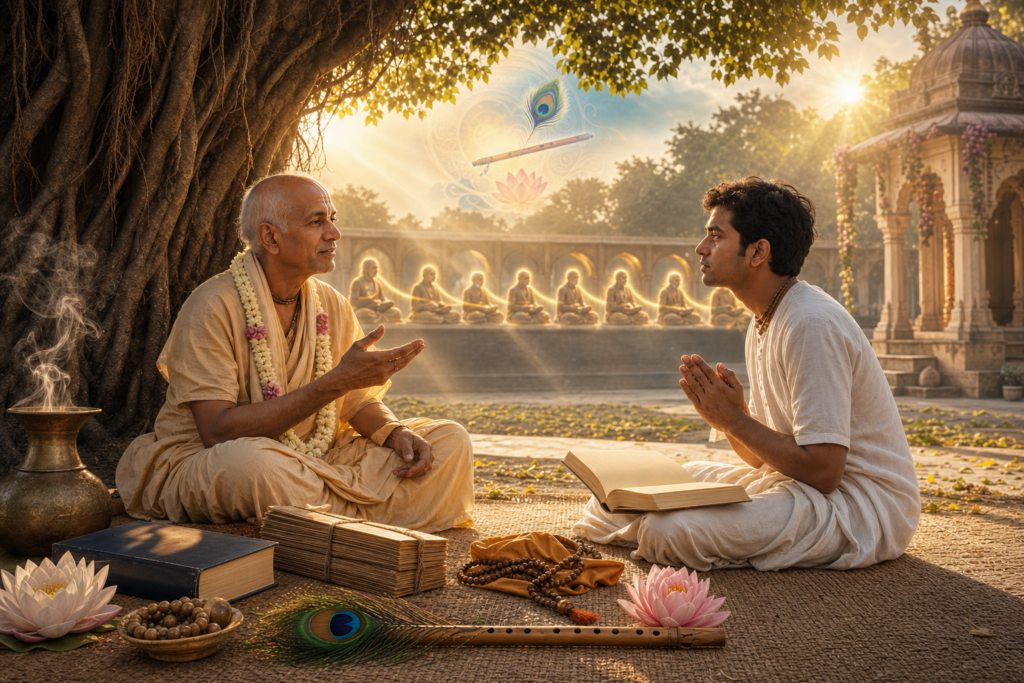
Srila Prabhupada stated: “The process is very simple. Just keep a picture of Lord Caitanya with His associates. Lord Caitanya is in the middle, accompanied by His principal associates—Nityananda, Advaita, Gadadhara, and Srivasa. One simply has to keep this picture. One can keep it anywhere. It is not that one has to come to us to see this picture. Anyone can have this picture in his home, chant this Hare Krishna mantra, and thus worship Lord Caitanya. That is the simple method. But who will capture this simple method? Those who have good brains. Without much bother, if one simply keeps a picture of Sri Caitanya Mahaprabhu at home and chants Hare Krishna, then one will realize God. Anyone can adopt this simple method. There is no expenditure, there is no tax, nor is there any need to build a very big church or temple. Anyone, anywhere, can sit down on the road or beneath a tree and chant the Hare Krishna mantra and worship God. Therefore it is a great opportunity.”
This instruction is important because it places spiritual accessibility at the center of bhakti-yoga. Krishna consciousness, as presented by Srila Prabhupada, is not reserved for monastics, scholars, wealthy patrons, or those living near established religious institutions. It can begin in a rented room, a family house, a small apartment, a student hostel, or even a quiet corner of a busy life. The emphasis rests on hearing, chanting, remembrance, sincerity, and regulated devotional conduct. Theologically, this reflects a fundamental principle of bhakti: the Supreme Lord is approached through loving service, not through material qualification alone.
The simple method also addresses a common emotional obstacle in spiritual life: discouragement. Many seekers quietly compare their circumstances with others. Someone may feel inadequate because there is no temple nearby, no regular kirtan gathering, no visible community, or no advanced personal scholarship. Yet Srila Prabhupada’s teaching redirects attention from what is missing to what is available immediately. A picture of Sri Panca-Tattva, the sound of the holy name, a sincere heart, and a willingness to continue are enough to begin. This is not a reduction of Krishna consciousness; it is its merciful opening.
The chanting of the maha-mantra remains the heart of this practice: “Hare Krishna, Hare Krishna, Krishna Krishna, Hare Hare/ Hare Rama, Hare Rama, Rama Rama, Hare Hare.” In Gaudiya Vaishnavism, the holy name is not treated as a symbolic reminder only, but as a sacred sound vibration that connects the chanter with Krishna. The practice may begin softly and imperfectly, but its discipline creates a rhythm around which the rest of devotional life can gradually form. A person may chant in the morning before work, during a quiet evening, while traveling, or before a simple home altar. The essential factor is attentive, humble repetition.
Lord Caitanya’s own instruction that chanting should be performed “in a humble state of mind” is central to understanding why this method is powerful. Humility does not mean weakness or lack of thought; it means freedom from the arrogance that obstructs receptivity. Spiritual practice can become distorted when knowledge, austerity, renunciation, or ritual correctness produce pride. In that condition, the outward appearance of religion may remain, but the inward movement of devotion becomes weakened. The simple method protects the practitioner by continually returning the focus to sincerity, remembrance, and service.
Srila Prabhupada made this point clearly in Nectar of Devotion, Chapter 14: “Some scholars recommend that knowledge and renunciation are important factors for elevating oneself to devotional service. But actually that is not a fact. Actually, the cultivation of knowledge or renunciation, which are favorable for achieving a footing in Krishna consciousness, may be accepted in the beginning, but ultimately they may also come to be rejected, for devotional service is dependent on nothing other than the sentiment or desire for such service. It requires nothing more than sincerity.” This statement does not dismiss learning or disciplined living. Rather, it places them in their proper position as servants of devotion, not substitutes for devotion.
This distinction is especially relevant in modern spiritual culture, where information is abundant but steadiness is often rare. One may read many books, hear many lectures, and discuss many philosophical categories, yet still struggle to maintain a daily practice. Conversely, a humble person with limited formal learning may steadily chant, offer food, hear from Srila Prabhupada, and live with growing awareness of Krishna’s presence. From the standpoint of bhakti, the second condition may be spiritually stronger because it is anchored in practical devotion rather than intellectual display.
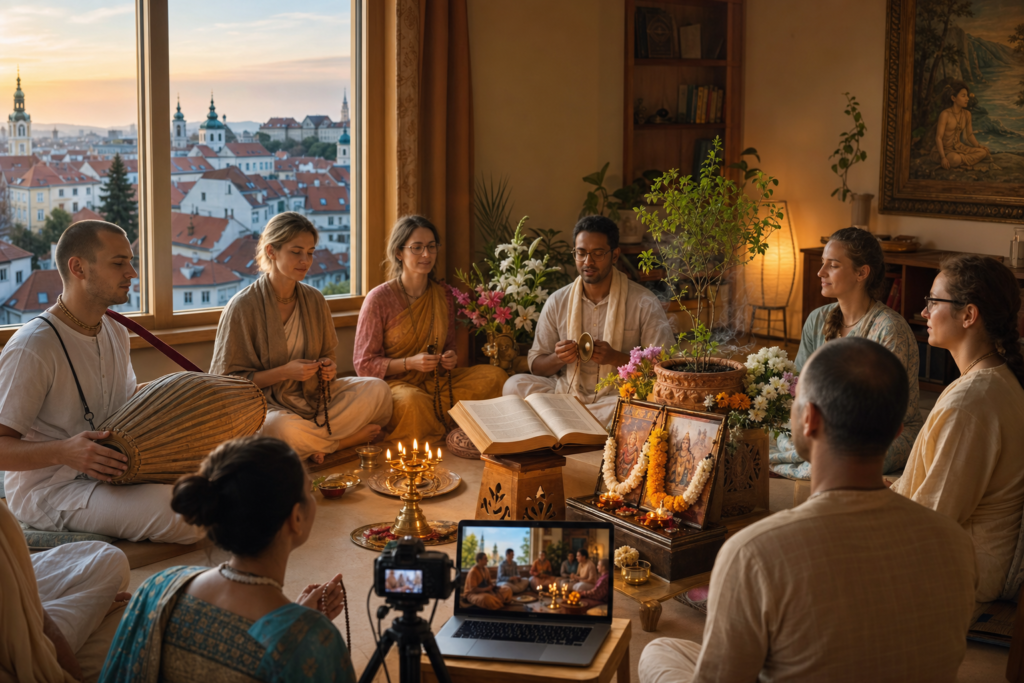
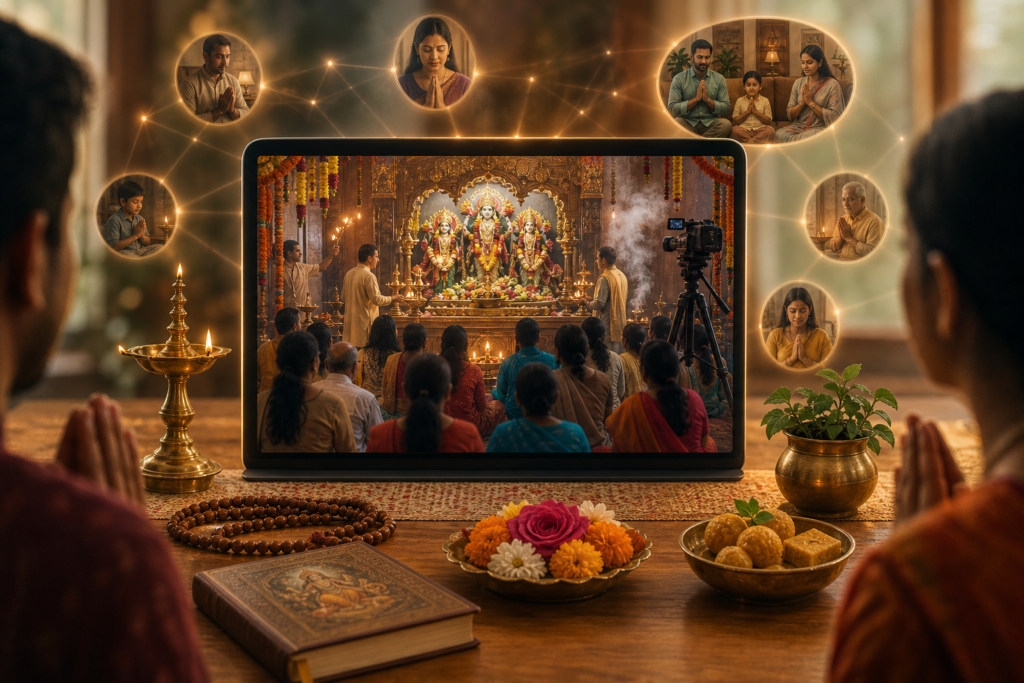
A home altar, therefore, is not merely decoration. It is a disciplined theological space within domestic life. A simple altar may include a clean cloth, a picture of Sri Panca-Tattva, a picture of Srila Prabhupada, perhaps a copy of Bhagavad Gita, and a place for offering water, flowers, incense, or simple vegetarian food prepared with devotion. The altar reorders the atmosphere of the home. It reminds household members that spiritual life is not confined to festivals or temple visits; it can be woven into waking, working, cooking, studying, resting, and family responsibilities.
In February 1975, during a conversation in Honolulu, Srila Prabhupada emphasized that living inside a temple is not the sole measure of success. He said: “Whether you live in temple or outside temple, the rules and regulation and the process must be followed. Then you are successful. It doesn’t matter that you have to live in the temple. If he does not agree with other godbrothers, friends, he can live separately. But he must follow the rules and regulation. That is wanted.” The instruction is practical and balanced. Temple life offers structure and association, but the essence of the process must be carried into every situation.
This teaching has broad relevance for householders, students, elders, professionals, travelers, and isolated practitioners. The question is not whether the external circumstances are ideal. The question is whether the process is honored with seriousness. Daily chanting, respectful worship, hearing from authentic sources, reading Srila Prabhupada’s books, honoring prasadam, and cultivating ethical conduct can transform ordinary domestic life into a field of sadhana. The home becomes spiritually significant when it is organized around remembrance of Krishna.
Srila Prabhupada also taught that his picture should be honored in a spiritually serious mood. In a letter dated September 4, 1972, he wrote: “There is no difference between me and my picture. Therefore we should honor and keep pictures in that spirit. If we throw pictures this way and that way, that is offence. The name and picture are as good as the person in spiritual world. In the material world either picture or person, everything is illusion.” In devotional practice, sacred images are not approached casually. They are treated as points of relationship, remembrance, and reverence.
The technical significance of this principle lies in the Vaishnava understanding of spiritual representation. The holy name, sacred image, scripture, and guru are not ordinary material objects when approached properly through authorized devotional practice. They function as mediums of grace, discipline, and consciousness. This does not require superstition or sentimental excess. It requires a coherent theological attitude: the practitioner honors what connects the mind, senses, speech, and daily actions to the Supreme Lord.
For those who cannot read extensively, hearing remains an accessible and powerful path. Srila Prabhupada’s recorded lectures, conversations, bhajans, and readings allow the practitioner to receive guidance through sound. This is consistent with the central role of sravanam, or hearing, in bhakti. Hearing can gradually refine understanding, correct misconceptions, and strengthen faith. When paired with chanting, it creates a daily cycle of receiving and responding: one hears transcendental instruction and then responds through the holy name, worship, and conduct.
The simplicity of this method should not be mistaken for spiritual shallowness. In many traditions of Sanatana Dharma and the wider dharmic family, including Hinduism, Buddhism, Jainism, and Sikhism, disciplined remembrance, humility, ethical living, and sacred sound hold an honored place. The forms, doctrines, and theological conclusions differ, yet the value of sincere practice over empty display is widely recognized. In this sense, Srila Prabhupada’s instruction also contributes to a larger dharmic conversation: spiritual life becomes real when it is practiced with steadiness, reverence, and transformation of character.
There is also a deeply human dimension to this teaching. Many people carry private feelings of spiritual inadequacy. They may think they are too late, too distracted, too imperfect, too busy, or too far from devotional society. The simple method challenges that despair. It says that a beginning can be made today, in the present place, with the resources already available. A clean space, a sacred image, the Hare Krishna mantra, a few minutes of honest attention, and a willingness to continue can become the first steps of a life redirected toward Krishna.
Practical spiritual advancement usually comes gradually. The mind may wander during japa, old habits may persist, and enthusiasm may rise and fall. Yet the regularity of the process is itself transformative. A daily altar invites discipline. A fixed chanting time trains attention. A habit of offering food encourages purity and gratitude. Reading or hearing Srila Prabhupada’s teachings gives philosophical orientation. Association, when available, strengthens commitment. When association is not available, the practitioner can still remain connected through the holy name, sacred texts, and the presence of guru and Krishna in the home.
The phrase “simple method” therefore carries a serious meaning. It is simple because it is accessible, not because it is trivial. It is simple because it can be practiced without wealth, social status, institutional proximity, or intellectual prestige. It is simple because the essentials are clear: chant Hare Krishna, honor Lord Caitanya and Sri Panca-Tattva, remember Krishna, follow the process, and cultivate sincerity. Such simplicity is not a compromise; it is a sign of spiritual mercy.
When the home becomes a place of worship, the division between sacred and ordinary life begins to soften. The kitchen can become a place where food is prepared for offering. The bookshelf can become a place of scriptural learning. The morning can become a time of japa. The evening can become a time for hearing, reflection, and prayer. The family room can become a place where children, elders, and guests see that devotional life is lived, not merely discussed. In this way, Krishna consciousness enters the texture of daily life.
Srila Prabhupada’s instruction remains especially relevant for contemporary seekers because modern life often produces isolation, distraction, and spiritual inconsistency. The solution he offers is neither expensive nor complicated. It asks for sincerity, attention, and respect. It asks the practitioner to begin where one stands. It also restores confidence: no sincere effort is wasted when it is directed toward Krishna with humility and perseverance.
The simple method ultimately teaches that divine presence is not absent from ordinary life. Lord Krishna is understood to reside in everyone’s heart, and devotional practice awakens awareness of that presence. By honoring Sri Panca-Tattva, chanting the Hare Krishna mantra, hearing from Srila Prabhupada, and maintaining a clean and reverent home altar, a practitioner can experience meaningful spiritual connection even without regular temple access. This is the enduring power of Srila Prabhupada’s practical guidance: the path of bhakti can begin anywhere, and it can be sustained by anyone who approaches it with sincerity.
Inspired by this post on Dandavats.


Leave a Reply
You must be logged in to post a comment.