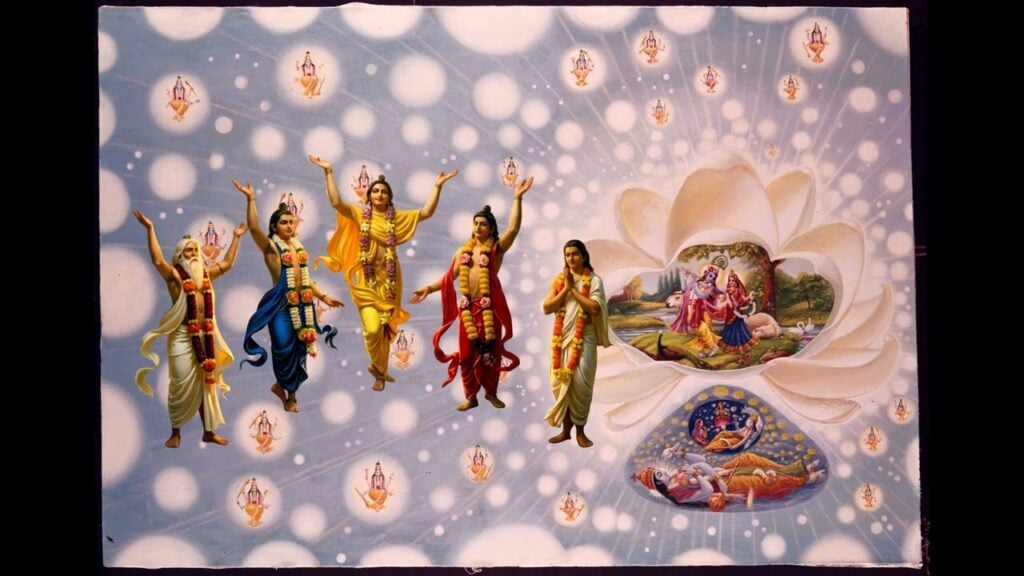
The first verse of the siksastakam consistently resonates during sankirtan, where the promised blessings of sacred sound and service become tangible. In the practice of book distribution, even sharing a tiny particle of Krishna consciousness reveals an ocean of bliss, one that remains steady regardless of external circumstances. This experiential joy, grounded in bhakti and seva, demonstrates how spiritual outreach can nourish inner strength and clarity over time.
Historical reflection reinforces this insight. Srila Prabhupada faced significant austerities in bringing Krishna bhakti to the West, and at one point in Vrndavanaafter being attacked by a cowhe reportedly wondered whether taking sannyasa had been the right course. Later, surrounded by devoted disciples, he observed that nobody knows Krishna's plan. In the United States he saw followers, recognition, and other opulences arise by divine arrangement after prolonged struggle. This sequence illustrates the reciprocation of mercy: sincere efforts to share wisdom often draw unexpected support and grace.
Such reciprocation is not limited to a single person or context. Anyone who sincerely strives to give Krishna to others through sankirtan and book distribution can perceive a similar exchangean elevating interplay of devotion, humility, and resilience. As a form of service, this work refines intention, steadies the mind, and expands compassion.
Viewed more broadly, the principle of sharing sacred knowledge is a unifying dharmic value. Across Hinduism, Buddhism, Jainism, and Sikhism, conveying wisdom is esteemed as a means to cultivate compassion, community well-being, and unity in spiritual diversity. Framed in this inclusive spirit, outreach is not proselytizing; it is an invitation to reflect, chant, and servewhether through kirtan, japa, study, or acts of compassionso that all can benefit according to their path.
Over more than four decades, consistent engagement in distributing books has functioned as a stabilizing and transformative discipline. It anchors consciousness in devotion while strengthening character, purpose, and service to others. In this way, the practice continues to affirm what the siksastakam proclaims: sacred remembrance purifies, enlightens, and fills life with enduring joy.
Inspired by this post on Dandavats.