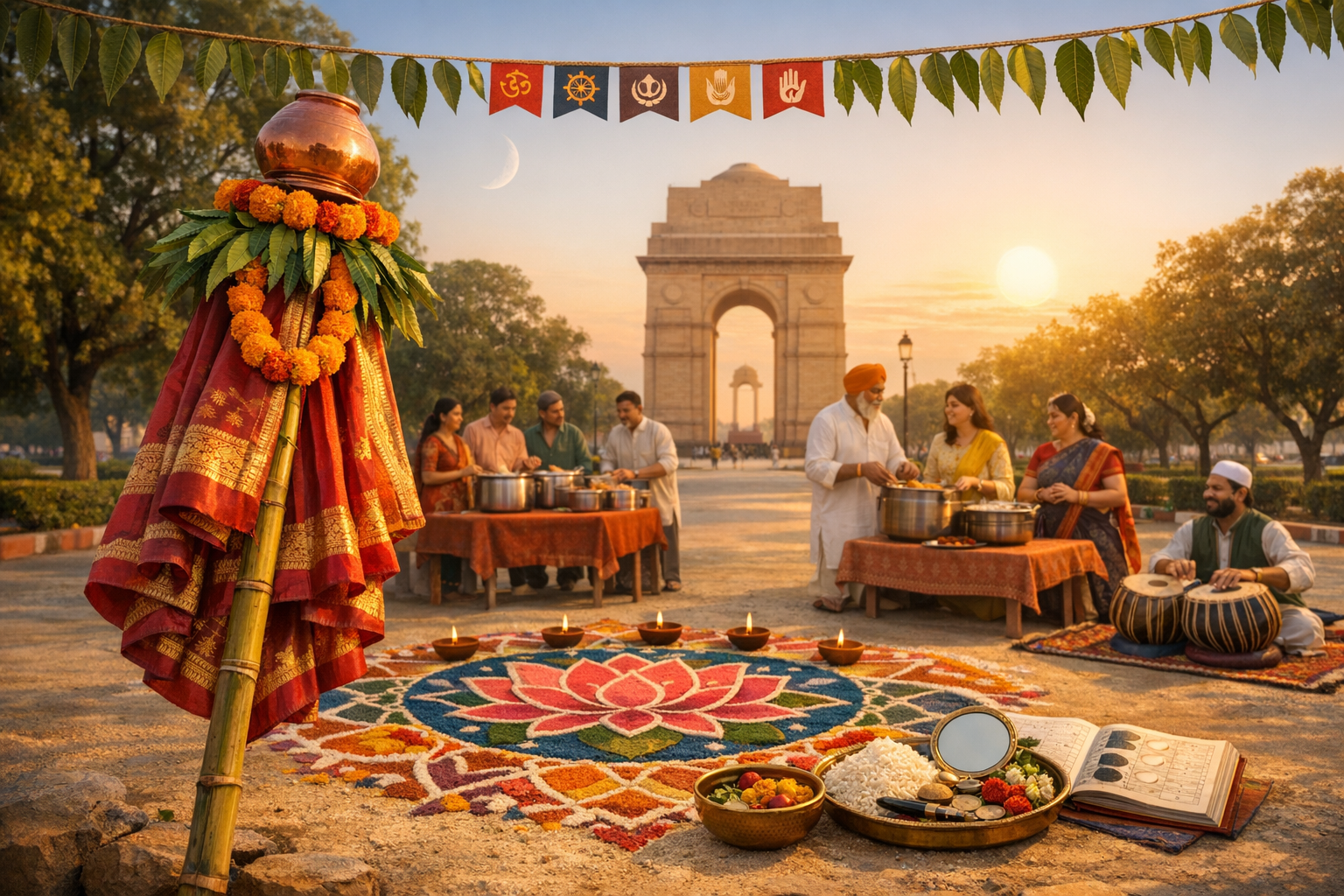
New Delhi, March 14, 2026 (HENB): The Indraprastha unit of the Vishwa Hindu Parishad (VHP) has urged community organisations, neighbourhood associations, educational institutions, and cultural bodies in the National Capital Region to mark the Hindu New Year (Nav Samvatsar) on March 19, 2026. The appeal places emphasis on shared civilizational heritage and social cohesion, inviting inclusive participation that honours the interconnected Dharmic traditions of Hinduism, Buddhism, Jainism, and Sikhism.
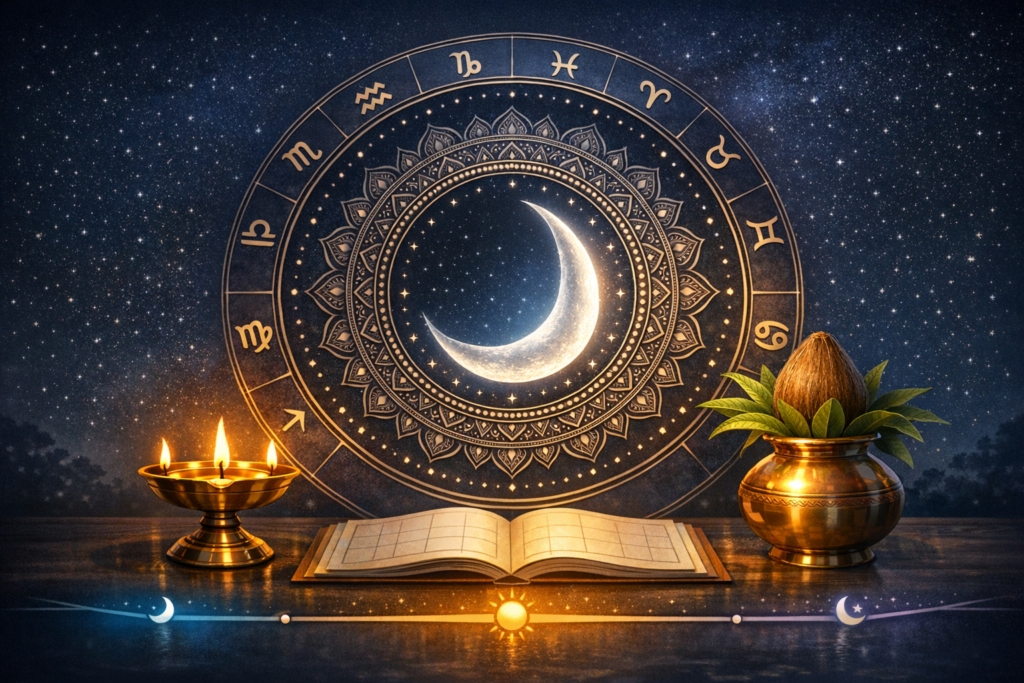
In the Hindu calendrical framework, the New Year is observed on Chaitra Shukla Pratipada, the first lunar day following the new moon that initiates the bright fortnight of Chaitra. For 2026, standard panchang calculations indicate that this tithi prevails in Delhi on March 19. This date is widely known across regions by different names—Ugadi (Kannada–Telugu), Gudi Padwa (Marathi–Konkani), and Navreh (Kashmiri Pandit tradition)—and is contemporaneous with the advent of Vikram Samvat 2083. Around the same period, the Government of India’s official Saka Era (Shaka Samvat 1948) also begins, underscoring a shared season of calendrical renewal near the vernal equinox.
The technical basis for dating Chaitra Shukla Pratipada rests on the lunisolar design of the Hindu calendar. Months track the moon’s phases, while leap months (adhika masa) are introduced to keep festivals seasonally aligned with the solar year. A tithi is a precise angular separation between the sun and the moon; the day of observance is fixed by which tithi prevails at local sunrise. Regional almanacs (panchangam/panchang) sometimes diverge due to distinct astronomical parameters and methods of computation, but the principle remains identical.
Two month-reckoning traditions—amanta (new-moon ending) and purnimanta (full-moon ending)—coexist within Hindu society. While this results in nomenclature differences at the margins, Chaitra Shukla Pratipada as the start of the bright fortnight is common to both, anchoring Ugadi/Gudi Padwa/Navreh to the same lunation. The North Indian and Deccan schools typically converge on the New Year date when the Pratipada tithi holds at sunrise in their respective time zones.
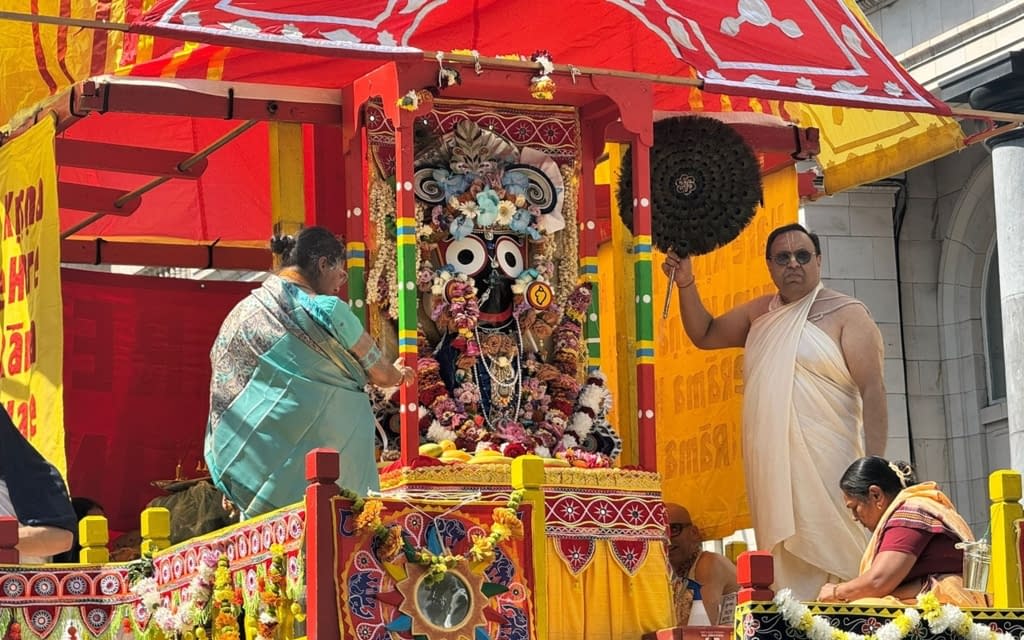
The multiplicity of names and practices on this day illustrates the strength of India’s cultural diversity. Ugadi is marked with the tasting of a six-flavoured pachadi that symbolises life’s composite rasas; Maharashtrian and Konkani households raise the gudi, a dhwaja evoking victory, auspiciousness, and moral renewal; Kashmiri Pandits observe Navreh with ritual readings and sacred thaal arrangements; in Sindhi communities, Cheti Chand follows close by, extending the arc of spring-time celebration. In many places, community kitchens, dana (charitable giving), and heritage arts accompany prayer and meditation.
Unity across the Dharmic fold is intrinsic to the VHP’s call. While distinct calendars are honoured—Jain communities traditionally begin their new year the day after Deepavali (linked to the Vir Nirvana Samvat), Sikh communities venerate Vaisakhi in mid-April as a seminal civilizational moment and observe the Nanakshahi calendar’s Chet start in March, and Theravāda Buddhist societies in South and Southeast Asia celebrate New Year in mid-April—the shared ethos of inner renewal, seva, satya, and compassion forms a natural bridge. The appeal in Delhi highlights this common ground, encouraging neighbours of all Dharmic backgrounds to meet in fellowship, music, meditation, and service.
At the heart of Chaitra Shukla Pratipada lies a simple civilizational grammar: align the mind with cosmic rhythms, and let ethical intention inaugurate the year. The raising of a Dharma Dhwaja or gudi, collective recitation of mantras and bhajans, and the offering of prasada or langar express this grammar through tangible acts. Residents across Delhi often recall how a pre-dawn prabhat-pherī or a quiet home puja transforms neighbourhood mood—introducing a tone of mutual regard that endures long after the festivities end.
From a calendrical-science perspective, the clustering of New Year observances near the equinox is not incidental. The lunisolar system preserves agricultural seasonality, monsoon anticipation, and ritual cycles tied to sunlight length. Panchang compilers harmonise lunar tithis to the solar year through intercalation rules that prevent seasonal drift. Observers in Delhi on March 19 thus partake in a millennia-tested synthesis of astronomy, ritual, and social timekeeping.
Chaitra Navaratri begins with this New Year in many traditions, culminating in Sri Rama Navami. Practitioners commonly adopt light disciplines in food, speech, and thought across nine days to foster inner clarity. Educators note that introducing children to the calendar’s logic—tithi, nakshatra, yoga, and karana—builds numeracy, observational curiosity, and cultural literacy alongside devotion.
Community organisations responding to the VHP Indraprastha appeal typically plan inclusive, non-partisan programmes: heritage lectures on the Hindu calendar (Hindu calendar, Chaitra Month, and Panchang basics), classical and folk arts showcases, tree planting, anna-dana or langar, cleanliness drives, and interfaith-friendly open houses where neighbours can learn the meaning of Ugadi, Gudi Padwa, and Navreh. Such designs consciously avoid exclusivist rhetoric, emphasising values that are shared across Hindu, Buddhist, Jain, and Sikh lineages—ahimsa, daya, dana, and satya.
Social-science literature consistently associates festival-led volunteering with higher social trust and lower inter-group anxiety. In Delhi’s mixed localities, elders often testify that collaborative seva on the New Year diffuses stereotypes and creates durable micro-networks of reciprocity. These narratives align with the Dharmic understanding that external observance and inner cultivation together repair the social fabric.
Sustainability adds another essential dimension. Many groups now favour eco-friendly dhwajas, natural rangoli powders, reusable decorations, and low-amplification music that respects shared spaces. Households increasingly choose seasonal, locally sourced ingredients for festive cooking, reflecting classical Ayurvedic notions of ritu-charya while reducing environmental burden.
As with any public celebration, responsible coordination with local authorities enhances safety and access. Organisers typically plan routes that avoid hospital zones and exam centres, provide multilingual signage, and ensure inclusivity for elders, children, and persons with disabilities. Quiet hours are respected, and public messaging foregrounds unity, heritage, and civic courtesy over partisanship.
While March 19, 2026 is broadly accepted for Delhi, minor regional variations can occur based on almanac choice and the sunrise rule for tithi prevalence. This is normal within the Hindu calendrical tradition and does not diminish legitimacy; the plurality of authoritative panchangs reflects a long history of scholarly schools that converge on principles even when their parameters differ at the second decimal.
Historically, the Vikram Samvat is conventionally associated with Vikramaditya and begins in 57–56 BCE, though academic discussions also examine the evolution and diffusion of era usage in inscriptions, court chronicles, and regional records. The Saka Era, used officially by the Government of India, commences in 78 CE. The coexistence of these eras is not a contradiction; it is a layered record of Indian temporal thought and statecraft that modern society inherits and can appreciate without rivalry.
In practice, the New Year in March–April interweaves with other spring markers across the Dharmic world. Sikh communities prepare for Vaisakhi (Khalsa Sajna Diwas), a profound celebration of courage and collective discipline. Theravāda Buddhists observe New Year in mid-April across Sri Lanka, Myanmar, Thailand, Laos, and Cambodia, blending water symbolism with mindfulness. Jains foreground ahiṃsā and introspection year-round, with their new year after Deepavali offering a complementary moment of ethical recommitment. The Delhi appeal, by inviting neighbours to greet one another across these observances, reaffirms a common inheritance.
Those who regularly participate describe a quietly transformative effect: renewed attention to sunrise, a re-centering of the home altar, kinder speech with family, and a fresh resolve to serve beyond one’s immediate circle. Such testimonies exemplify how a calendrical hinge like Chaitra Shukla Pratipada can become a civic hinge, nudging the city toward harmony by the unpretentious means of food shared, flags raised, and songs remembered.
In calling for celebrations on March 19, the Vishwa Hindu Parishad (VHP) positions Nav Samvatsar not as a narrow identity marker but as a living, unifying tradition. The date collects together science (astronomy), culture (arts and foodways), ethics (seva and dana), and spirituality (sadhana and gratitude). Delhi’s organisations, by embracing this integrative spirit, can set a welcoming tone for Vikram Samvat 2083—one that honours diversity within the Dharmic family and strengthens the broader civic commons.
Inspired by this post on Struggle for Hindu Existence.