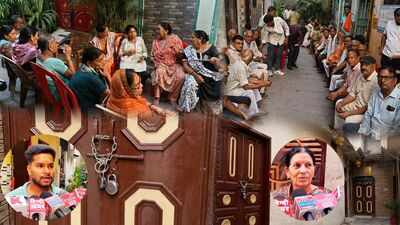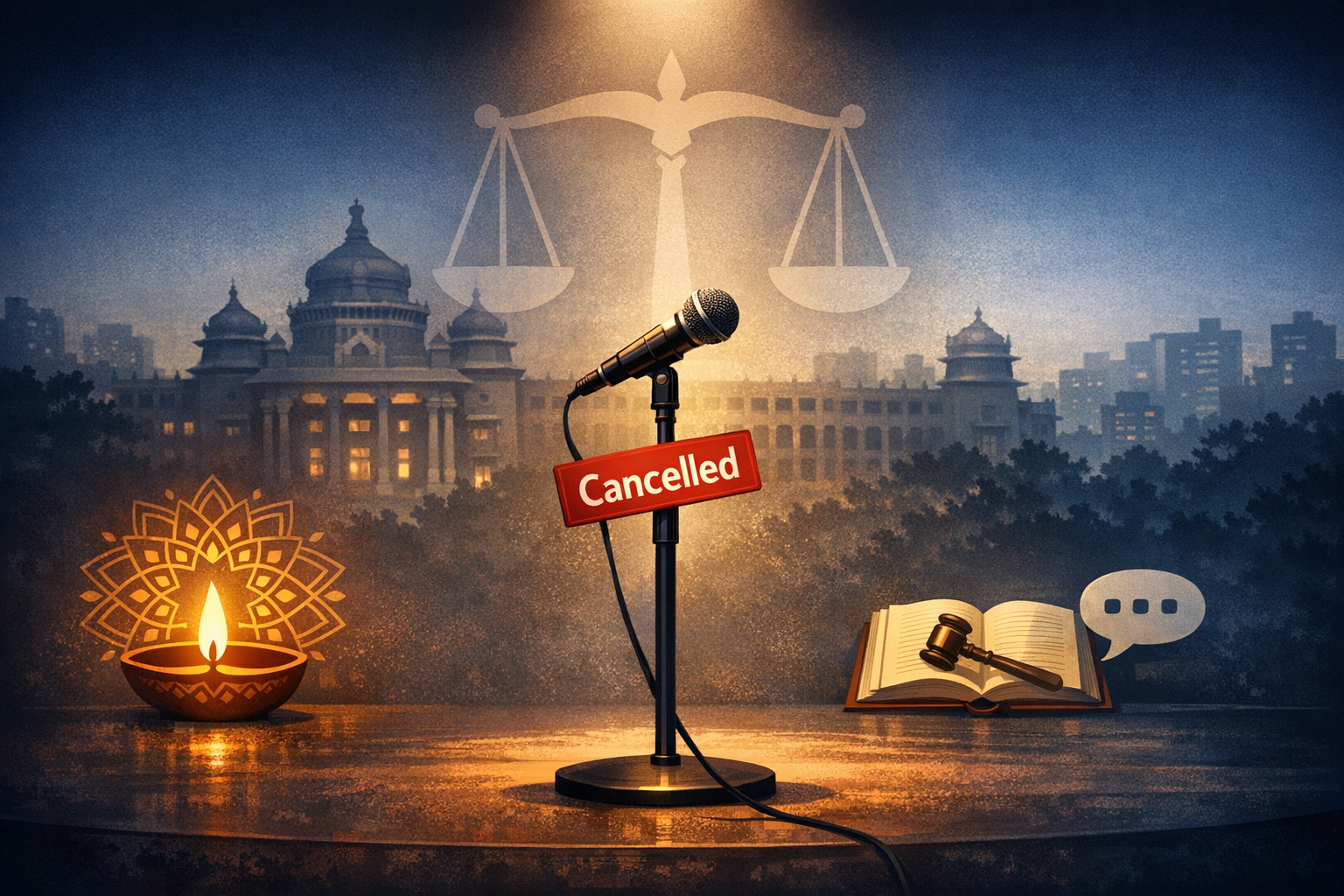
Bengaluru, Karnataka A stand-up comedy show by Nasir Akhtar was reportedly cancelled after a complaint led by Hindu Janajagruti Samiti (HJS) alleged that previous performances contained remarks perceived as derogatory toward Hindu Dharma, India, Prabhu Shri Ram, and Hindu Rashtra. In the absence of a publicly available transcript or official order, the incident is best understood as a flashpoint in the ongoing national conversation about free speech, religious sentiments, and responsible event management.
The core policy question raised in Bengaluru is familiar across India: how should a democratic society balance Article 19(1)(a) guarantees of free expression with the reasonable restrictions under Article 19(2), which include public order, decency, and morality? Comedy relies on provocation and critique, yet it also unfolds within a plural society where sacred figures and symbols command deep reverence. Finding an equitable standard that preserves artistic autonomy while protecting the dignity of faith communities is the challenge.
Indian law delineates boundaries for speech that targets religion. Three provisions typically cited in such disputes are Section 295A of the Indian Penal Code (IPC) (deliberate and malicious acts intended to outrage religious feelings), Section 153A (promoting enmity between groups), and Section 505(2) (statements creating or promoting enmity, hatred, or ill-will). The legal threshold is intentionally high: casual irreverence or mere offense is not enough; statutes target deliberate, malicious, or inciting speech that risks public disorder or entrenches group hostility.
Judicial guidance further clarifies this threshold. In S. Rangarajan v. P. Jagjivan Ram (1989), the Supreme Court warned against a heckler’s veto, noting that expression may not be suppressed by mere threat of disruption unless there is a proximate and credible risk to public order. Shreya Singhal v. Union of India (2015) distinguished advocacy, discussion, and incitement, protecting the first two. More recently, Amish Devgan v. Union of India (2020) discussed markers of hate speech that go beyond robust criticism into dehumanization and vilification of protected groups.
Beyond legal tests lies an ethical imperative. For many devotees, references to Prabhu Shri Ram are entwined with memory, family ritual, and personal identity. Satire that appears to reduce such sacred symbols to ridicule can feel like an affront to dignity, not just an intellectual disagreement. This distinction between disagreement and degradation matters; it is pivotal to maintaining trust among communities and to ensuring that art does not erode the social compact.
The Dharmic fabric of Indiaencompassing Hinduism, Buddhism, Jainism, and Sikhismhas historically sustained a wide spectrum of philosophical debate alongside a deep ethos of reverence. Speech that disparages any Dharmic tradition harms the wider civilizational commitment to pluralism. Equally, blanket suppression of satire damages democratic inquiry. The aspiration should be a principled middle path where humor interrogates ideas without demeaning identities.
Viewed through a governance lens, cancellations often emerge from hurried risk calculations by venues and organizers facing compressed timelines. Stronger front-end processes can reduce last-minute outcomes while respecting both artistic freedom and religious dignity. The goal is not performative censorship but proactive stewardship of events in a culturally complex society.
Organizers in Bengaluru and across Karnataka can adopt a structured due-diligence framework: pre-show content vetting for potential red flags; artist contracts that outline professional standards and remedial steps; cultural-sensitivity reviews by diverse panels; clear on-site escalation protocols; and documented community-engagement channels. Such preparation affirms respect for Hindu Dharma and other Dharmic faiths while signaling that venues are prepared to uphold safety, civility, and lawful expression.
An actionable “Dharmic Arts Charter” can offer shared guardrails without scripting creativity. Indicative principles might include: avoiding slurs or demeaning caricatures of deities or practitioners; ensuring context for sensitive material; providing disclaimers where satire engages the sacred; committing to good-faith correction when a line inadvertently crosses into denigration; and establishing an independent ombudsperson to mediate complaints promptly and transparently.
Complaint-handling should be time-bound and evidence-led. A rapid triage (ideally within 24 hours) can assess content using structured criteria similar to international incitement analyses (intent, content, context, status of the speaker, reach, and likelihood of harm). When thresholds for incitement are not met, proportionate remediesedits, disclaimers, or moderated segmentsshould be prioritized over cancellation. Where law is plausibly implicated, prompt legal consultation and coordination with authorities are warranted.
Digital media complicates these assessments because short clips can strip nuance from a full set. Event stakeholders should request primary recordings, contextual notes, and artist explanations before judging intent. Clear rules on “no out-of-context edits” and “right of response” can reduce misinterpretation while empowering communities to call out genuinely harmful patterns.
Distinguishing offense from harm is central. A practical harm matrix can help: subjective offense (a felt response) warrants listening and clarification; systematic degradation (patterns that stereotype or vilify) calls for edits, training, and formal warnings; incitement (advocation of discrimination or violence) demands cancellation and, if applicable, legal recourse. This tiered approach aligns with constitutional principles and secures public order without chilling legitimate commentary.
Consistency is equally crucial. Communities across Indianot only Hindusreport moments when satire or commentary slips into contempt. Public trust depends on content-neutral standards that apply evenly across faiths and ideologies. A single, transparent rubric counters claims of selective enforcement and strengthens the moral legitimacy of any subsequent intervention.
For performers, cultural literacy is an investable skill. Red-teaming new material with reviewers from diverse backgrounds, replacing identity-based jibes with self-deprecation or observational humor, and building opt-in content advisories can keep material sharp yet responsible. When genuine mistakes occur, visibly adopting remediation (edits, acknowledgments, and dialogue) often restores goodwill better than defensiveness.
Civil-society organizations, including HJS and interfaith forums, can strengthen outcomes by combining vigilant complaint mechanisms with structured dialogue. Town-hall conversations chaired by neutral moderators, pre-event advisory consultations, and post-incident restorative processes help convert flashpoints into learning moments, aligning with the broader Dharmic commitment to ahimsa and mutual respect.
Local administration and police can support this architecture by publishing clear, content-neutral event advisories; facilitating time-bound, evidence-based responses to complaints; and resisting a heckler’s veto while intervening decisively when credible threats to public order or statutory violations arise. Predictable processes lower friction for venues and help artists prepare responsibly.
Venues in Bengaluru and elsewhere benefit from standardized content-values policies embedded in booking agreements. Clauses can outline (1) respect-for-faith expectations, (2) rapid review triggers, (3) remediation ladders, and (4) a good-faith safe harbor protecting venues that follow the protocol. Such clarity protects staff and audiences while reducing reputational risk.
Without definitive public records from the cancelled show, assigning specific fault would be speculative. What is clear is that the controversy signals a growing expectation that public culture be both vibrant and reverentcapable of robust critique without disparagement. This is not a contradiction but a discipline: honoring the sanctity of Prabhu Shri Ram and the dignity of believers while allowing space for ideas, policies, and social mores to be questioned.
The wider civilizational horizon is unity among Hindu, Buddhist, Jain, and Sikh traditions. Protecting each tradition from contempt while preserving a generous sphere for speech and art is essential to that unity. Bengaluru’s episode is a reminder that practical toolsclear law, consistent standards, and empathetic dialoguecan reconcile freedoms with faith and convert conflict into shared learning.
Going forward, the most durable solution is a cooperative compact: performers commit to cultural due diligence; organizers and venues invest in review and remediation; civil society channels grievances into structured processes; and authorities uphold both constitutional freedoms and public order. With that compact, India can continue to define free speech without diminishing faith, and safeguard faith without stifling expression.
Inspired by this post on Hindu Jagruti Samiti.