
Some ancient mysteries survive because evidence has been destroyed. Others survive because the evidence remains visible but unreadable. The clay tablets of Bronze Age Crete once belonged to the second category: their signs could be counted, copied and compared, yet nobody knew with confidence how they sounded or what language they represented. Their eventual decipherment demonstrates how disciplined analysis can extract meaning from a script even when there is no convenient translation, living scribal tradition or ancient key.
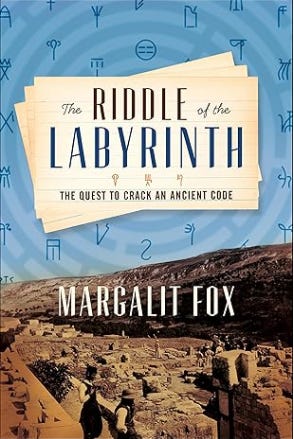
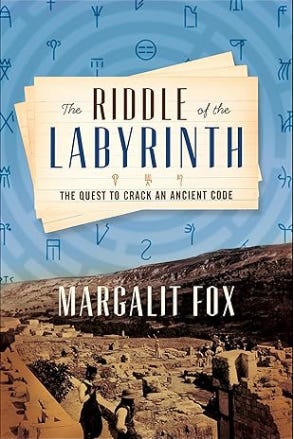
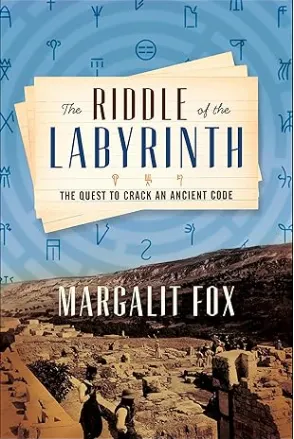
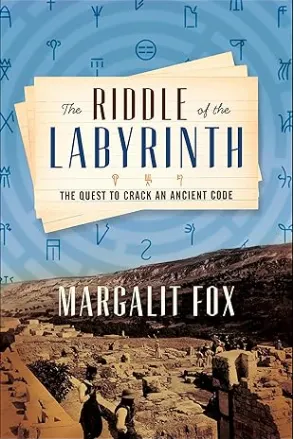
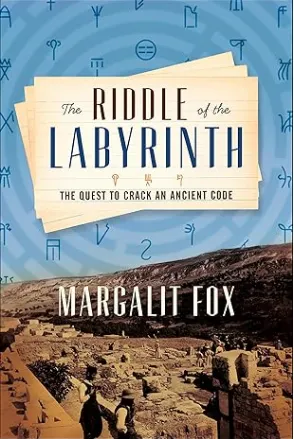
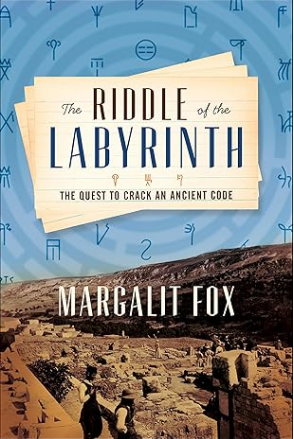
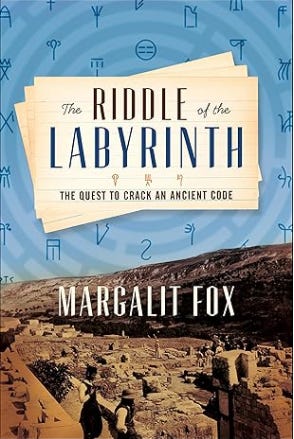
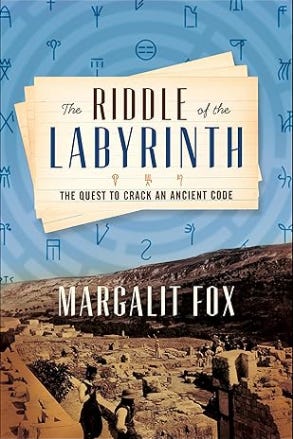
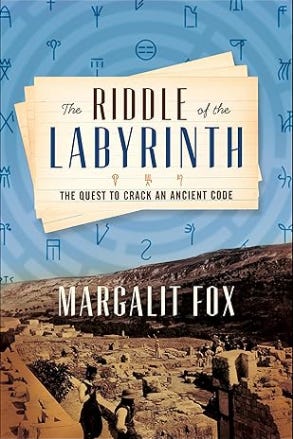
The achievement is often summarized as the triumph of Michael Ventris, a gifted British architect who pursued Linear B outside the conventional boundaries of classical scholarship. That description is broadly correct, but incomplete. Ventris was a professional architect and an amateur decipherer, not an amateur architect. More importantly, his breakthrough depended on foundations laid by the archaeologist Arthur Evans, the American classicist Alice Elizabeth Kober and, after the initial solution, the classical scholar John Chadwick. Margalit Fox’s The Riddle of the Labyrinth restores this collective dimension and shows that decipherment was not a single flash of genius. It was a chain of observation, classification, restraint, intuition and verification.
The story has immediate relevance to one of South Asia’s greatest unresolved questions: the signs associated with the Indus, or Harappan, civilization. Thousands of short inscriptions survive on seals, sealings, tablets, pottery and other objects from sites extending across a vast commercial and cultural landscape. Depending on the sign list and the rules used to distinguish variants, researchers commonly identify several hundred signs. Yet most inscriptions are extremely brief, often containing only about five signs. That brevity makes it extraordinarily difficult to recover grammar, syntax or recurring phrases.
Why Decipherment Is More Than Pattern Recognition
Deciphering a script involves several related but distinct problems. Researchers must determine whether the signs encode language, identify how the system operates, assign probable sound values or meanings, recognize the underlying language and test the proposed readings against the full corpus. A theory that produces a few attractive words is not a decipherment. A credible solution must explain spelling conventions, sign order, grammatical variation, proper names, numerical notation and previously unread examples without repeatedly inventing exceptions.
The easiest situation combines a known script with a known language, as in contemporary English written with the Roman alphabet. A known language recorded in an unfamiliar script presents a harder but manageable challenge because the expected vocabulary and grammar constrain the possibilities. A familiar script representing a poorly understood language creates a different problem: the words may be pronounceable while their meanings remain uncertain, as is partly true of Etruscan. The most difficult situation arises when both script and language are unknown and no bilingual text exists. Linear B initially appeared to occupy this last category, and the Indus signs still do.
Even this classification requires caution. A script can be visually unfamiliar while still belonging to a recognizable family, and an unknown language may preserve names or loanwords from known languages. Archaeological context can also function as a limited external key. The location of a tablet, the objects found beside it and the pictograms or numerals written upon it may reveal its administrative purpose before a single syllable has been read.
Arthur Evans and the First Structure of the Puzzle
Arthur Evans uncovered large quantities of inscribed clay at Knossos beginning in 1900. He distinguished several Cretan writing systems, including the script he named Linear B. Evans recognized the direction of writing, separators between word groups, numerical signs and recurring patterns associated with commodities. He also understood that the documents belonged to an administrative environment. These observations did not reveal the language, but they transformed irregular-looking marks into an organized body of evidence.
Linear B combines phonetic signs with ideograms, numerals and measures. Its core phonetic inventory contains roughly 87 syllabic signs, most representing an open syllable of the consonant-plus-vowel or vowel type. A scribe could therefore record a spoken form only through the conventions permitted by the system. Final consonants might be omitted, consonant clusters could be separated by inserted vowels, and distinctions familiar from alphabetic Greek were not always represented. These limitations later explained why recognizable Greek words did not initially look Greek.
Evans nevertheless became strongly committed to the view that the language was non-Greek and that Minoan civilization was fundamentally separate from the later Greek world. His prestige shaped the early field. The episode illustrates a recurring danger in historical research: a useful working hypothesis can harden into a boundary that evidence is no longer permitted to cross.
Alice Kober and the Discipline of Not Guessing
Alice Kober brought a different temperament to the problem. Teaching classics at Brooklyn College while conducting research under demanding personal and professional circumstances, she spent years creating a hand-built analytical archive. Before electronic databases, she recorded signs and sign groups on approximately 180,000 slips and cards, many cut from whatever paper was available. Her method was laborious, but its logic remains modern: normalize the data, compare distributions, isolate variables and resist assigning sounds until the structure justifies them.
Kober’s most important achievement was the identification of recurring sets now commonly described as “Kober triplets.” Certain word groups shared the same beginning but differed systematically in their endings. Other groups linked those endings through signs that appeared in corresponding positions. This pattern suggested inflection—the alteration of word endings to express grammatical relationships such as case, number or gender.
The insight was decisive because it established that the tablets did not contain arbitrary symbols or a simple collection of labels. They reflected a language with internal grammatical structure. Kober also inferred that many signs were probably syllabic and arranged them in a grid according to shared vowels or consonants, even though she did not yet know the relevant sound values. Her “bridging” signs connected otherwise separate patterns and revealed relationships within the sign system.
Kober’s restraint was as important as her discoveries. She did not begin with a preferred ethnic or linguistic identity and then search for words that resembled it. She insisted that internal evidence had to come first. This principle remains essential for the Indus script, where a proposed reading can easily become entangled with modern debates over language, ancestry and civilizational ownership.
Kober died in 1950 at the age of 43, before the decipherment was completed. Historical memory long reduced her to a preliminary figure, but the surviving record shows that she had established much of the analytical architecture upon which Ventris worked. The emotional force of the story lies partly in this unfinished labor: a researcher came close enough to define the shape of the solution but did not live to see it confirmed.
Michael Ventris and the Productive Risk
Michael Ventris encountered the Cretan scripts while still a schoolboy and remained fascinated by them for years. He published an early paper at 18 and continued the problem alongside his architectural career and wartime service. Architecture may have strengthened habits useful to decipherment: spatial organization, sensitivity to recurring forms and the ability to test how individual components fit within a larger system.
Ventris circulated a series of “Work Notes” among specialists, making his assumptions and provisional results available for criticism. This practice mattered. Decipherment is vulnerable to self-confirming interpretations, so an explicit record of each step allows other researchers to locate errors and distinguish evidence from intuition.
Using Kober’s structural insights and an expanded corpus of tablets, Ventris developed a grid in which signs were grouped according to hypothetical shared consonants and vowels. The grid did not initially supply actual sounds. It mapped relationships: if two signs behaved as though they shared a vowel, they occupied the same column; if they appeared to share a consonant, they occupied the same row. The method reduced a mass of symbols to a constrained system.
The crucial advance came from sign groups that appeared at Knossos but not in material from Pylos. Ventris considered whether these might be Cretan place names. Known names such as Knossos, Amnisos and Tylissos offered possible phonetic anchors. When tentative values derived from these names were propagated through the grid, additional words began to resemble an early form of Greek.
The Cypriot syllabary also provided comparative clues because it was a related syllabic system whose values were known and which had been used to write Greek. The solution, however, was not produced by mechanically replacing every Linear B sign with a Cypriot equivalent. The relationship between the scripts was partial, and Ventris combined comparative evidence with Kober’s grid, positional analysis, place-name hypotheses and repeated testing.
Ventris announced in 1952 that the language of Linear B appeared to be Greek. The proposal contradicted his own earlier preference for an Etruscan-related solution as well as the dominant historical expectation. Its strength was therefore not that it confirmed a cherished belief. It was that it forced a reluctant investigator to change his mind when multiple independent patterns converged.
How the Solution Was Tested
A plausible hypothesis became a decipherment only through external testing. John Chadwick, a classical scholar with linguistic and wartime codebreaking experience, recognized the significance of Ventris’s proposal and helped interpret the emerging Mycenaean Greek. Together they explained how the syllabary represented Greek imperfectly, why familiar words had unfamiliar written forms and how grammatical endings corresponded to known Greek morphology.
A particularly powerful confirmation came from a newly published tablet from Pylos. The text included words that Ventris’s values interpreted as different kinds of vessels, accompanied by an ideogram depicting a tripod and numerical information matching the inventory. Because the tablet had not been used to construct the original hypothesis, its successful reading functioned as an independent test rather than a circular demonstration.
Further tablets yielded consistent vocabulary, personal names, place names, titles and grammatical forms. The system could read new material and explain its own spelling conventions. This ability to generate correct results beyond the examples used to build a theory is the dividing line between decipherment and coincidence.
The solution also corrected a major cultural assumption. Linear B did not record the still-undeciphered Minoan language represented by Linear A. It recorded Mycenaean Greek and was used by Greek-speaking palace administrations at Knossos and on the Greek mainland. The tablets therefore pushed the documented history of Greek several centuries deeper into the Bronze Age.
What the Tablets Actually Revealed
Linear B did not disclose a lost epic comparable to the Iliad or the Odyssey. Most surviving tablets are administrative records: allocations of grain and wool, inventories of livestock and vessels, lists of personnel, landholding arrangements, military equipment and offerings to deities. Their apparent plainness is precisely what makes them historically valuable. Bureaucracies record the recurring structures of life that literary works often take for granted.
The documents illuminate palace-centered economies governed by ranked officials, specialized workers and systems of collection and redistribution. They preserve titles such as wanax, usually understood as a paramount ruler, and they identify craftspeople, herders, religious personnel, dependent laborers and enslaved people. They also record divine names recognizable from later Greek religion, establishing both continuity and change between the Mycenaean world and subsequent Greek traditions.
The survival of the tablets was accidental. Many were not permanently fired archival documents; they were temporary clay records hardened when palace buildings burned. Their preservation therefore captures narrow administrative moments near the destruction of the palace centers. This limitation cautions against treating the surviving corpus as a complete portrait of Mycenaean thought or literature.
Why the Indus Script Is Even Harder
The comparison with the Indus signs is inspiring, but it should not obscure fundamental differences. Linear B tablets often contain long enough sequences for inflectional patterns and repeated administrative formulas to become visible. The Indus corpus consists mainly of very short texts. Even a large number of five-sign inscriptions provides far less grammatical information than a smaller collection of extended documents.
Indus inscriptions also lack a universally accepted bilingual text. No later document explains the sign values, and no securely identified descendant script supplies a dependable phonetic bridge. The language or languages used by Harappan communities remain unknown. Proposed candidates have included early Dravidian, Indo-Aryan, Munda-related languages, an otherwise lost linguistic family and multilingual combinations. None has achieved a consensus decipherment.
Researchers have nevertheless established useful regularities. Many inscriptions appear to run from right to left, although other arrangements occur. Some signs favor initial positions, some cluster near the end, and others recur with signs interpreted as numerical or metrological elements. The famous “unicorn” seals, other animal motifs and the archaeological contexts of objects may encode institutional, commercial, ritual or social information. Yet an image on a seal cannot automatically be assumed to identify the phonetic value of an adjacent sign.
There is also an unresolved debate over whether the sign system represents a full language in the conventional sense. Statistical studies have identified structured sign order, but ordered sequences can occur in linguistic and nonlinguistic systems. Demonstrating regularity is therefore necessary but not sufficient. A robust theory must explain what kind of information the inscriptions encode and why that information appears in such compressed form.
The common estimate of roughly 400 signs introduces another technical problem. If every visual variation is treated as a separate sign, the inventory may be artificially inflated; if meaningful distinctions are merged, crucial information may disappear. Before phonetic values can be assigned, researchers need reliable photographs, consistent sign segmentation, clear rules for distinguishing damage from deliberate variation and transparent documentation of archaeological provenance.
The Proper Lesson About Scholarly Orthodoxy
Linear B is sometimes invoked to argue that a currently unfashionable Indus-language hypothesis must eventually triumph. That conclusion goes beyond the evidence. The genuine lesson is methodological: no candidate language should be excluded merely because it conflicts with an inherited narrative, but no candidate should be accepted because it serves a preferred history or modern identity.
Questions about Indo-European, Dravidian, Austro-Asiatic and other language families in prehistoric South Asia remain active areas of archaeology, historical linguistics and archaeogenetics. The Harappan civilization covered an enormous region and sustained wide trading networks over centuries, so linguistic diversity is plausible. Plausibility, however, is not a reading. Population movement does not map mechanically onto language, and genetic ancestry cannot assign sound values to written signs.
It is therefore prudent to describe claims about a multilingual Harappan world as hypotheses of varying strength rather than settled facts. The presence of one language would not automatically exclude others, and an administrative script might privilege the language of a particular institution rather than represent every language spoken in streets, farms, workshops and ports.
This restraint also serves the broader cultural purpose of unity. Hindu, Buddhist, Jain and Sikh traditions emerged in later historical settings and developed through centuries of dialogue across the Indian subcontinent. The undeciphered Indus signs should not be recruited as exclusive property for any modern religious, linguistic or political constituency. Their eventual interpretation would enrich a shared civilizational inheritance rather than diminish any Dharmic tradition.
Trade, Meluhha and the Search for a Bilingual Key
Mesopotamian sources refer to trade with a region called Meluhha, widely associated by many scholars with the Indus civilization or its maritime sphere. Archaeological evidence demonstrates long-distance movement of materials and goods between South Asia, the Persian Gulf and Mesopotamia. Indus-style seals and other objects found outside South Asia confirm that merchants, intermediaries and administrators crossed cultural boundaries.
An Akkadian cylinder seal identifies Shu-ilishu as a “Meluhha interpreter.” This title is among the most evocative pieces of evidence in the entire problem. It implies that communication between Meluhhan visitors and Mesopotamian speakers sometimes required professional mediation. It does not reveal exactly what language Shu-ilishu translated, but it demonstrates that bilingual individuals operated within the commercial network.
The possibility of a bilingual inscription is therefore reasonable, especially in Gulf or Mesopotamian administrative contexts where merchants from different regions interacted. It remains a possibility rather than evidence that such a tablet certainly exists. If a securely provenanced object were found bearing a sufficiently long Indus text and an accurate translation in cuneiform, it could provide the equivalent of a Rosetta Stone. A tiny seal containing two names would be useful, but it might still be too short to establish the full system.
What a Credible Indus Decipherment Would Require
A successful research program would begin with a comprehensive and openly accessible corpus. Each inscription would need high-resolution imaging, archaeological context, dimensions, material, find location, reading-direction assessment and a record of uncertain or damaged signs. Three-dimensional scanning and reflectance imaging could help distinguish carving order, recutting and surface damage that flat photographs conceal.
The next stage would separate structural claims from linguistic ones. Researchers could model sign frequency, positional constraints, recurring pairs, possible prefixes or suffixes, numerical expressions and relationships between inscriptions and object types. Computational methods are valuable here, but algorithms do not remove interpretive risk. A model trained on inconsistent sign lists will produce precise-looking measurements of unreliable data.
Candidate decipherments should then make explicit predictions. A proposed sound system must work across inscriptions from different sites and periods. A proposed language must yield recurring grammatical patterns, not isolated look-alikes. Names inferred from external sources should occupy plausible contexts. Numerical interpretations should agree with associated commodities and measures. Most importantly, scholars should be able to test examples that were withheld while the theory was developed.
Independent replication is indispensable. Linear B gained acceptance because Ventris’s values worked on new tablets and because Chadwick and other specialists could examine the results. An Indus proposal should similarly publish its sign list, rules, intermediate reasoning and complete readings. A claim that succeeds only when its originator selects the examples or changes values between inscriptions cannot be evaluated scientifically.
The Enduring Human Lesson
The decipherment of Linear B was neither a romantic victory of intuition over scholarship nor a mechanical triumph of statistics over imagination. Kober’s disciplined analysis made Ventris’s creative risk productive; Ventris’s hypothesis gave sound to the structures she had mapped; Chadwick’s linguistic expertise helped convert the initial reading into a defensible account of Mycenaean Greek. Different intellectual strengths became stages of one solution.
That combination offers the most valuable model for Indus research. The puzzle requires archaeological precision, linguistic range, statistical competence, technological assistance, institutional openness and the courage to abandon attractive ideas when they fail. An independent scholar may still make a crucial discovery, but durable success will depend on evidence that specialists across disciplines can reproduce.
The eventual reading may not reveal royal chronicles, sacred hymns or a forgotten epic. If the inscriptions resemble other early administrative systems, they may identify people, offices, commodities, quantities, destinations or obligations. Such information would not be disappointing. Accounts and labels can reconstruct production, trade, authority, social organization and ritual practice with an intimacy that monumental art rarely provides.
Linear B ultimately yielded because patient classification met a daring but testable hypothesis. The Indus script remains more resistant because its texts are shorter and its external anchors weaker. Even so, every carefully excavated object, improved image, transparent corpus and independently tested model narrows the field. The mystery endures, but the history of Kober, Ventris and their collaborators shows that “undeciphered” does not necessarily mean “undecipherable.”
Inspired by this post on Varnam.








Leave a Reply
You must be logged in to post a comment.