-
The Architect Who Cracked Linear B—and the Clues That Could Unlock the Indus Script

The decipherment of Linear B was not a solitary miracle but the result of Arthur Evans’s observations, Alice Kober’s rigorous structural analysis, Michael Ventris’s testable insight and John Chadwick’s linguistic verification. This account explains how Kober’s inflectional patterns and Ventris’s syllabic grid transformed mysterious signs into readable Mycenaean Greek. It also corrects the misconception that…
-
Pakistan’s Harappan Awakening: A Powerful Test of History, Identity, and Truth

Pakistan’s renewed interest in Harappa, Mohenjo-daro, Taxila, Gandhara, Panini, Porus, and Chanakya raises a serious question about history and national identity. The land now called Pakistan contains some of the most important archaeological and civilisational sites of ancient South Asia, but territorial possession alone does not create civilisational continuity. This essay examines the tension between…
-
Indus Waters Treaty Explained: Powerful Rivers, Partition, and Bharat’s Water Legacy

This long-form analysis explains why the Indus Waters Treaty is not merely a legal agreement but a civilisational, agricultural, and geopolitical turning point. It traces the Indus basin from Harappan water management and British canal engineering to Partition and the 1960 treaty. The piece clarifies how the Ravi, Beas, Sutlej, Indus, Jhelum, and Chenab were…
-
Unraveling the Indo-European Homeland: Evidence, Myths, and South Asia’s Living Heritage

The search for the Indo-European homeland remains unsettled, but today it is informed by a stronger synthesis of comparative linguistics, archaeology, and ancient DNA. This article surveys the three leading proposalsAnatolian-Neolithic, South Caucasus, and Pontic-Caspian steppeand distills J. P. Mallory’s critiques, including the problem of massive language shifts without clear archaeological correlates. It explains how…
-
Michel Danino: quiet giant of Indian history, NCERT reformer, facing Supreme Court censure

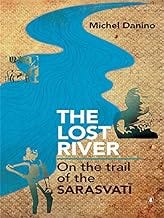
Michel Danino emerges here as a quiet giant of Indian historiographyunassuming yet formidable in method and integrity. His research spans the Sarasvati–Ghaggar–Hakra palaeochannels, Harappan urbanism, critiques of the Aryan Invasion Theory, and readings of the Puranas and epics, all undergirded by cross-disciplinary evidence. Professional roles at IIT Gandhinagar and leadership within NCERT’s textbook development reflect…
-
How the ‘Aryan Race’ Myth Persists: Colonial Pseudoscience, White Supremacy, and Dharmic Unity

A recent media segment revived a racialized reading of the ‘Aryan’ idea, prompting a careful review of what Sanskrit ārya actually means and how colonial-era narratives distorted it. This analysis explains how the British period and certain missionary discourses mapped language onto race, fueling the ‘Aryan–Dravidian’ binary. It traces how eugenics and white supremacist groups…
-
Discover the Saraswati–Sindhu Breakthrough: Proven Power of Decentralized Collective Governance

The Saraswati–Sindhu Civilization challenges the assumption that cities require powerful ruling elites. Spanning an immense geography for centuries, the SSC left few traces of palatial exclusivity yet abundant evidence of urban planning, standardized weights, civic water management, and open-access public amenities. Seals, craft debris, and meeting spaces point to federated production, shared norms, and neighborhood-level…
-
Essential Breakthrough: Rethinking Vedic Origins, Saraswati, and Aryan Migration

This analysis revisits the Vedic people through archaeology, linguistics, and Vedic textual geography to clarify how Saraswati, Aryan Migration, and Out of India debates intersect. It highlights dense Harappan settlements along the Ghaggar–Hakra (Saraswati) paleochannel and explains why Vedic references to a mighty river matter for chronology. It reviews leading Indo-European homeland models and the…
-
Aryan Invasion Theory (AIT), Indo-Aryan Migration Theory (IAMT) and the Indigenous Aryan Theory (IAT): What we know so far

The origins of the Indo-European languages, which include many of the world’s major language families, have been the subject of much debate and speculation among scholars for over a century. Three theories have emerged to explain the origins of the Indo-European languages in the context of India: the Aryan Invasion Theory, the Indo-Aryan Migration Theory,…