Somnath occupies a singular place in the history of medieval India as both a revered temple complex and an enduring symbol of cultural resilience. The events of 1025–1026 CE, culminating in the assault by Mahmud of Ghazni, stand at the intersection of warfare, iconoclasm, and statecraft, with implications that continue to inform how dharmic communities—Hindu, Buddhist, Jain, and Sikh—reflect on heritage, unity, and preparedness.
On Monday, 18 October 1025, Mahmud of Ghazni departed from Ghazni after prayer, leading a large and disciplined force that included approximately thirty thousand regular cavalry. His supply chain was formidable, with thirty thousand camels carrying water and provisions, and additional camels allotted to individual troopers, underscoring the logistical planning behind the Ghaznavid invasions.
By late November, having reached Multan and rested, Mahmud commenced the principal advance. Prior experience at Kalinjar guided a strategic choice: rather than traverse the Ganga–Jamuna belt controlled by powerful Hindu polities, he cut south-west through the Thar desert—described as fiery as “Jahannum itself.” The route was hazardous, but the determination and confidence of the invading army overcame the terrain, reflecting both ambition and calculated risk.
Emerging from the desert, the Ghaznavid forces attacked Ludrava near Jaisalmer and overran its defences after a stubborn stand by the garrison. They then seized Chikudar hill and threatened Nahrwala (Anahilapataka), capital of the Gujarat Chalukya dynasty founded by Mularaja. At this juncture, Bhima I, the reigning monarch, withdrew to the fortified refuge of Kanthkot—an absence that would later weigh heavily on the morale and organization of local resistance.
By December 1025, Mahmud encamped near Patan. After replenishing supplies, he pressed on toward Mundher (Modhera), site of the renowned Sun Temple, where he met substantial resistance before prevailing. Pushing across the Kathiawar peninsula to the affluent town of Dewalwara, he again faced stiff opposition; his forces overcame it, and temple sites there suffered destruction and looting characteristic of high-stakes medieval warfare.
On Thursday, 6 January 1026, Mahmud reached the coastal city of Somanatha. The fortified settlement held large numbers of defenders and pilgrims determined to protect the Jyotirlinga. Contemporary and later accounts note a deadly combination of courage and complacency among the defenders, as captured by D. C. Ganguly’s observation that many believed divine intervention would annihilate the invaders even as their political leadership had fled. This overreliance on providence, in the absence of unified command, proved costly.
Initial Ghaznavid assaults were repulsed with striking ferocity, surprising even an army hardened by campaigns across the subcontinent. Yet sustained attacks, coupled with superior organization, eventually breached the city’s defences. Fighting spilled toward the Somanatha Temple precincts as desperate bands of defenders mounted repeated charges, underscoring both the intensity of devotion and the tragic limitations of uncoordinated resistance.
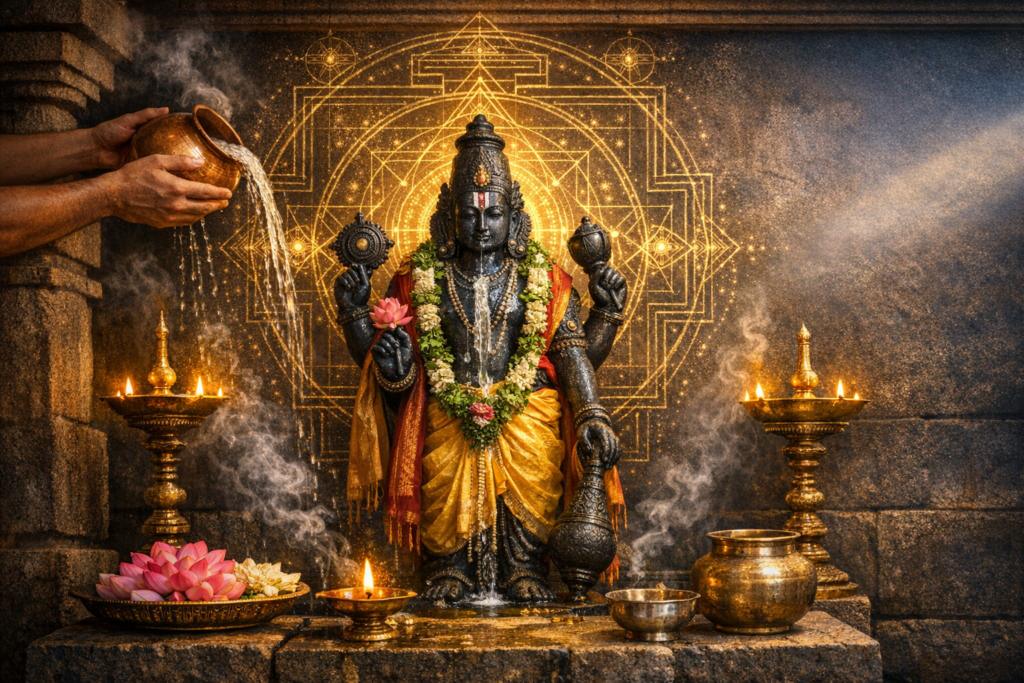
Descriptions of the Somanatha complex from historical reconstructions emphasize its architectural ambition and accumulated wealth. The temple stood on massive stone blocks, with a pyramidal superstructure of thirteen stories surmounted by fourteen golden domes. The sanctum’s Sivalinga, partially embedded beneath the base, was attended by an extensive temple economy: priests, attendants, singers, dancers, and service staff supported by endowments reputedly spanning ten thousand villages. Chandeliers of precious stones, a canopy set with jewels, and a substantial gold chain with a bell illustrated the opulence amassed over centuries.
As the city fell, violence escalated. Many devotees and defenders were killed in successive clashes and pursuits beyond the temple precincts; some accounts estimate the toll in the tens of thousands. While such numbers warrant critical scrutiny—as is customary in the study of medieval chronicles—the magnitude of loss of life and heritage is beyond dispute.
Primary and near-contemporary sources remain central to understanding what followed. Al-Biruni records: “The image was destroyed by Prince Mahmud in 416 H. (1026 C.E.). He ordered the upper part to be broken and the remainder to be transported to his residence, Ghaznin, with all its coverings and trappings of gold, jewels and embroidered garments. Part of it has been thrown into the hippodrome of the town, together with the Cakraswamin, an idol of bronze that had been brought from Thaneshar. Another part of the idol from Somnath lies before the door of the mosque of Ghaznin, on which people rub their feet to clean them from dirt and wet.”
Firishta’s later chronicle echoes the same iconoclasm and loot: “Having now placed guards round the walls and at the gates, Mahmud entered Somnat accompanied by his sons and a few of his nobles and principal attendants. On approaching the temple, he saw a superb edifice built of hewn stone…. In the center of the [Temple] hall was Somnat, a stone idol, five yards in height, two of which were sunk in the ground. The King, approaching the image, raised his mace and struck off its nose. He ordered two pieces of the idol to be broken off and sent to Ghazni so that one might be thrown at the threshold of the public mosque, and the other at the court door of his own palace [emphasis added]. These identical fragments are to this day (now six hundred years ago) to be seen at Ghazni. Two more fragments were reserved to be sent to Mecca and Medina…. The next blow broke open the belly of Somnat, which was hollow, and discovered a quantity of diamonds, rubies, and pearls.”
Accounts also preserve an exchange in which local Brahmins purportedly offered wealth to spare the murti—an offer rejected with a statement that has become emblematic of the raid’s ideological framing: “Should I consent to such a measure, my name would be handed down to posterity as ‘Mahmud the idol-seller’ whereas I desire to be known as ‘Mahmud the idol-destroyer.’” In the same vein, the phrase “But-shikhan not but-farosh!” captures the sentiment attributed to the conqueror in several narratives.
After extensive plunder and destruction, the temple was set ablaze. K. M. Munshi’s reflective judgment—“A sacred city like … Somanatha armoured principally by the devotion and reverence of the whole country, fell prey to an army pledged to fanatic destruction of alien shrines”—has shaped much of the modern memory of the event. In the medieval Islamic world, contemporary panegyrics celebrated the conquest as a triumph of faith; in the Indian subcontinent, it became a wound remembered across generations.
For dharmic communities today, Somnath’s devastation is not a prompt for division but a call to unity in safeguarding civilizational heritage. The episode underscores how leadership vacuums, complacency, and overreliance on miracles can imperil sacred institutions. Equally, the multiple reconstructions of Somnath across centuries testify to resilience—a shared value across Hindu, Buddhist, Jain, and Sikh traditions. In this light, the study of 1026 CE becomes a lesson in cultural stewardship, inter-dharmic solidarity, and the necessity of preparing to protect heritage through scholarship, conservation, and lawful collective action.
From an academic standpoint, this reconstruction draws on well-known textual witnesses such as Al-Biruni and Firishta, and modern historians including D. C. Ganguly and K. M. Munshi, while situating the campaign within the political context of the Gujarat Chalukya dynasty, Bhima I’s retreat to Kanthkot, the battles at Modhera and Dewalwara, and the wider arc of Ghaznavid invasions. The aim is clarity without sensationalism: to present the facts as recorded, acknowledge the losses suffered at Somnath, and highlight the enduring imperative to preserve India’s plural, dharmic heritage.
Inspired by this post on Dharma Dispatch.