Across the dharmic traditions of the subcontinent, ethics in warfare have never been a moral afterthought. Rather, they constitute a rigorous frameworkYuddha Dharmathat seeks to reconcile the necessity of force with the primacy of compassion, proportionality, and restraint. Building on the classical tripartite classification of warfareDharma, Lobha, and Asurathis analysis examines the semantics, practice, and ethical boundaries of Kutayuddha and situates it against the ideals of Dharma-Yuddha and the category termed Asura Vijaya, while offering careful, textually grounded comparisons to selected interpretations of jihad.
In the Sanskritic tradition, the theory of war is not merely descriptive but normative. Sources ranging from the Mahabharata and Dharmasutras/Smritis to the Arthasastra and Puranas outline criteria for just cause, right intention, and admissible means, anticipating many concerns later formalized in international humanitarian law. This code is not confined to Hindu thought alone; its emphasis on the minimization of harm and protection of non-combatants resonates with parallel concerns in Buddhism, Jainism, and Sikhismthreads of unity that affirm a common dharmic commitment to ethical restraint in conflict.
Kutayuddhaunrighteous or illicit warfareillustrates where the line is drawn. The Atharva-Veda preserves an early semantic clue to kuta (variously translated as “horn,” “trap,” or “hammer”) in a stark verse: “Here are spread the fetters of death, which stepping into thou are not released, let this horn (kuta) slay of yonder army by thousands.” (8.16) The imagery reveals an archetype of entrapment that later texts expand into a comprehensive category of prohibited stratagems.
Purānic literature records the term’s cognate, Citrayuddha, in which Mayadeception, artificedominates. The Brahmandapurana narrates the creation of a Sarpani whose limbs released torrents of snakes, bewildering the Saktis (forces) of the enemy. Stripped of supernatural motifs, these episodes function as allegories for disinformation, terror inducement, and battlefield trickery.
Kautilya’s Arthasastra gives Kutayuddha its most systematic policy contour. He lists crafty methods, intrigue, and the use of prohibited, deadly weapons among practices that corrode the ethical foundation of war. Although the Arthasastra is often read for its realpolitik, it is also a normative manual: it distinguishes permissible ruses from condemnable perfidy, and targeted deception from wanton cruelty, always measuring means against the overarching goals of statecraft and social order.
Classical texts also contrast prakasa yuddha (open warfare) with tushnim yuddha (silent warfare). The former is the honorable, declared, and face-to-face form of combat; the latter involves stealth and secrecy. While certain forms of clandestine action may be allowed under strict constraints of discrimination and necessity, the Sanatana code censures the slide into Kutayuddhamethods that annihilate ethical boundaries rather than merely veil operational plans.
In normative terms, Kutayuddha is the negation of the ethics of war. It includes acts whose primary effect is mass harm to non-combatants or the environment: poisoning of wells and tanks, scorched-earth devastation of villages and agriculture, indiscriminate arson, attacks on sleeping camps, and the use of poisoned weapons. It also encompasses practices aimed at breaking society itselfprolonged terrorization, systematic deceit that targets civilian morale, and the deliberate collapse of basic sustenance networks.
Later commentators sometimes classify the incitement of rebellion via bribery, rumor, and deceptive narratives under Kutayuddha when such efforts collapse the social fabric or deliberately target civilians. Kautilya does discuss stratagems such as bheda (sowing dissension), but he embeds them within a framework of calibrated statecraft, subject to discrimination between combatants and non-combatants and subordinated to the prevention of greater harm. The criterion remains: means must not violate the dharmic floor of human dignity.
Chanakya, ever pragmatic, does allow reciprocity: when an enemy employs Kutayuddha, the defender may resort to countermeasures that neutralize that specific threat. R. K. Mookerji’s account of Mauryan military organization underscores that soldiers were trained in varied modes of warfare precisely to prevent being overwhelmed by surprise or subterfuge. Even so, such reciprocity is framed as a shield, not a license; where the enemy’s resort to perfidy ceases, so too should the defender’s exceptional latitude.
Within Dharma-Yuddha, the operational code is strikingly humane. The Mahabharata’s war books and allied Dharmasastra literature recommend sparing the unarmed, avoiding attacks on those who flee or surrender, and upholding rules concerning time, place, and proportionality. After victory, it counsels leniencesome formulations advise against annexing the vanquished realm, against bodily punishment of the defeated king, against plundering treasuries, and against dishonor toward womenthereby dignifying triumph with restraint.
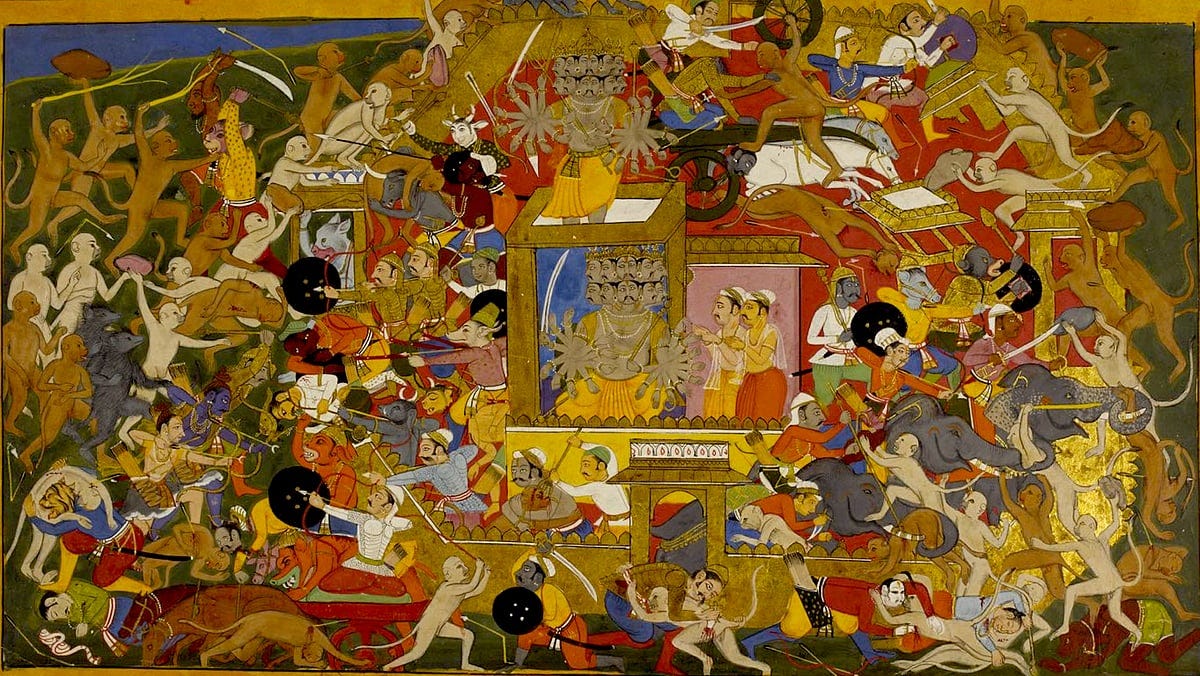
Asura Vijaya sits at the opposite end of the spectrum: a mode of conquest that subordinates ethics to expediency. It condones deception and terror as first-choice instruments and blurs the combatant–non-combatant line. Epic literature dramatizes this inversion; in the Ramayana, Indrajit deploys Maya to stage the illusory killing of Sitadevi before Sri Rama’s army to shatter moralean emblematic example of psychological warfare unmoored from dharmic guardrails.
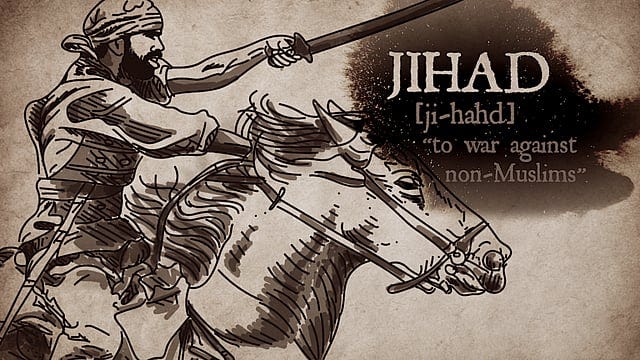
Comparative scholarship often places selected interpretations of jihad alongside this spectrum to examine emphases and divergences in the ethics of means. Brigadier S. K. Malik’s The Quranic Concept of War, for instance, foregrounds psychological domination as decisive. It should be stressed, however, that Islamic jurisprudence contains diverse traditions and debates; Malik’s thesis is one modern articulation rather than the sole or definitive account. The analytical value here lies in mapping how different civilizational discourses theorize the balance between intention, means, and ends.
Kautilya warns smaller polities to avoid frontal collision with a conqueror habituated to Asura Vijaya; prudence may dictate negotiated concessions to preserve life and the possibility of future agency. Historical memory often cites the devastation of Kalinga as an instance of warfare whose human cost exceeded restraint. Notably, Ashoka’s later remorse and turn to dhamma, recorded in his edicts, illustrate the transformative pressure of ethical reflection upon statecraft after catastrophic violence.
Sanctions for violating the code existed. If a Kshatriya transgressed the ethics of battleby cowardly retreat or by atrocitiestexts describe penalties ranging from social ostracism to severe corporal punishment. Such prescriptions read harshly today, yet their function was to maintain discipline under the most destabilizing of human conditions. Historically, their enforcement likely varied by era and polity; normativity and practice never align perfectly, but normative clarity shapes expectations and accountability.
Dharmic unity becomes especially clear in comparative perspectives. Jainism’s uncompromising ahimsa sets a pole star that continually interrogates the ethics of force. Buddhism’s emphasis on right intention (samyak sankalpa) and compassion (karuna) constrains the legitimization of violence even under duress. Sikh thought articulates dharam yudhrighteous defensewhere force is a last resort and must never be directed at non-combatants or motivated by hatred. Across these traditions, the through-line is unmistakable: protect life, limit means, and make peace possible.
Modern humanitarian law echoes these ancient intuitions. The Geneva Conventions and the broader jus in bello framework codify principles of distinction, proportionality, necessity, and humane treatment of captivesideas long debated in Indic sources. Where Kautilya distinguishes open from silent warfare and warns against perfidy, contemporary law forbids treachery while allowing ruses; where Dharma-Yuddha exalts restraint, international law commands it in binding form.
There is, nevertheless, a strategic paradox. Excessive chivalry can be exploited by an adversary unbound by restraint. V. R. R. Dikshitar observed that misplaced generosity might erode martial qualities and embolden ruthless enemies. The defeat of Prithivi Raja Cahamana is frequently invoked as a cautionary tale: generosity unaccompanied by vigilance can become a liability in the arena of power.
What emerges is not an antiquarian curiosity but a living framework with contemporary salience. Yuddha Dharma holds that victory and virtue are not mutually exclusive, provided discipline curbs fury, proportionality curbs ambition, and compassion curbs vengeance. Kutayuddha and Asura Vijaya mark ethical red lines whose violation corrodes both the victor’s legitimacy and the social order peace is meant to restore. Read together, the dharmic traditions of Hinduism, Buddhism, Jainism, and Sikhism offer a shared, unifying horizon: defend what must be defended, but never cease to be humane.
Inspired by this post on Dharma Dispatch.