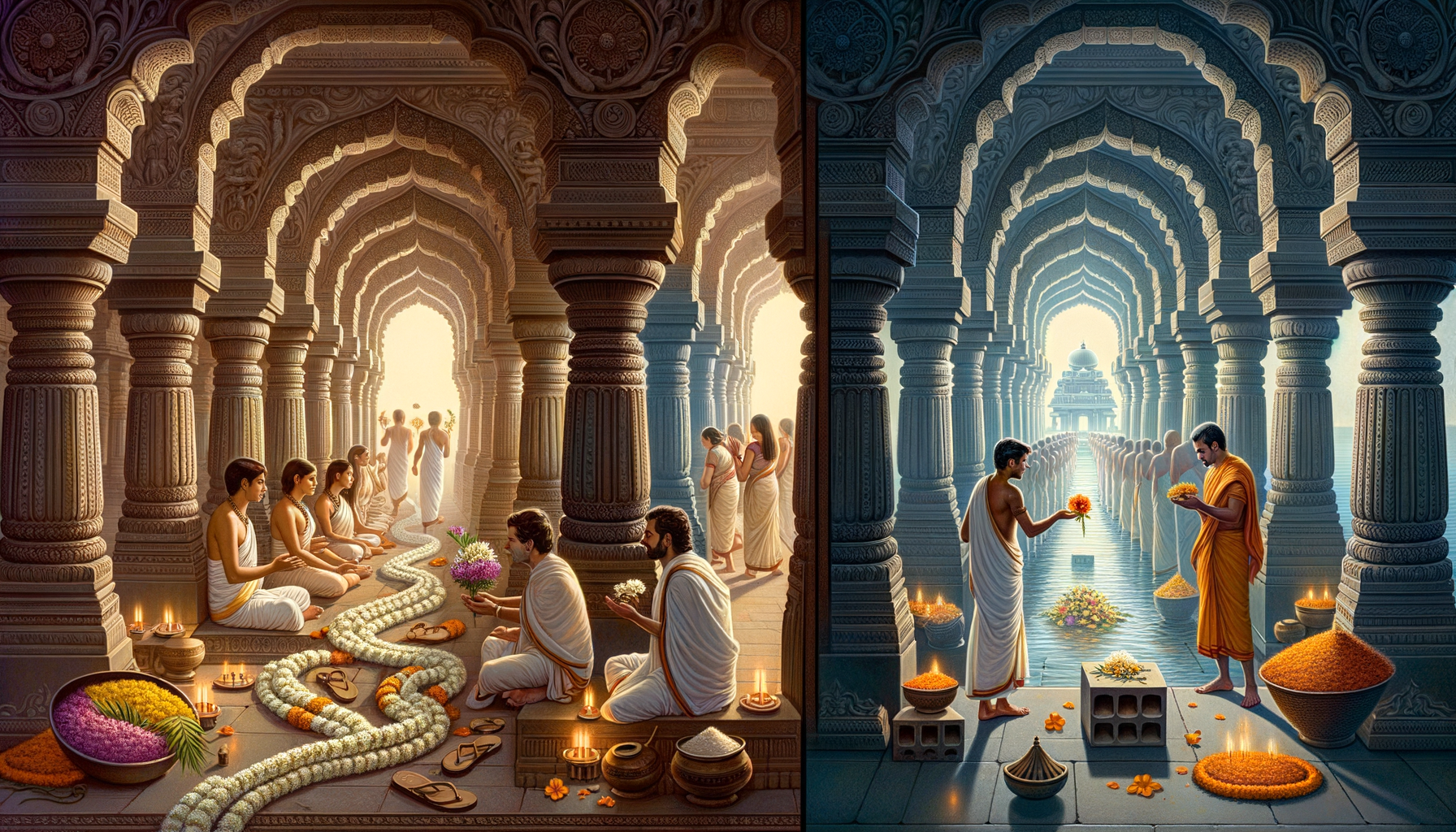
The Bhakti movement in medieval India unfolded across regions through distinctive yet convergent devotional currents. A comparative view of the Tamil Alvars and the Maharashtrian Bhakti saints illuminates how poetry, pilgrimage, and social ethics translated inner devotion into public culture. Examined together, these traditions highlight an inclusive ethos that resonates across Hinduism, Buddhism, Jainism, and Sikhism, nurturing unity in spiritual diversity while preserving the richness of local languages and practices.
In South India, the twelve Tamil Alvars (c. 6th–9th centuries CE) celebrated Vishnu through emotionally charged, lyrically refined hymns. Their corpus, the Nalayira Divya Prabandham, became integral to temple liturgy and everyday piety. Figures such as Andal brought a distinctive voice to devotional literature, widening participation and signaling that love of the divine transcends social boundaries. Theologically, surrender (prapatti) and grace (kripa) are central motifs, expressed in Tamil idiom yet universally intelligible as pathways of compassion and humility. Later Sri Vaishnava acharyas systematized these insights, ensuring that the Alvars’ Tamil hymns remained living scripture in community practice.
In western India, the Maharashtrian Bhakti tradition (c. 13th–17th centuries CE) coalesced around the Varkari movement and the deity Vithoba of Pandharpur. Saints such as Dnyaneshwar (author of the Dnyaneshwari), Namdev, Eknath, Tukaram, Chokhamela, and Janabai used Marathi abhangs and kirtan to make spiritual teaching accessible to all. Annual yatras to Pandharpur, especially during Ashadhi Ekadashi, cultivated a participatory devotional culture centered on nama-smarana, ethical living, and social equality. Notably, Namdev’s hymns appear in the Guru Granth Sahib, illustrating the deep connective tissue between Bhakti and Sikh spirituality through shared reverence for the divine Name and congregational singing.
Placing these traditions side by side reveals striking parallels. Both centered devotion on VishnuSriman Narayana in the Alvar tradition and Vithoba (a form of Krishna/Vishnu) in Maharashtrawhile privileging heartfelt devotion over ritual hierarchy. Both prioritized vernacular languages (Tamil and Marathi), enabling devotional knowledge to travel beyond scholastic circles into households and public spaces. Both foregrounded ethical virtues such as compassion, humility, and service, thereby challenging caste exclusivity and opening space for women’s voices. At the level of practice, the Alvars anchored temple recitation and pilgrimage networks in the South, while the Varkaris sustained itinerant singing, congregational kirtan, and regular pilgrimage circuits in the West.
There are, however, illuminating differences of emphasis. Alvar compositions, embedded in temple culture, carry an aesthetic and theological intensity shaped by South Indian sacred geography and ritual performance. Varkari Bhakti emphasizes the transformative simplicity of the divine Name, moral accountability in daily life, and the communal energy of abhang and kirtan. The Alvar legacy flows into the Sri Vaishnava tradition with a robust scholastic scaffolding; the Maharashtrian stream, while not devoid of doctrine, privileges ethical practice, musical devotion, and social inclusion as its enduring markers.
These shared currents and distinct accents together advance dharmic unity. The Bhakti celebration of compassion (karuna), non-harm (ahimsa), self-discipline, and inner transformation aligns deeply with Buddhist mindfulness and compassion, Jain ethical rigor, and Sikh nam-simran and sangat. Rather than erasing differences, Bhakti demonstrates how diverse forms of worship can harmonize around common values, strengthening a civilizational fabric that welcomes multiple paths to the divine.
For readers today, the comparison clarifies why the Bhakti movement continues to inspire. Whether hearing the recitation of Divya Prabandham in a South Indian temple or joining a Varkari kirtan on Ashadhi Ekadashi, devotees encounter an accessible spirituality that affirms dignity, fosters community, and invites ethical action. In classrooms, homes, and pilgrimage towns, these traditions still offer practical guidance: love of the divine expressed in one’s own language, service to others as worship, and unity forged through shared song rather than uniformity of thought. The Alvars and the saints of Maharashtra thus stand as complementary lightsdistinct in expression, convergent in purposeguiding seekers toward devotion, wisdom, and social harmony.
Inspired by this post on Hindu Blog.