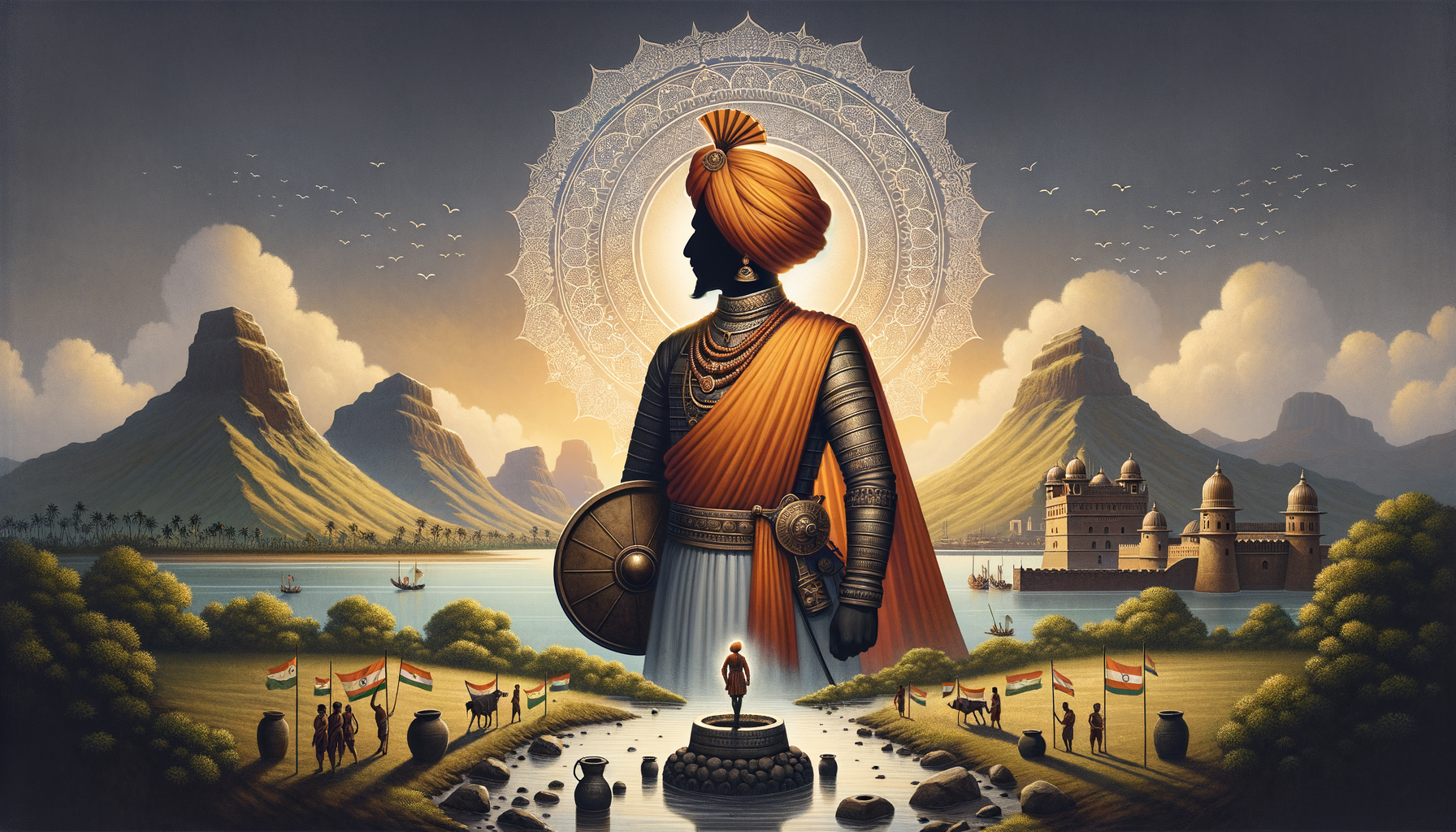
Marking the 396th birth anniversary of Chhatrapati Shivaji (1630–1680) invites a rigorous re-examination of three interlinked virtuescompassion, ecology, and moral courageas living principles of governance and social harmony. Read through the prism of dharmic thought and cultural heritage, these virtues form a coherent, historically grounded framework that speaks to contemporary needs: protecting life (ahimsa), stewarding nature (prakriti-samrakshana), and exercising just power (kshatra-dharma) through dharma-yuddha, or ethically bounded warfare. Far from an insular narrative, this appraisal foregrounds unity across Hindu, Buddhist, Jain, and Sikh traditions, locating shared values in karuṇā, ahimsa, and seva for sarbat da bhala.
Seventeenth-century Deccan politics were defined by fluid borders, volatile alliances, and intense imperial competition. Within this crucible, Shivaji’s statecraft integrated cultural continuity with institutional innovation, balancing strategic audacity with a codified ethic toward civilians, sacred spaces, and the environment. His leadership can be read not only as political resilience but as civilizational resiliencean insistence that power be disciplined by dharma, that conquest never eclipse conscience, and that prosperity be premised on protecting people and place.
Compassion, in this historical context, was not sentiment but policy. Court correspondence, administrative orders, and later chronicles consistently portray norms that prohibited harm to non-combatants, disallowed the desecration of places of worship, and demanded the dignified treatment of captives. A widely cited episode from the Kalyan campaign (1661) recounts the respectful protection and safe return of a noblewoman seized during operationsan episode frequently remembered in Maharashtra’s oral tradition as a touchstone of principled restraint. Such choices exemplify compassion as an executive virtue and align with the Jain emphasis on ahimsa, the Buddhist cultivation of karuṇā, and the Sikh commitment to seva.
Religious pluralism followed naturally from this ethic. Archival grants (sanads) and local memory attest to endowments not only for temples and mathas but also for dargahs and Sufi institutions, reinforcing the broader dharmic principle of freedom of worship and the harmony of faiths. Rather than a fragile tolerance, this was a confident pluralisma recognition that social cohesion depends on honoring diverse paths while safeguarding a shared public peace. The result was an early, practical expression of unity in diversity that remains instructive in interfaith dialogue today.
Ecology, often overlooked in political readings, was embedded in Maratha-era fortification and settlement patterns. Hill forts such as Raigad and Rajgad integrated rainwater harvesting, rock-cut cisterns, and careful catchment management; the Gangasagar reservoir at Raigad exemplifies how monsoon flows were captured and conserved to sustain garrisons and nearby communities. These water systemsstill visibleunderscore a culture of Environmental conservation that paired strategic necessity with ecological balance, showing how infrastructure can be designed to endure climate variability without degrading local ecosystems.
Coastal strategy reflected similar ecological intelligence. Sea-forts like Sindhudurg leveraged natural basaltic outcrops and surrounding reefs, creating defenses that worked with, rather than against, littoral geography. Early naval planning along the Konkan littorals emphasized mobility and intimate knowledge of tides, estuaries, and mangrove beltsan operational art inseparable from environmental awareness. The logistical ethic here is unmistakable: security and sustainability must co-evolve.
Operational doctrineoften summarized as ganimi kava (guerrilla methods)depended on deep familiarity with forest corridors, watershed alignments, and seasonal rhythms. The success of rapid, small-unit maneuvers assumed a social compact with agrarian and forest communities and a working respect for their livelihoods. The inference is clear for modern policy: resilient security architectures are built on trusted local knowledge and careful stewardship of the commons.
Moral courage, the third pillar, surfaces both in warfare and in governance. Episodes such as the Agra detention and subsequent escape (1666) are frequently celebrated for strategic ingenuity, yet their deeper lesson is constitutional: resolve may be firm without abandoning ethical constraints. The refusal to sanction indiscriminate reprisals, the insistence on due conduct toward non-combatants, and the willingness to negotiate when just outcomes were possible, collectively illustrate the dharmic ideal that power is legitimate only when leashed to responsibility.
Institutionally, this ethic took form in the Ashta Pradhan council and an administrative style that sought predictable revenue, protection for cultivators, and an emphasis on productive capacity over plunder. Read alongside classical formulations of rajadharma, the model aligns with the Hindu way of life as a civic ethic: governance must protect life, ensure justice, and enable the flourishing of knowledge and labor. By contemporary standards, this aligns with rights-conscious statecraft bound to the duties of office.
The cross-dharmic resonance of these virtues is striking. In Jainism, ahimsa disciplines intent and action; in Buddhism, karuṇā unfolds as universal compassion; in Sikh tradition, seva and the aspiration of sarbat da bhala enjoin service for the welfare of all; in Hindu thought, kshatra-dharma and dharma-yuddha define courage and constraint in equal measure. Together they describe a shared moral language: protect life, serve with humility, fight only when necessary, and even then within ethical bounds. Shivaji’s record, taken in this light, exemplifies an indigenous, inter-traditional grammar of responsible power.
For many families, school groups, and pilgrims who still visit the Sahyadri forts, this moral language is felt as much as it is studied. Standing by stone-lined tanks that still collect monsoon rain, visitors encounter a living classroom in Environmental conservation. Listening to local ballads that praise restraint toward non-combatants, they glimpse compassion as strategic strength. These experiential encounters help younger generations internalize unity in diversity as something more than a sloganit becomes a memory-scape of places, practices, and principles that have endured.
Translating these lessons to the present suggests a practical triad for policy and civil society. First, compassion as a design principle: social protection systems should prioritize the vulnerable, measure dignitynot just throughputand encourage community kitchens and volunteer networks modeled on inclusive seva. Second, ecology as infrastructure: water budgeting, urban rainwater harvesting, and green temple or festival protocols can repair local hydrology without diminishing cultural vibrancy. Third, moral courage as institutional habit: transparent decision-making, due process in security, and refusal to dehumanize any community reinforce a dharmic public ethos.
Equally important is narrative stewardship. Commemoration should resist sectarian framings and emphasize the shared, dharmic roots of compassion, ecological care, and ethical valor across Hinduism, Buddhism, Jainism, and Sikhism. Honoring Shivaji’s legacy, therefore, is not an act against anyone; it is a pledge to uphold a civilizational ethic in which many traditions can recognize themselves. That ethic remains a reliable compass in an age of polarized discourse and planetary strain.
On this 396th birth anniversary, the triad of compassion, ecology, and moral courage offers both historical clarity and forward-looking guidance. It recalls that statecraft without empathy corrodes legitimacy, that prosperity without stewardship exhausts the land, and that bravery without ethics imperils society. The dharmic synthesis visible in this legacyahimsa, karuṇā, seva, and kshatra-dharmaproposes a durable path to unity in diversity. By living these principles in public institutions and everyday life, society can honor the past while equipping itself to meet the moral tests of the future.
Inspired by this post on SikhNet – News.